What Is Stop And Go in Poker?
The stop and go is calling preflop then shoving the flop instead of jamming preflop. Learn what the stop and go is, why it adds fold equity, and when to use it.
On this page · 6 sections
The stop and go is a short-stack tournament play: instead of moving all in before the flop, you flat-call the raise and then shove any flop. You “stop” preflop by just calling, then “go” on the flop by jamming. The whole point is to manufacture fold equity that a preflop shove would have thrown away.
It sounds counterintuitive — why not just get it in now? — but the logic is sound. The stop and go trades your preflop initiative for a better spot to make your opponent fold, by using the flop as leverage.
The Core Idea: Two Decisions Beat One
When you shove all in preflop, your opponent faces a single decision with the entire board still to come. Because they get to see all five cards for one price, they call with a wide range — any two overcards, small pairs, suited connectors. Your fold equity is low.
The stop and go changes the structure. By calling, you let your opponent proceed to a flop they will usually miss. Unpaired hands flop a pair only about one time in three. So when you shove the flop into a raiser holding two overcards, they whiff roughly two-thirds of the time — and now they must decide whether to call off their tournament with ace-high on a board that missed them.
Many will fold. Those folds are pots you simply could not have won by jamming preflop. For the mechanics of committing your stack, see what does all in mean in poker.
A Worked Example
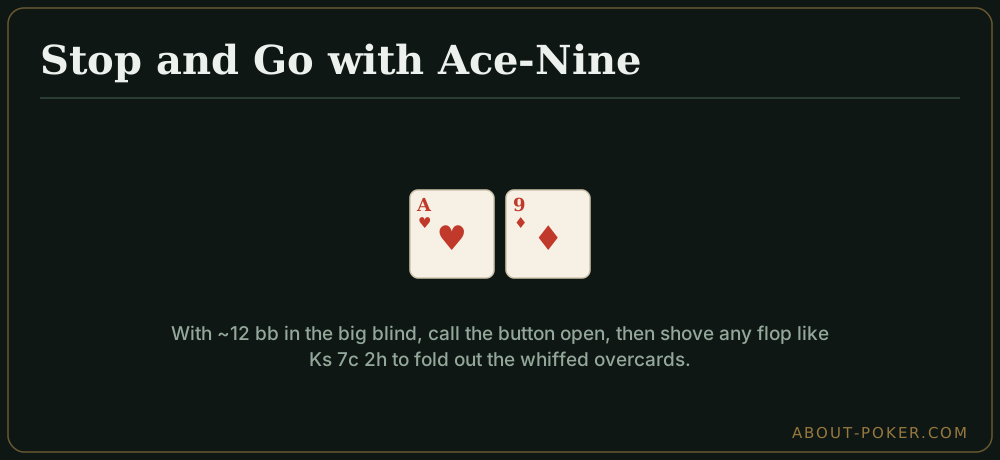
You are in the big blind in a tournament with 12 big blinds — a low M-ratio that normally means “shove or fold.” You hold Ah 9d. The button opens to 2.5 big blinds.
- Preflop-jam line: you shove 12 blinds. The button, getting a good price, calls with a lot of hands — pocket pairs, suited aces, king-queen, even ace-jack. You are often a coinflip or slightly behind, and you never get folds.
- Stop-and-go line: you call. The flop comes Ks 7c 2h. You shove your remaining ~9.5 blinds.
Now the button has to survive a flop that missed most of their raising range. Their two overcards and small pairs that would have called a preflop jam now face a board with a king. Hands like queen-jack or pocket fives fold. When they do call, you still have outs. The stop and go turned a spot with almost no fold equity into one where you win uncontested a meaningful share of the time.
When to Use It
The stop and go is a defensive, out-of-position tool for specific situations:
- From the blinds, where you will act first on the flop and can shove before your opponent shows strength.
- When your stack is small but not tiny — enough that a flop shove is still a real threat, but a preflop jam would be called too lightly.
- Against opponents who call wide preflop but fold to flop pressure — the exact players whose calling ranges are full of overcards that whiff.
It is fundamentally about being pot-committed anyway and choosing the moment that maximizes folds.
When to Skip It
The stop and go is not free. Skip it when:
- You are the favorite and want a call. If you hold a big pair, a preflop jam that gets called is exactly what you want. Do not give a free flop that could counterfeit you.
- Your stack is so short that flop shoving adds no pressure. With three big blinds behind on the flop, your opponent calls automatically and your fold equity vanishes.
- You are in position. In position you can often just jam preflop, and calling risks facing a bet that puts you to a tough decision before you can shove.
A Quick Checklist
Before you stop and go, confirm all of these:
- Am I out of position? The move is built for the blinds.
- Is my flop shove still scary? You need enough chips left to make folding correct for a wide range.
- Does my opponent call preflop too wide? If yes, splitting the decision helps; if they only call with monsters, it does not.
- Would I rather get called? If your hand wants action, jam preflop instead.
Why the Name Matters
The name is a perfect description of the tempo. You stop — decline to commit fully — before the flop, then go — fully commit — once the community cards give you a decision point that favors you. It is one of the few plays in poker where slowing down actually generates more aggression, and more folds, than charging in would.
Frequently asked
What is the stop and go in poker?
The stop and go is a short-stack tournament play where, instead of moving all in preflop, you just call the raise and then shove any flop. The idea is to add fold equity by making your opponent commit again on the flop, where they will miss most of the time and can fold.
Why use a stop and go instead of shoving preflop?
Shoving preflop gives your opponent one decision with the whole board still to come, so they call wide. The stop and go splits it into two decisions and lets the flop miss them. When they whiff, your flop shove wins pots that a preflop jam would have lost.
When is the stop and go correct?
It works best from the blinds, out of position, when your stack is small enough that a flop shove is still meaningful but a preflop jam would get called too easily. It is a defensive move designed to steal the pot when the flop bricks for the raiser.