What Is Straddle in Poker?
A straddle is a voluntary blind of double the big blind that buys last action preflop. Learn straddle rules, the button straddle, and why it usually loses money.
On this page · 6 sections
A straddle is a voluntary forced bet — usually twice the big blind — posted before the cards are dealt. It functions as a live blind, which means the straddler acts last preflop and can raise when the action returns to them. The classic straddle comes from the player under the gun, the seat immediately to the left of the big blind. You are essentially buying a bigger, later blind for one round.
Players love to straddle because it feels aggressive and creates action. Whether it is actually a good idea is a different question — and the honest answer is usually no.
How a standard straddle works
Before the hand, the under-the-gun player announces “straddle” and posts double the big blind. In a 2/5 game that is a 10 straddle. Because the straddle is a live blind:
- The chips count toward the straddler’s wager for the round.
- The straddle becomes the new amount to call, so other players must now call 10 (or raise) instead of 5.
- The straddler acts last preflop and gets the option to check or raise when the action returns, exactly like the big blind’s option.
That last-to-act privilege is the entire appeal. Preflop, position normally belongs to whoever is closest to the button; the straddle temporarily hands the straddler the last word before the flop.
Types of straddle
- Under-the-gun straddle: the standard, posted from first position for 2x the big blind.
- Re-straddle: the next player to the left doubles it again — a 20 re-straddle over a 10 straddle in a 2/5 game.
- Mississippi straddle: allowed from other positions in some rooms, often the button. A button straddle is far more powerful because the straddler has genuine position on later streets too, not just preflop.
- Mandatory straddle: a table or house rule that forces a designated seat to straddle every hand. See mandatory straddle for how those games change your strategy.
Always confirm which straddles your room permits; the rules vary widely.
A worked example
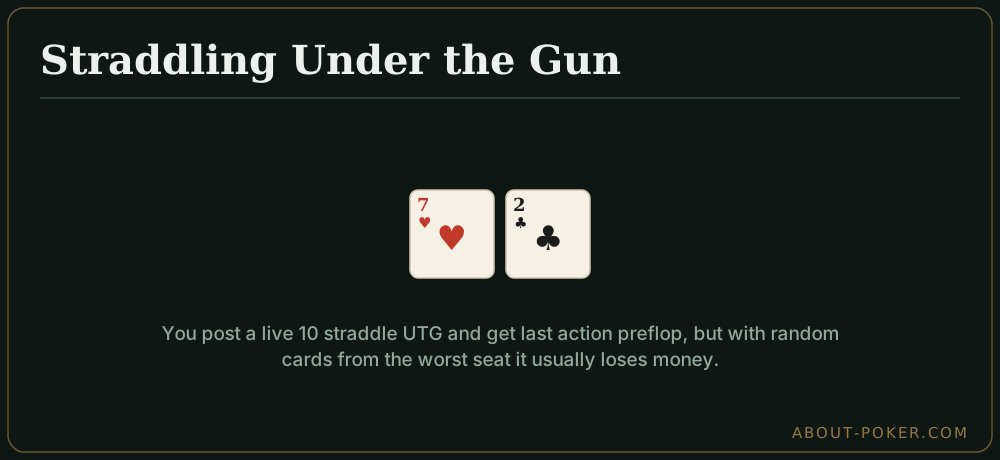
You are under the gun in a 2/5 game and you straddle to 10. Two players call the 10, and the button raises to 40. Everyone folds back to you.
Because your straddle is live, you still have action. Your live 10 counts toward the call, so you only need to add 30 more to continue against the button’s raise, and you also have the option to re-raise. Sounds great — until you remember why you are in this spot. You committed 10 blind with two random cards from the worst position at the table. Most of the time you are looking down at a weak holding and folding your 10, or calling out of position with a marginal hand. The occasional pot you win last-to-act does not make up for all the blind money you leak.
That is the core problem with straddling: you buy last action preflop but pay for it by entering blind from early position, and you are still first to act on the flop, turn, and river unless you are on the button.
Why straddling usually loses money
- You enter blind with random cards. Posting extra money before you see your hand is a losing proposition on its own.
- Early position is the worst position. The standard UTG straddle puts the most money in from the seat with the least information.
- You are out of position postflop. Acting last preflop does not help you on the three streets that actually decide most pots.
The main strategic upside is not for the straddler — it is for the table. A straddle doubles the effective stakes and deepens the play. If you are the strongest, most disciplined player in the game, a bigger pot amplifies your edge over weaker opponents. So you might welcome others straddling while rarely straddling yourself.
When a straddle can make sense
- Button (Mississippi) straddle, where you keep position postflop — this is the least-bad straddle.
- Table-image or game-flow reasons, if a small, occasional straddle keeps a soft game lively and the weak money engaged.
- You are deep and dominant, and inflating stakes shifts more money through your edge.
Even then, treat it as a small, deliberate leak you accept for a bigger-picture reason — not a default play.
Quick checklist before you straddle
- Which position is straddling? UTG straddles are the weakest; a button straddle is the only one with real merit.
- Does the room allow re-straddles or Mississippi straddles?
- Are you the stronger player, so a bigger pot helps you?
- Can your bankroll handle the doubled effective stakes?
- If in doubt, don’t. The default correct play is to let others straddle and quietly profit from the bigger game.
Understand the straddle and you will stop burning chips on a flashy play that usually helps everyone at the table except the person posting it.
Frequently asked
What is a straddle in poker?
A straddle is a voluntary forced bet, usually double the big blind, posted before the cards are dealt. It is a live blind, so the straddler acts last preflop and can raise when the action returns. The most common straddle is posted by the player under the gun, immediately to the left of the big blind.
Is straddling in poker a good idea?
Usually not for the straddler. You put in a blind bet with random cards from an early position, which is generally a losing proposition. The main upside is acting last preflop, but that rarely compensates for entering the pot blind. Straddling does make the game bigger, which can help you if you are the stronger player and it hurts weaker opponents more.
How much is a straddle in poker?
A standard straddle is twice the big blind. In a 2/5 game the straddle is 10. Some rooms allow re-straddles, where the next player posts double the straddle (20 in that example), and Mississippi straddles, which can be posted from other positions such as the button.