What Is Light 3-Bet in Poker?
A light 3-bet is a re-raise made as a bluff rather than for value. Learn what a light 3-bet is, which hands to use, and when it profits against openers.
On this page · 6 sections
A light 3-bet is a re-raise made as a bluff rather than for value. Where a value 3-bet re-raises a strong hand hoping to get called by worse, a light 3-bet re-raises a weaker hand hoping the opener simply folds. “Light” here means light on strength — you are applying pressure without the goods.
This is one of the plays that separates thinking players from beginners. Without light 3-bets, your re-raises always mean the same thing — premiums — and any decent opponent folds everything except hands that crush you. Adding bluffs makes your 3-bets impossible to read.
Why Bluff-Raise at All?
The math is about fold equity plus a backup plan. When you re-raise, the opener must fold, call, or 4-bet. Most players open a wide range from late position and cannot continue against a re-raise with the bottom half of it. Every fold hands you the pot outright.
Even when you get called, a well-chosen light 3-bet is not dead. You take the betting lead into the flop against a range that is now somewhat capped, and you can continuation bet many boards profitably. So a light 3-bet wins two ways: immediately through folds, and later through your initiative and equity when called. The threat of the 4-bet is the main risk, which is why hand selection matters so much.
Which Hands to Choose
Not all bluffs are equal. The best light 3-bet hands share two traits: blockers and playability.
- Suited aces like Ad 5d or Ac 4c are premium bluffing hands. The ace blocks the opener’s strongest hands — aces and ace-king — making it less likely they can continue, and the suited wheel card makes flushes and straights when called. Blocker logic is covered in what are blockers in poker.
- Suited connectors like 9h 8h or 7s 6s have no blocker value but flop huge equity — straights, flushes, and strong draws — so they play beautifully when the opener calls.
The hands to avoid are pure junk with no suit or connectivity, such as king-four offsuit. They fold out the same range but have no backup: when called, they flop nothing and cannot continue.
A Worked Example
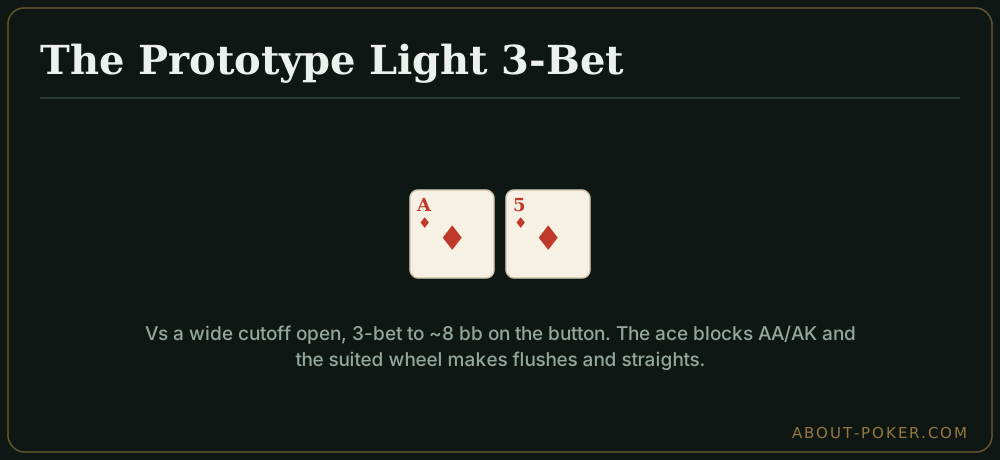
A loose regular opens to 2.5 big blinds from the cutoff. You are on the button with Ad 5d.
You 3-bet to about 8 big blinds. Consider the two outcomes:
- Opener folds (the most common result against a wide cutoff steal). You win the pot with the worst hand — pure profit from fold equity.
- Opener calls. The flop comes 9h 6d 3d. You now have a flush draw plus an overcard and the betting lead. You can continuation bet, and if called you have around 35% equity or better with the flush draw. Even your “bluff” is now a genuine semi-bluff with a real hand.
Compare that to 3-betting king-four offsuit on the same board: you flop nothing, cannot barrel credibly, and must give up. Same fold equity, far worse when called. That difference is the entire art of choosing light 3-bet hands.
When to Light 3-Bet
Light 3-betting profits against the right targets and positions:
- Against wide openers. Cutoff and button steals are the prime targets because those ranges are weak and fold often.
- In position. Being last to act lets you realize your equity and control the pot when called.
- Against players who fold too much. If someone open-folds to nearly every 3-bet, ramp up the bluffs.
Avoid light 3-betting against tight openers who only raise strong hands, against calling stations who never fold, and against aggressive 4-bettors who will blow you off your bluff. In those cases the fold equity is not there.
Sizing and Balance
Size your light 3-bets the same as your value 3-bets so opponents cannot tell them apart — roughly 3x the open in position, more out of position. Using a bigger size only when bluffing is a classic tell that observant players will punish.
Balance matters over the long run. For every couple of value 3-bets you make, mixing in a light one keeps your range credible. Do it too rarely and opponents fold correctly; do it too often and they start calling and 4-betting you light in return.
A Quick Checklist
- Does the opener fold too much? Green light to bluff.
- Do I have blockers or playability? Prefer suited aces and suited connectors over junk.
- Am I in position? Bluffs realize far more equity in position.
- Is my size identical to my value 3-bets? Keep it disguised.
Frequently asked
What is a light 3-bet in poker?
A light 3-bet is a re-raise made as a bluff rather than for value. Instead of re-raising with a premium hand you want called, you re-raise with a weaker hand hoping the opener folds. The goal is to win the pot preflop or set up a favorable flop against a capped range.
Which hands are best for a light 3-bet?
The best light 3-bet hands have blockers and playability. Suited aces like ace-four and ace-five block the opener's strongest calling hands, and suited connectors like nine-eight and seven-six make strong hands when called. These beat using pure trash, which has no backup plan.
When should you light 3-bet?
Light 3-bet against players who open too wide and fold too often to re-raises, ideally when you have position. It is most profitable against late-position steals from the cutoff and button, where the opener's range is weak and folds frequently.