How to Beat 25NL Cash Games
Beat 25NL where regs get real: value bet fish, balance vs regs, 3-bet and c-bet with a plan. Opening chart, a worked 3-bet-pot hand, and the leaks that stall you.
On this page · 7 sections
To beat 25NL — the $0.10/$0.25 online cash level, the top of the micros — you keep exploiting the recreationals hard while playing a genuinely competent, roughly balanced game against the regulars. This is the level where “just value bet everyone” stops being enough. The fish are still there and still profitable, but the regs are real, and your winrate now depends on separating the two pools and playing each correctly.
Two games at one table
At 25NL every table is really two games. Against recreationals you do what always works: value bet big, isolate limps, and let them pay you off. Against regs you tighten up, respect their aggression, and mix in balanced lines so they can’t run you over. The single most important skill is knowing which opponent you’re in a pot with — everything from exploiting recreational players to playing against regs branches from that read.
Opening ranges for 25NL
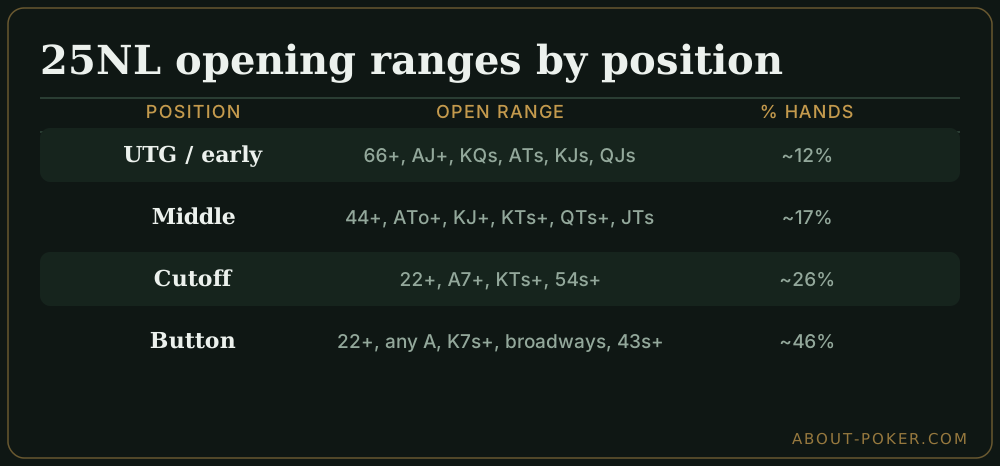
Play a solid, position-aware raise-first-in strategy:
| Position | Open range (approx.) | % of hands |
|---|---|---|
| UTG / early | 66+, AJ+, KQs, ATs, KJs, QJs | ~12% |
| Middle | 44+, ATo+, KJ+, KTs+, QTs+, JTs | ~17% |
| Cutoff | 22+, A7+, KTs+, suited connectors 54s+ | ~26% |
| Button | 22+, any A, K7s+, most broadways, 43s+ | ~46% |
Against regs you’ll open a touch tighter from early position and lean on the button; against a table of fish you can widen everywhere.
Balance vs regs, exploit vs fish
The core adjustment at 25NL: your c-bets, 3-bets, and river bets need a plan against regs. C-bet with a mix of value and real bluffs so a thinking opponent can’t just fold or float you. 3-bet a linear value range plus a few blocker bluffs. But drop all of that against a station — versus a caller, collapse back to pure value and never bluff. Balance is a tool you use only when the opponent is capable of punishing imbalance.
A worked hand
A competent reg opens the cutoff to 2.2bb. You 3-bet AsQs from the button to 7bb. The reg calls. Pot ~15bb.
- Flop: Qh 7c 4d. Top pair, top-ish kicker with the nut-flush backdoor. You c-bet 7bb. Reg calls.
- Turn: 9s. You pick up a flush draw to go with top pair — a strong two-way hand. You bet 16bb. Reg calls.
- River: 2h. The flush missed; you have top pair. Against a reg you now value bet thin — say 24bb — because your hand still beats KQ, QJ, JJ, and floats. If the reg check-raises the river, you have an easy fold: at 25NL a reg’s river raise is almost never a bluff.
Notice the discipline: you bet for thin value but respect a big raise. Against a station in the same spot you’d bet bigger and never fold; against the reg you bet to get called by worse and fold to strength.
Defend your blinds correctly
At 25NL regs will start attacking your blinds with wide button and cutoff opens. You can’t fold your way through that — over-folding hands the stealers free money. Against a 2.2–2.5bb button open you should defend the big blind with a wide range of suited hands, connectors, and any pair, because you’re getting a good price and closing the action. Out of the small blind, defend tighter but still 3-bet a value-plus-blocker range rather than flat-calling everything into a squeeze. The goal is to make stealing your blinds cost the reg something.
Common 25NL leaks
- Playing the reg like a fish — bluffing where they call and folding where they’d have paid.
- Never bluffing regs, so your value bets get no action.
- Over-3-betting into positions where you’re always dominated.
- Ignoring table selection — sitting in reg-only games with no money to win.
- Paying off obvious river raises from tight, passive players.
Your 25NL checklist
- Identify fish vs regs before every big decision.
- Exploit fish with pure value and iso-raises.
- Play balanced c-bet, 3-bet, and river ranges vs regs.
- Value bet thin against regs; fold to their big raises.
- Table-select for the softest lineups.
- Keep a 40-plus buy-in roll and clear this level before jumping.
25NL is the graduation exam for the micros. Play two games at once — merciless on the fish, disciplined on the regs — and 50NL opens up.
Frequently asked
What is a good winrate at 25NL?
A strong 25NL regular runs about 5–8bb/100 ($0.10/$0.25 blinds), or $12–$20 per hundred hands. The pool has more competent regs than 10NL, so winrates compress a bit and table selection matters more.
Is 25NL the end of micro-stakes?
Yes, 25NL is generally the top of the micros and the boundary into low stakes. It's the first level where you must play a reasonably balanced game against regs while still ruthlessly exploiting the recreationals in the pool.
How many buy-ins do I need for 25NL?
Thirty buy-ins is $750; many players prefer 40–50 buy-ins here because the swings feel larger in real money and a bad run shouldn't force you back down two levels. Move up when you're comfortably beating the level over a large sample.