How to Beat 2NL Cash Games
Beat 2NL by value betting relentlessly, folding your bluffs, and dodging the rake. A full opening chart, a worked hand, and the leaks that stall micro grinders.
On this page · 7 sections
To beat 2NL — the $0.01/$0.02 online cash level — you play a tight, aggressive value-first game, bet your good hands bigger than feels comfortable, and almost never bluff. The 2NL pool is the softest in poker: players limp too much, call too much, and fold too little. Your entire edge comes from getting paid when you have it and folding cheaply when you don’t.
Understand who you’re playing
The typical 2NL opponent is a recreational or brand-new player. They open-limp with a huge range, call raises with weak aces and any suited card, and refuse to fold top pair or a flush draw. That single tendency — they don’t fold — writes most of your strategy. You can’t bluff a station off a hand, so you stop trying and instead charge them the maximum when you’re ahead. This is the purest form of beating a calling station, and it’s why 2NL rewards patience over creativity.
Your opening ranges
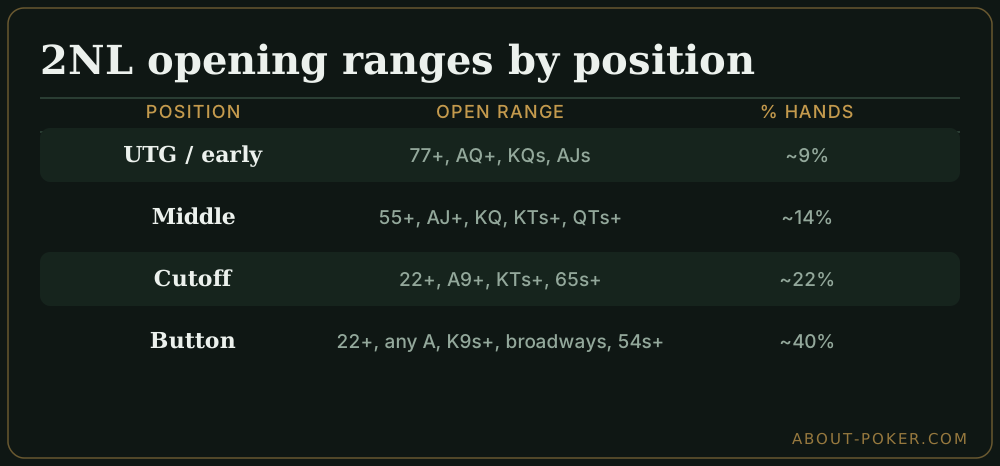
Enter pots with a raise, not a limp, and use a range that flops well. Open to about 3bb and add 1bb per limper already in. Tighten early, widen on the button:
| Position | Open range (approx.) | % of hands |
|---|---|---|
| UTG / early | 77+, AQ+, KQs, AJs | ~9% |
| Middle | 55+, AJ+, KQ, KTs+, QTs+ | ~14% |
| Cutoff | 22+, A9+, KTs+, suited connectors 65s+ | ~22% |
| Button | 22+, any A, K9s+, most broadways, 54s+ | ~40% |
Against limpers, raise (isolate) rather than limp behind. A single limper folding to a 4–5bb raise hands you the pot, and if they call you’re heads-up in position with the better range.
Value bet relentlessly
Because the field calls with worse, you should bet thin and bet big. A hand like top pair with a decent kicker is often good for three streets of value at 2NL. Use larger sizings — two-thirds to full pot — because big bets don’t scare a station, they just build the pot you’re going to win. This is the opposite of the balanced, small-sizing world of tougher games; at 2NL, thin value betting is where the money lives.
A worked hand
You open KhQh from the cutoff to 3bb. The big blind, a loose caller, comes along. Pot is roughly 6.5bb.
- Flop: Qs 8d 4c. You have top pair, good kicker. You bet 4bb (about two-thirds pot). Villain calls.
- Turn: 2h. Still top pair. You bet 9bb. Villain calls again — at 2NL this often means a worse queen, a pair like 88 that’s actually a set (rare) or middle pair refusing to fold, or a random draw.
- River: 7s. The board missed every draw. You bet 18bb for value. A station calls with Q9, Q7, 99, or a stubborn 8x.
You made three value bets with one pair and got paid. That is the 2NL blueprint. Notice you never had to bluff — you just kept betting a hand that was ahead of the range that calls you.
Respect the rake
At 2NL the rake is a brutal share of small pots. Winning tiny limped pots barely beats the rake, so avoid rake-heavy limp-fests and aim to play fewer, larger, higher-quality pots. Playing in position and isolating limpers naturally steers you toward bigger pots where your edge — and your value bets — outrun the rake. Multi-tabling too many tables early just multiplies your rake exposure and your mistakes.
Common 2NL leaks
- Limping behind instead of raising — surrenders initiative and invites multiway pots.
- Bluffing stations — burning chips trying to fold out players who never fold.
- Playing too many offsuit hands out of position, like KJo and A9o under the gun.
- Slowplaying big hands — against callers you should bet, not trap; they’ll pay a bet.
- Chasing draws without odds — at 2NL you get paid when you hit, but only if the price to draw was correct.
Your 2NL checklist
- Open-raise, never open-limp. Isolate limpers.
- Play tight from early position, loosen on the button.
- Value bet top pair and better for three streets versus stations.
- Size up — two-thirds to full pot — for value.
- Bluff almost never.
- Keep your table count low enough to make clean decisions.
2NL is a classroom with a tiny tuition. Master value betting and rake-awareness here and you’ll carry a real edge up to 5NL and beyond.
Frequently asked
What is a good winrate at 2NL?
A solid winning regular at 2NL earns roughly 5–10bb/100, which is only a few dollars per hundred hands at $0.01/$0.02 blinds. The dollar amounts are tiny, so 2NL is best treated as a training level to build fundamentals rather than a place to make money.
How many buy-ins do I need for 2NL?
Thirty buy-ins ($60) is plenty at 2NL because a full buy-in is only $2. Since the risk of going broke is negligible in dollar terms, most players use 2NL to practice bankroll discipline before it actually matters at higher stakes.
Should I bluff at 2NL?
Rarely. The 2NL field calls far too much, so bluffs get paid off and value bets get paid off. Your profit comes almost entirely from betting your strong hands bigger and giving up on your air rather than firing multiple barrels.