How to Play Against a LAG
A LAG applies constant, balanced pressure. Learn to widen your calling ranges, pick spots to 3-bet back, use position, and stop folding your way to the felt.
On this page · 7 sections
A LAG — loose-aggressive — is the thinking player who plays a wide range of hands and applies relentless, deliberate pressure. Unlike a maniac, a LAG’s aggression is controlled and balanced: they bluff at the right frequencies, value bet thinly, and can fold when they need to. This makes them the toughest common opponent in cash games. You cannot simply trap them, and you cannot fold your way to profit either. Beating a LAG means fighting back selectively — widening your ranges, picking your spots, and leaning on position.
Understand the threat
A LAG wins by putting you in tough, marginal spots over and over. If you tighten up and fold to every barrel, they will chip away at you relentlessly, taking pot after pot. The mistake most players make is playing “fit or fold” against a LAG, which lets them run wild. Because their range is wide, your medium-strength hands are often good, and passing on them repeatedly bleeds your stack. The nuanced adjustments here overlap heavily with adjusting to aggressive regs.
Widen your calling ranges
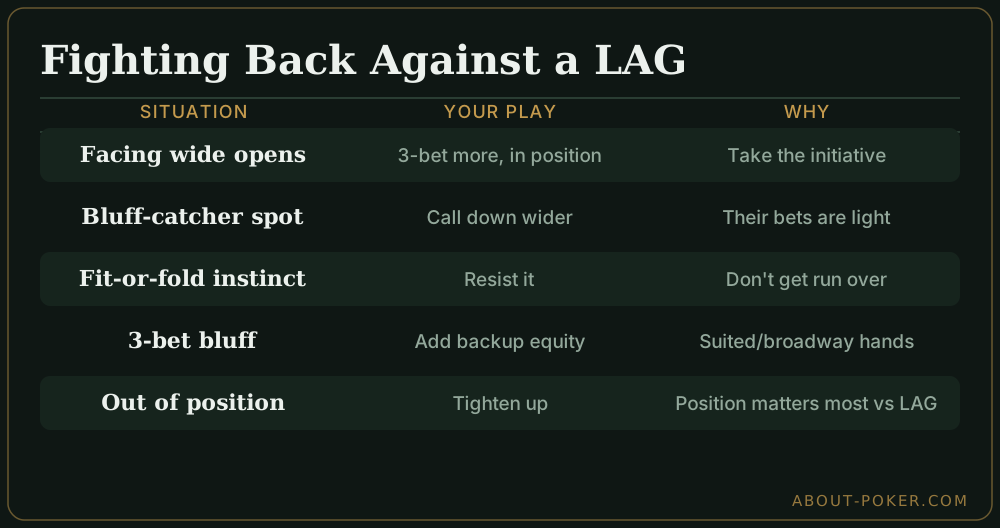
Against a LAG’s wide betting range, you must defend wider. Hands like second pair, weak top pair, and strong draws that you might fold to a tight player become clear calls or even raises against a LAG. The key is that their aggression is not backed by strength every time, so your bluff-catchers hold real equity. Call down one or two streets with hands that beat their bluffs, and do not be bullied off marginal made hands when the board favors your range.
Re-raise to seize initiative
Passively calling a LAG all night lets them keep the betting lead, which is where their edge lives. The antidote is to 3-bet and check-raise more often, taking initiative back. A LAG opens a wide range, so 3-betting for value and as a bluff is highly profitable — especially in position, where you can apply pressure on later streets. The mechanics of building a proper 3-betting range are covered in 3-betting in cash games. Do not let them be the only one applying pressure.
Position is everything
More than against any other player type, position matters against a LAG. When you act after them, you see their aggression before committing, you can float flops and take pots away on later streets, and you control the size of every pot. Try to play your big pots against a LAG when you are on their left. Out of position against a skilled LAG, tighten up; in position, open up and attack.
A worked example
The LAG opens to 3 big blinds from the cutoff with a range around 35% of hands. You are on the button with A-10 suited. Rather than flat-call and let them barrel you off later, you 3-bet to 10 big blinds. They call. Flop is K-7-2 with one of your suit. They check, you c-bet 6 into 21; they call. Turn is a 4, bringing your flush draw. They check again. You bet 16 into 33. Now you are representing a strong range that fits your 3-bet, you have a flush draw and two overcards for backup, and you are in position — a genuinely tough spot for the LAG to continue without a real hand. Position plus initiative turns a marginal holding into an aggressive, profitable line.
Common mistakes
The first mistake is folding too much and letting the LAG run you over — respect that their bets are often light. The second is calling too passively and never fighting back, which cedes them the initiative permanently. The third is spewing chips by 3-bet bluffing out of position with no plan; pick your aggression carefully. A fourth is treating a LAG like a maniac and trying to trap — a LAG can fold, so slowplaying often just costs you value. Study how they differ from a solid, tighter aggressor in how to play against a TAG.
Checklist
- Defend and call down wider — their bets are frequently light.
- 3-bet and check-raise more to seize the initiative.
- Prioritize playing pots in position on the LAG.
- Do not fold “fit or fold”; do not call purely passively either.
- Pick 3-bet bluff spots with hands that have backup equity.
- Tighten up out of position; open up in position.
A LAG is beatable but demands your best. Match their aggression with disciplined, well-timed counter-aggression, lean on position, and refuse to be run over.
Frequently asked
How do you beat a LAG in poker?
Widen your calling and 3-betting ranges so you are not run over, and use position to control pots. A LAG pressures you with a wide range, so you cannot fold your way to profit — you must fight back selectively by calling down lighter and re-raising in the right spots, ideally when you have position on them.
What is the difference between a LAG and a maniac?
A LAG is loose-aggressive but disciplined and balanced — their aggression is deliberate and comes with a plan. A maniac is reckless and bets with anything regardless of the situation. The LAG is far tougher because their bluffs are chosen carefully and they can fold, whereas a maniac is pure aggression you can simply trap.
Should you 3-bet a LAG?
Yes, more than you would against a tight player. A LAG opens a wide range, so 3-betting for value and as a bluff is profitable, especially in position. Re-raising takes the initiative away from them and forces them to play out of position with a weak range.