How to Play Against a Short Stacker
Short stackers wait to shove all in preflop. Learn to tighten your calling ranges, avoid dominated hands, isolate them, and stop paying off their tight jams.
On this page · 7 sections
A short stacker is the player who buys in for the table minimum — often 20 to 40 big blinds — and plays a deliberately simplified game built around getting all in preflop or on the flop. By keeping the stack shallow, they remove the tricky postflop decisions where most edges are won, and they profit from opponents who commit too loosely against their jams. Beating a short stacker is not about outplaying them after the flop; it is about winning the preflop math by tightening the hands you commit and refusing to enter coin flips or dominated spots.
Why short stacking works for them
A short stacker’s edge comes from reducing variance in decisions and from opponents who misjudge their tight shoving range. When you have 100 big blinds and they have 25, calling their all-in with a marginal hand risks a lot to win a little, and their range is stronger than a full stack’s would be. The right response is to respect the jam and only get involved when you clearly beat it. If you want to understand their side of the table, playing short stacked cash lays out the strategy from their point of view.
Tighten what you commit
The single biggest adjustment is to tighten your calling and 4-betting ranges against a short stacker. A player jamming 25 big blinds usually has a hand that wants to get it in — big pairs, strong aces, and premium broadways. Against that range, you want hands that dominate or crush, not hands that merely flip. Fold the marginal stuff, and reserve your stack-off for holdings that are genuine favorites. This is the opposite of loosening up against a wide, aggressive full stack.
Avoid domination
The classic trap is the dominated ace. If you call a short stacker’s shove with A-8 offsuit and they turn over A-K or A-Q, you are drawing nearly dead. The same goes for weak kings and second-tier broadways. Because a short stacker’s jamming range is ace-heavy and pair-heavy, your weak aces and marginal broadways are frequently reverse-dominated. Prefer pairs and truly strong aces when you do commit, and let the trouble hands go.
Isolate with position and initiative
When a short stacker limps or opens small, use a big isolation raise to get them heads-up and take initiative. A 3-bet or a large iso-raise with a premium hand punishes their limps and often commits them light or wins the pot outright. The mechanics of building these re-raising ranges appear in 3-betting in cash games. Playing them heads-up with the better hand and position is exactly where you want to be.
A worked example
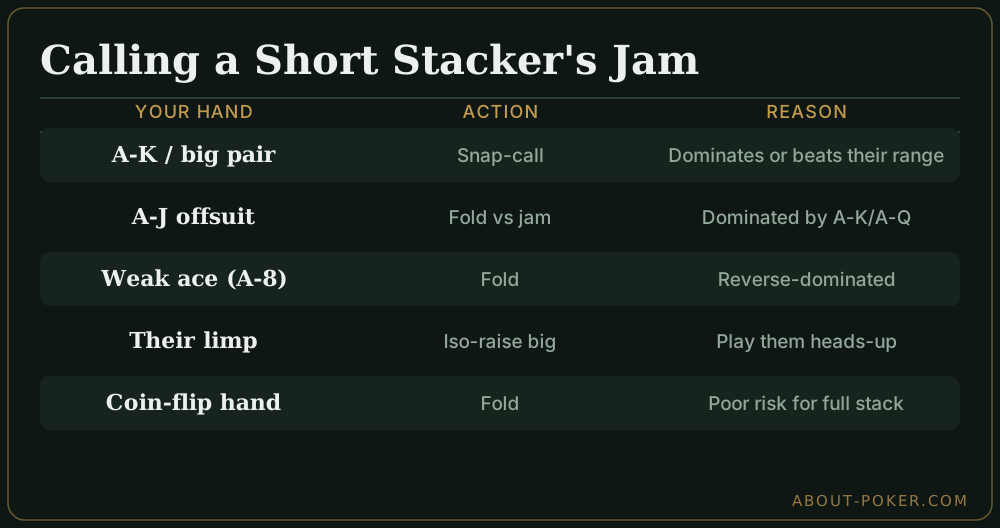
You open A-J offsuit from the cutoff. A short stacker with 22 big blinds on the button shoves all in. Against a full stack you might feel A-J is strong, but a short stacker’s re-jam range here is loaded with A-K, A-Q, and pairs like tens through aces. Against that specific range, A-J is a clear fold — it is dominated by the aces and behind the pairs, giving you poor equity for a large chunk of your stack. By contrast, if you held A-K or a big pair, you would snap-call, because now you dominate or beat most of their jams. The whole game against short stackers is calling with the top of your range, not the middle.
Common mistakes
The first mistake is calling all-ins too loosely, treating a short stacker’s tight jam like a wide one. The second is committing with dominated hands, especially weak aces. The third is failing to isolate — letting a short stacker limp cheaply into multiway pots wastes the chance to play them heads-up with an edge. A fourth is chasing them, playing every pot out of annoyance; wait for the spots where your range dominates. If short stackers are hurting your table, consider whether the seat or table is worth staying in — see table selection and seat selection.
Checklist
- Tighten your calling and 4-betting ranges against their jams.
- Commit with hands that dominate their range, not coin flips.
- Fold weak aces and marginal broadways to their all-ins.
- Isolate limps and opens with a big raise to play heads-up.
- Do not play every pot against them out of frustration.
- Save your stack-offs for premium pairs and strong aces.
A short stacker profits from loose callers and dies against disciplined ones. Respect their tight jams, avoid domination, and only get it in when the math is clearly on your side.
Frequently asked
How do you play against a short stacker?
Tighten the hands you commit against their all-in, because a short stacker's shoving range is usually strong. Call or 4-bet with hands that dominate their range rather than coin-flip hands, isolate them heads-up when you have a premium, and avoid getting into big pots with dominated holdings like weak aces.
What is a short stacker in poker?
A short stacker is a player who buys in for the minimum, often 20 to 40 big blinds, and plays a simplified strategy of shoving all in preflop or on the flop with strong hands. Their short stack removes postflop decisions, making them predictable but frustrating to face.
Should you call a short stack's all in with a weak ace?
Usually not. Weak aces like A-5 or A-8 are often dominated by the ace-strong, big-pair-heavy range a short stacker jams, so calling puts you in a reverse-dominated spot. Call their shoves with hands that beat their range, not hands that merely have some equity.