AK vs 22: Preflop Odds & Equity
Ace-king vs pocket deuces is the classic poker coin flip — 22 is a slim ~53/47 favorite. Here are the exact preflop equities and why it is nearly even.
On this page · 7 sections
You shove A♠ K♥, villain calls with 2♣ 2♦, and the table calls it a coin flip. They are almost right. Pocket deuces are a slim favorite, about 53/47, and the outcome comes down to whether ace-king can pair up. This is the textbook race: a small made pair against two overcards, nearly even money.
The headline equity
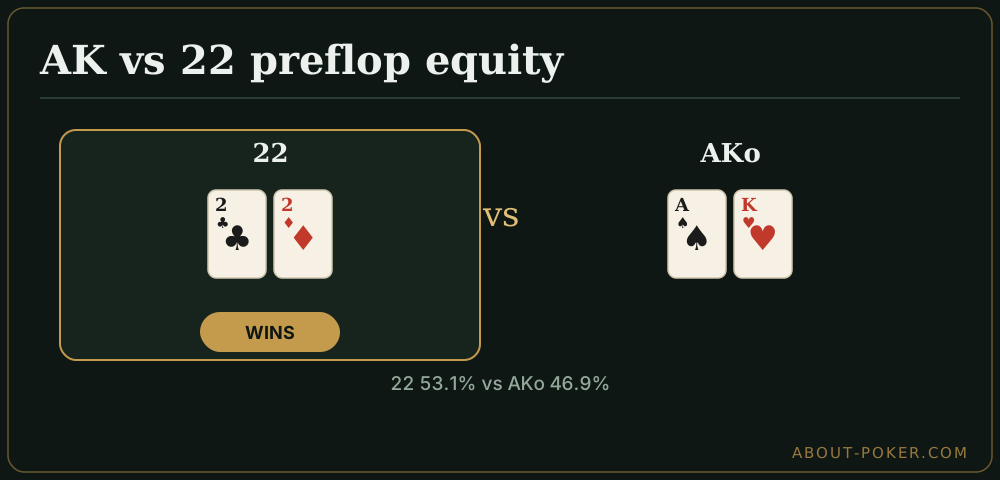
Every figure below comes from a full board run cross-checked against a Monte Carlo simulation:
| Matchup | 22 equity | AK equity |
|---|---|---|
| 22 vs AKo (offsuit) | 53.1% | 46.9% |
| 22 vs AKs (suited) | ~50% | ~50% |
Offsuit, the deuces are a small favorite. Suited ace-king picks up flush outs and pulls the matchup to almost exactly 50/50. Either way, nobody has a real edge.
Why a pair of deuces holds up
The deuces are already a made hand. To lose, they need ace-king to improve — and to win, they just need the board to miss the big cards. That built-in head start is why the smallest pair in the deck is a favorite over two premium cards.
Count what ace-king is chasing:
- Pair an ace: three aces remain.
- Pair a king: three kings remain.
- Together that’s six outs to a bigger pair, plus straights and flushes.
Six live cards over five board cards works out to ace-king pairing roughly 48-50% of the time, and that pairing is where nearly all of its equity lives. When the board bricks — no ace, no king, no straight or flush — the deuces win with a pair of twos.
A worked example
Use the rule of 4 and 2 to feel the race. On the flop, ace-king has six outs to pair. Multiply by four (two cards to come) and you get roughly 24% to hit on that specific draw — but that undercounts, because ace-king was already 47% before the flop and picks up backdoor straights and flushes too.
Watch it swing on a real flop. Board comes A♦ 9♠ 4♥: ace-king pairs top pair and rockets to about 91% — the deuces are down to their two remaining twos, about 8%. But board comes Q♠ 7♥ 3♦ and misses ace-king entirely: now the deuces are around 90% and ace-king needs to catch one of six cards on the turn or river. That flip from 47% to 91% or down to 10% on a single flop is the entire character of the race.
Suited matters here
The gap between AKo and AKs is all flushes. Suited ace-king can complete a flush that offsuit never can, and those extra run-outs add a couple of points — enough to pull the matchup from 53/47 against the deuces to essentially even. It is the same flush premium that shows up in every offsuit-vs-suited comparison across the equity tables.
How the flop reshapes the race
The near-even preflop number hides how violently the equity moves once three cards land. There are only three shapes the flop can take, and each one nearly ends the hand:
- Ace or king flops (no help for 22): happens about 41% of the time. Ace-king pairs top pair and jumps to roughly 87–91%. The deuces are cut to their two remaining twos.
- The board bricks (no ace, no king): ace-king is now drawing to six clean cards over two streets — about 24% by the rule of 4 and 2 — and the deuces sit around 76–90% depending on straight and flush texture.
- A deuce flops (set for 22): rare, about 12% for the pair to improve to a set, and now the deuces are 95%-plus and essentially uncatchable.
Because the flop resolves so much, “53/47” is really a preflop average of wildly different post-flop worlds. That is the practical meaning of a race: you are not grinding a small edge street by street, you are flipping a nearly fair coin that lands almost entirely on the flop.
Why the pair changes with more players
Heads-up, 22 is a slim favorite. Add opponents and the picture flips fast. Against two hands with overcards, the deuces stop being a favorite, because now two players are drawing to pair up and the chance that at least one board card beats you climbs sharply. A small pair is a heads-up hand — its edge is the “you must improve, I already made it” head start, and that head start evaporates when several players each get their own shot at connecting. This is why jamming 22 into a multiway all-in is far worse than the clean 53/47 headline suggests, and why set-mining (win a big pot the ~12% you flop a set, fold cheaply otherwise) is often the better plan multiway than racing.
From equity to a decision
A race is where fold equity and pot odds decide everything, because your raw equity is only ~50%.
| Situation | Read | Line |
|---|---|---|
| You shove AK, get called by a small pair | ~47% | Coin flip, fine if fold equity was there |
| You call off with 22 vs a shove | ~53% | Slight favorite, but tournament life matters |
| Deep stacks, 22 wants to set-mine | — | Prefer implied odds over racing |
Lock in the anchor — 22 is a ~53/47 favorite over AKo, ~50/50 vs AKs — and every race decision becomes about the surrounding math: your fold equity when shoving, and your pot odds when calling. Since the flip itself is nearly even, the money is made before the cards are dealt. Turn that into an actual line with preflop all-in odds, sharpen your reads with equity, and work through the poker odds & math hub.
Frequently asked
What are the odds of AK vs 22 preflop?
Pocket deuces win about 53% of the time against offsuit ace-king, with ace-king around 47%. It is a near coin flip. Suited ace-king closes the gap to almost exactly 50/50.
Why is a tiny pair like 22 a favorite over AK?
A made pair only has to hold up, while ace-king has to improve to win most of the time. Ace-king wins about 47% by pairing an ace or a king, but the deuces are already ahead when the board bricks.
How often does AK pair up by the river?
About 48-50% of the time ace-king pairs at least one of its cards by the river, which is roughly where its equity comes from. Six cards help it — three aces and three kings — plus rare straights and flushes.
Is AK vs 22 really a coin flip?
Close to it. The pair is a slight favorite at about 53/47 offsuit and nearly dead even suited. In practice players call it a race because neither side has a meaningful edge.