Bet Sizing Tells Explained for Beginners
A bet sizing tell is information leaked by how much a player bets. Learn the common patterns, why they happen, and a worked river example beginners can use.
On this page · 4 sections
A bet sizing tell is a piece of information you pick up from how much a player bets, not simply from the fact that they bet. Most beginners watch for whether a bet happens. The more useful skill is noticing that the size itself often leaks how strong a player believes their hand is.
This works because many players, especially at lower stakes, size their bets emotionally. A hand they love gets a big bet; a hand they are unsure about gets a timid bet. Once you learn to read those patterns, you gain a free window into the strength of the range across the table.
Why bet sizing leaks information
A perfectly balanced player would use the same size with strong hands and bluffs, so the amount would tell you nothing. Real opponents rarely do this. Instead, they pick a size based on what they want to happen, and that goal is tied to their hand.
Someone with a monster wants to get paid, so they often bet big or overbet, hoping you call. Someone with a medium hand wants a cheap showdown or a little thin value, so they bet small to avoid a raise. Someone bluffing may either shove hard to scare you off or dribble out a nervous half-hearted bet. Each of these choices maps to a hand class, and that mapping is the tell.
The key idea is that sizing is a decision, and unbalanced decisions are readable. This is the same logic behind the bluff-to-value ratio: a player who bets big only with value and small only with weak hands has split their range in a way you can exploit.
Common bet sizing patterns
These are the patterns you will see most often from straightforward opponents. None is a law, but each is a strong starting read against players who have not learned to balance.
- Small bet (about a quarter to a third of the pot): usually a medium-strength made hand or a thin value bet. The player wants to see a showdown cheaply and fears a raise.
- Standard bet (about half to two-thirds pot): the widest and least readable size, used for routine value and continuation bets alike.
- Big bet or overbet (pot or more): from a straightforward player, often a genuinely strong hand looking to get paid. From a tricky player, this can be a polarized bet that is either a monster or a bluff.
- The nervous min-bet on the river: frequently a hand that gave up on value or a weak blocking bet, hoping to end the hand cheaply.
Notice that the small-bet read is the most reliable at low stakes. Beginners almost never make tiny bets as bluffs, so a small river bet usually means “I have something, but not much.”
A worked river example
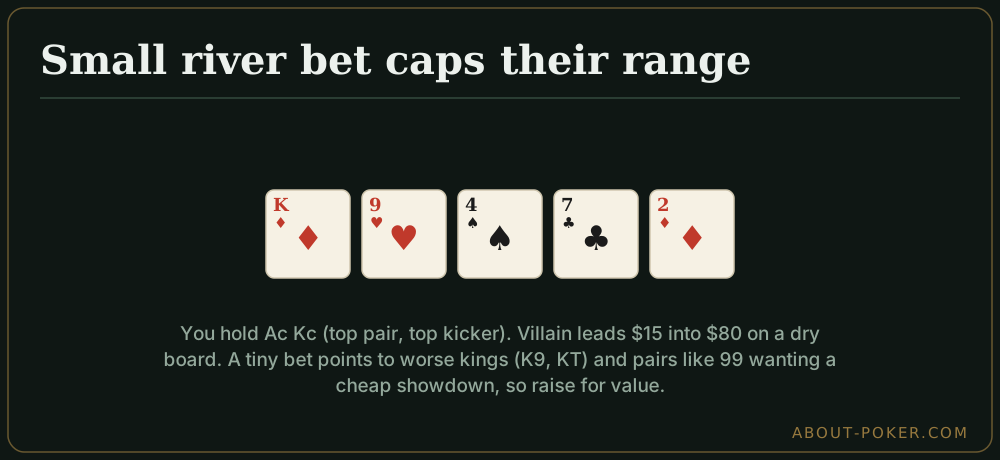
You hold Ac Kc on a final board of Kd 9h 4s 7c 2d. You have top pair, top kicker, and the pot is $80. Your opponent, a straightforward recreational player, leads out for just $15 — under a quarter of the pot.
Run the sizing tell through your reasoning. A strong hand like two pair, a set, or a straight wants your money and would bet larger to build the pot. This tiny bet points instead toward a worse king with a weak kicker (K9, KT), a medium pair like 99 that improved, or a pair of nines wanting a cheap showdown. In other words, the small size caps their range below your AK.
Because their range is mostly hands you beat, this is a spot to raise for value rather than just call. A raise to around $50 targets exactly those second-best kings and pairs that felt strong enough to bet small but are not strong enough to fold. You are turning their sizing tell into extra profit, which is the whole point of value betting against readable opponents.
If instead the same player had shoved a pot-sized bet, the read flips. A straightforward player rarely overbets top pair on this dry board, so their big size would suddenly threaten two pair or a set, and cautious calling or folding becomes correct.
Turning tells into decisions
Bet sizing tells are most valuable when you combine them with the price you are being offered. A small bet not only signals a medium hand, it also gives you great pot odds to continue with your own draws and marginal hands. The size tells you about their strength and about your call at the same time.
Two habits will sharpen your reads fast. First, note each opponent’s sizes over several hands and watch which sizes go to showdown with which hands. Second, guard your own sizing by using consistent amounts, so you do not hand the same free information to the table. The best defense against a bet sizing tell is simply not having one yourself.
Frequently asked
What is a bet sizing tell in poker?
A bet sizing tell is information you gather from how much a player chooses to bet rather than whether they bet at all. Because many amateur players size their bets according to how strong they feel, the amount often leaks the strength of their hand.
Does a big bet always mean a strong hand?
No. A big bet frequently means strength from a straightforward player, but skilled players deliberately use large sizes as bluffs to apply pressure. Treat sizing as one clue among many, not a rule, and weigh it against the player's overall tendencies.
Why do small bets often mean medium hands?
Players who bet small usually want a cheap showdown or a small amount of value without building a big pot. That size is common with marginal made hands and thin value bets, so a tiny bet on a later street often signals a hand that is good but not great.
How do good players hide their bet sizing tells?
Strong players use the same sizes with both strong hands and bluffs, so the amount reveals nothing about their holding. This balanced approach removes the sizing tell entirely and forces opponents to guess.