Odds of Both Blinds Folding
When you steal from the button, both blinds fold often enough that many raises print. The fold-equity math behind blind steals and the break-even threshold.
On this page · 7 sections
“Odds of both blinds folding” isn’t a fixed card probability like flopping a set — it depends entirely on who’s in the blinds. But there is real math underneath the blind steal, and understanding it tells you exactly how wide you can profitably open from late position.
Why there’s no single number
Card odds are fixed by the deck. Human folding is not. Two nitty recreational players in the blinds might fold to a button open 75% of the time; two aggressive regulars might defend so hard that both fold less than 40% of the time. So the honest answer is a range: against typical opposition, both blinds fold roughly 55% to 70% of the time to a standard button raise.
That variability is the whole game. Your job isn’t to memorize a number — it’s to estimate each table’s fold tendency and adjust your stealing range accordingly.
The break-even math
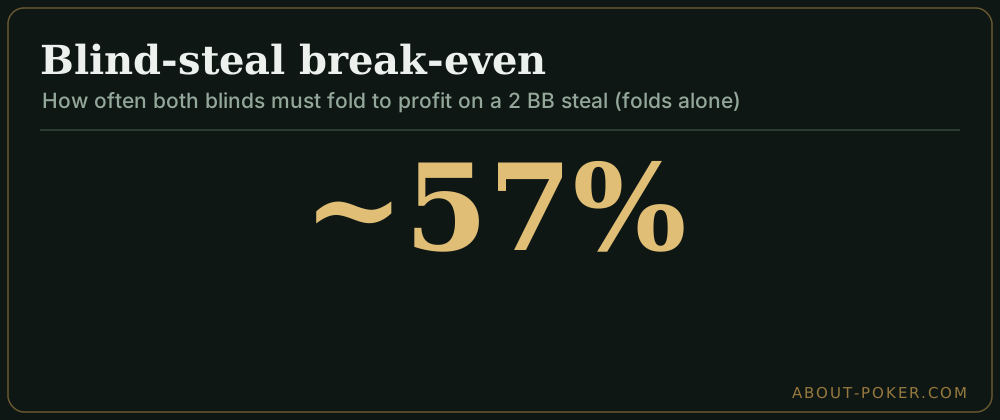
A steal is a bet with fold equity. Say you min-raise to 2 big blinds trying to pick up the 1.5 BB in the pot (the small blind’s 0.5 and the big blind’s 1). You risk 2 to win 1.5 immediately.
Your break-even fold frequency is risk ÷ (risk + reward) = 2 ÷ (2 + 1.5) = about 57% for the raise to profit on folds alone. But that ignores the times you get called and still win with equity or postflop skill. Factor those in and the true threshold drops to roughly 40% to 45% for a wide, well-played stealing range.
Since typical blind fold rates comfortably clear that bar, blind-stealing is one of the most reliable profit sources in the game.
A worked example
You’re on the button with a 2 BB open. The pot before you act holds 1.5 BB. Suppose the blinds fold both hands 60% of the time.
- 60% of the time both fold: you win 1.5 BB with no further risk.
- 40% of the time you get called or raised and play a pot in position.
Even before counting the profitable pots you play postflop, that 60% > 57% break-even means the raise makes money on folds alone. Everything you win when called is bonus. This is a positive expected value play with a hand as weak as K‑7 offsuit, purely because of position and fold equity.
How the blinds should fight back
The flip side is minimum defense frequency. To stop you from auto-profiting, the blinds combined must defend often enough that you can’t just print with any two cards. Against a 2 BB open, the blinds should collectively continue with a fairly wide range — calling and 3-betting — so that both folding stays under your break-even threshold.
If the blinds under-defend, you exploit them by opening wider still. If they over-defend, especially by 3-betting light, you tighten up and let them make the mistake of playing too many hands out of position.
Reading each blind separately
“Both blinds folding” is really two independent decisions that you should read one at a time. The small blind acts first, out of position, and closes to a much worse price, so it folds more often — frequently 65% or more against a button open. The big blind gets a discount (it already has 1 BB invested) and often closes the action, so it defends far more, sometimes folding only 40% to 55%.
Multiply the two folds together to estimate both folding. If the small blind folds 70% and the big blind folds 55%, both fold about 0.70 × 0.55 ≈ 38% of the time — below the naive break-even, which tells you the big blind’s defense is what really governs your steal profit. When you scan the table before opening, the big blind’s tendencies matter most; a nitty small blind and a sticky big blind still leaves you with modest fold equity.
Common mistakes
The biggest leak is stealing on autopilot regardless of who’s behind you. If both blinds are stations who never fold, your fold equity is near zero and you should raise a value-heavy range, not junk. Adjust to the players, not to a fixed chart.
The second mistake is oversizing the steal. Raising to 3 BB or more to steal 1.5 BB means you need the blinds to fold far more often to break even. A smaller open, 2 to 2.5 BB, keeps your break-even fold frequency low and your steal profitable against more opponents.
Quick checklist
- There’s no fixed number: typical both-blinds-fold rates run 55% to 70%.
- A 2 BB steal breaks even around 57% folds on immediate profit alone.
- Counting postflop equity, the real threshold drops to roughly 40% to 45%.
- Steal wider against tight blinds; tighten against sticky or aggressive ones.
- Keep steal sizing small (2 to 2.5 BB) to lower your break-even fold frequency.
Frequently asked
How often do both blinds fold to a button raise?
It varies with the players, but against typical opponents both blinds fold to a standard button open somewhere in the 55% to 70% range. Tight tables fold more; loose or aggressive blinds fold much less. There's no universal number because it's entirely opponent-dependent.
How often do both blinds need to fold for a steal to be profitable?
For a min-raise style steal, both blinds only need to fold roughly 40% to 45% of the time to break even on the steal alone, before you factor in your equity when called. Since typical fold rates exceed that, blind-stealing with a wide range is usually profitable.
Should I steal every button?
Not literally every hand, but a very wide range — often 40% to 50% of hands from the button. The exact width depends on how much the blinds defend. Against blinds who fold too often, you can raise almost anything; against sticky blinds, tighten up and rely more on your postflop edge.