Odds of Flopping a Flush
You flop a flush just 0.84% of the time (1 in 119) holding two suited cards. Here is the exact count, how flush draws compare, and what it means for play.
On this page · 7 sections
Hold two suited cards and you will flop a made flush about 0.84% of the time — roughly 1 in 119. That is far rarer than most players guess. The value of a suited hand comes almost entirely from the flush draws you make, not the flushes you flop outright. Below is exactly where the number comes from and how to use it.
The exact count
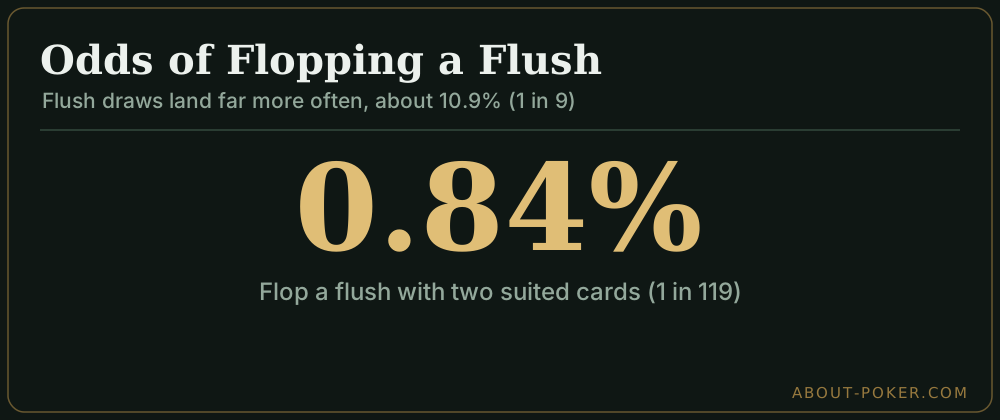
Suppose you hold two hearts. After the deal, 50 cards are unseen, and 11 of them are hearts. To flop a flush, all three flop cards must be hearts:
P(flush) = C(11,3) ÷ C(50,3) = 165 ÷ 19,600 = 0.842%
That is 1 in 119. There is no shortcut here — you simply need three specific suit cards to arrive at once out of a shrinking deck, and the odds against that are steep. Compare it to flopping a set with a pocket pair (11.8%) and you can see the flush is more than ten times rarer.
Flush draws are the real prize
The flopped flush is a novelty; the flopped flush draw is the workhorse. Two of your suit landing on the flop leaves you four to a flush and nine outs to complete:
P(flush draw) = C(11,2) × 39 ÷ C(50,3) = 55 × 39 ÷ 19,600 = 10.9%
So you flop a four-flush about 1 in 9 — roughly thirteen times more often than the made flush. That draw is worth roughly 35% equity against a made hand, and if you improve, you usually win a big pot. This is why suited cards matter: not for the 0.84%, but for the 10.9% that fuels flush draw odds on later streets.
A worked example
You raise with A♠ 7♠ and the flop comes K♠ 9♠ 2♠. You have flopped the nut flush — a genuine 1-in-119 event. The value of the hand now is enormous, but the correct play is often not to blast it, because your opponent rarely has enough to pay you off on such a scary, monotone board. Contrast this with A♠ 7♠ on K♠ 9♠ 2♥: now you have the nut flush draw, a far more common outcome, and you can barrel aggressively because your equity plus fold equity is high and the board is not obviously wet to your opponent.
How the flush odds shift by street
The 0.84% figure is a flop-only number. Your chances of eventually making a flush from two suited cards by the river are much higher — roughly 6.5% — because you get two more cards to improve after the flop. The rule of 4 and 2 captures the after-flop portion: with nine outs and two cards to come, you are around 35% to complete; with one card to come, about 19%. When you compare a flush chase to a straight chase, see straight vs flush odds — the flush is stronger because it usually holds up at showdown and is harder for opponents to read from the board.
Common mistakes
The biggest error is overvaluing suited cards preflop. A hand like J♠ 4♠ is only about 2–3% better than its offsuit twin, because the made flush is so rare and you often make a losing flush or get outkicked. Suitedness is a tiebreaker, not a reason to enter pots. The second mistake is drawing to non-nut flushes: when you hold the eight-high flush draw and the ace of your suit is out there, completing your flush can cost you a stack. Track your outs carefully — see poker outs — and discount them when you are not drawing to the nuts.
How opponents read a flush board
One underrated cost of the flopped flush is that a monotone board is loud. When three cards of one suit hit, every observant opponent knows a flush is possible, so they check back weak hands and rarely pay off a big bet. This is why a flopped nut flush often wins a small pot: the very board that made your hand also warns everyone else. The flush draw is quieter — a two-tone flop does not scream danger — so you can often extract more value while drawing than you can once the flush is complete. Factor this into your sizing: bet a made flush to get called by second-best flushes and strong pairs, not to blow everyone off the pot.
Quick checklist
- Flopping a made flush with two suited cards: 0.84%, or 1 in 119 — rare.
- Flopping a flush draw with two suited cards: 10.9%, or about 1 in 9.
- A flopped flush draw is worth roughly 35% equity by the river.
- Value suited hands modestly preflop; the draw, not the made flush, is where the money is.
- Discount non-nut flush draws — a made flush that loses is the costliest kind.
Frequently asked
What are the odds of flopping a flush with two suited cards?
About 0.84%, or roughly 1 in 119. You need all three flop cards to match your suit, and with 11 of your suit among the 50 unseen cards, that happens only 0.84% of the time. It is one of the rarest common flops in hold'em.
How often do you flop a flush draw instead?
About 10.9%, or roughly 1 in 9. Two more of your suit landing on the flop leaves you with four to the flush and a draw worth 9 outs. That is far more common and far more relevant to everyday play than the made flush.
Is it worth calling preflop just to flop a flush?
No. At 1 in 119 the made flush alone can never justify a call. Suited hands earn their small equity boost from flush draws and the occasional backdoor, not from flopping the flush outright, so value suitedness modestly.