Barrel vs Pot Control
Barrel or pot control? Learn how hand strength, board texture, and stack depth decide whether to keep building the pot or check to keep it small and cheap.
On this page · 6 sections
Two of your strongest postflop tools point in opposite directions. Barreling grows the pot with bets; pot control shrinks the decision by checking. Knowing which to reach for on the turn is a defining skill, because the same hand can be a barrel in one spot and a pot-control check in another. The choice comes down to how your hand does against the range that will keep putting money in.
What each line is really for
Barreling is for the extremes of your range: strong value hands that want three streets of money, and bluffs that fold out better hands. Both benefit from a bigger pot. Pot control is for the middle: hands good enough to win at showdown against bluffs but not good enough to want a huge pot, because a huge pot means facing value from hands that beat you.
The trap is treating every decent hand as a value bet. A hand like top pair with a weak kicker beats a lot of your opponent’s range, but if you barrel three streets you mostly get called by better and fold out worse. That is the textbook case for checking a street to keep the pot manageable, a concept we cover fully in pot control in poker.
A worked example with top pair
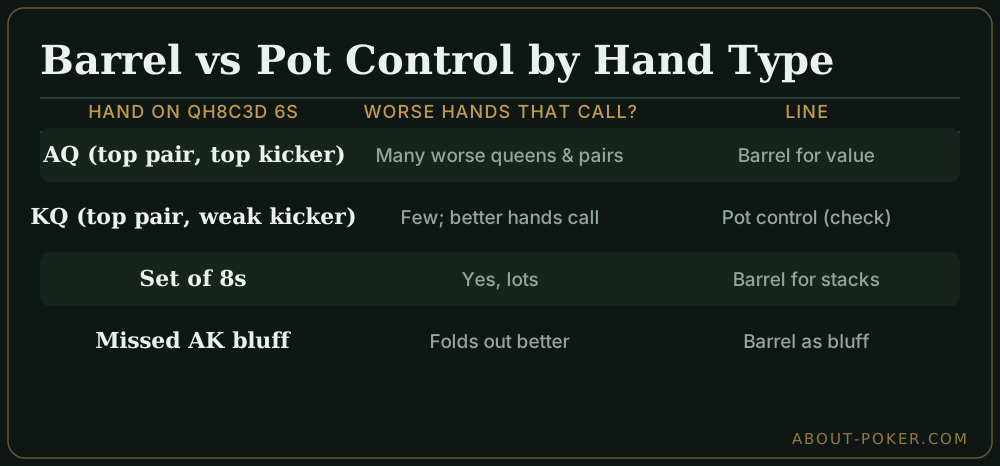
You open KdQs from the cutoff, the big blind calls, and the flop is Qh 8c 3d. You c-bet, villain calls. The turn is the 6s. You now have top pair, decent kicker, on a fairly dry board.
Should you barrel or control? Consider what a second big bet accomplishes. Worse queens (QJ, QT) may already fold to your flop bet or call one more; better hands (AQ, sets, two pair) will keep calling or raise. If you fire the turn and the river, you build a pot where you often get called only when beaten. Checking the turn back keeps the pot around one to two big bets, lets you call a reasonable river, and denies your opponent the chance to check-raise you off the best hand. That is pot control done right.
Change one detail and the answer flips. If your kicker were the nut kicker (AQ) on the same board, you have a clear value hand that wants to barrel, because now more worse queens and pairs pay you off and few hands beat you. Same category of hand, opposite decision, driven by how far ahead of the calling range you are.
Board texture and range advantage
Barreling is stronger when the board favors your range. As the preflop raiser you often hold the range advantage on high, dry boards, so betting again applies pressure your opponent can’t easily fight back against. On boards that connect with the caller’s range, pot control climbs in value because your medium hands are more likely to be behind and your opponent is more likely to have a raise.
Wet, draw-heavy boards complicate the picture. There, checking back a marginal made hand can be dangerous because you give free cards to draws. Sometimes the right pot-control move on a wet board is a smaller bet rather than a check, sizing down to charge draws while keeping the pot from exploding. Our guide to turn bet sizing breaks down how size interacts with these goals.
Stack depth and the raise you fear
Deep stacks make pot control more attractive because there is more money behind to lose if you commit a medium hand. Short stacks push the other way: with a low stack-to-pot ratio, checking back is less protective because even a small bet gets you close to committed, so you may as well barrel your value and fold your air.
The core fear pot control addresses is the big bet or raise you can’t profitably call. When you check the turn, you take that decision off the table for a street. If the river is safe, you can value bet then; if it’s ugly, you saved a big bet. This is why medium hands love position: checking behind guarantees a cheaper showdown.
Common mistakes
The biggest leak is barreling medium hands for “protection” when protection isn’t needed. On a dry board with no draws, betting a weak top pair three times only inflates a pot you win small and lose big. Another mistake is pot controlling too passively out of position, where checking invites your opponent to bet and take the initiative from you. Out of position, sometimes a small blocking bet controls the pot better than a check, a nuance explored in double and triple barreling.
A quick decision checklist
Ask: Is my hand strong enough that worse hands will call two or three bets? If yes, barrel for value. Is it a bluff that folds out better? If yes, barrel as a bluff. Is it a medium hand that beats bluffs but not value, on a board without urgent draws? If yes, pot control by checking. Is the board wet enough that a free card is dangerous? Then choose a small bet over a pure check.
Master this fork and you stop bleeding chips with hands that are too good to fold but not good enough to build a pot with. Barreling and pot control are not opposites so much as two settings on the same dial, and picking the right one turns your medium hands from a liability into a quiet, consistent source of profit.
Frequently asked
What is the difference between barreling and pot control?
Barreling means firing another bet to grow the pot, usually with strong value or a bluff that folds out better hands. Pot control means checking to keep the pot small so a medium-strength hand can get to showdown cheaply and you avoid facing a big raise you can't call.
Which hands should I pot control?
Pot control with medium-strength hands that beat bluffs but lose to value if the pot gets big, such as second pair, weak top pair, or a small overpair on a scary board. These hands want to see a cheap showdown, not build a pot they can't defend.
Can I still win a big pot if I pot control?
Yes. Pot control keeps the pot small on one street, but if you improve or the runout gets safer you can bet later. Checking one street is not surrendering the hand; it is choosing when to put money in.