Blocking Bets on the River
A small river block bet sets your own price and denies a big bet from position. Learn when to use blocking bets and how to size them, with a worked hand.
On this page · 7 sections
A blocking bet is a small river bet, made out of position, whose purpose is to set your own price and stop the opponent from betting bigger. The name says it all: by betting small yourself, you block the larger bet you’d have faced if you checked. It’s a defensive-value tool for medium-strength hands that want to reach showdown cheaply but can’t comfortably call a big bet. Used at the right moments it saves chips and squeezes thin value; overused it becomes a predictable, exploitable habit.
The problem a block bet solves
Picture yourself out of position on the river with a hand like second pair. You beat bluffs but lose to most value hands. If you check, an aggressive opponent might bet large — say three-quarters pot — and now you have a miserable decision: call and often lose, or fold and give up a hand that beats their bluffs. Either way you’re stuck.
A blocking bet sidesteps this. By betting 25% of the pot yourself, you often get called by worse hands (thin value) and, crucially, you make it awkward for the opponent to bet big — you’ve taken the betting lead and set a cheap price. You’ve converted a tough check-decision into a controlled small pot. It’s a close cousin of pot control, applied specifically to the river out of position.
When blocking bets work
Block bets shine under three conditions. First, you’re out of position — in position you can simply check back for a free showdown, so blocking is unnecessary. Second, your hand is medium strength — good enough to want a showdown, not good enough to bet big for value or call a big bet. Third, the opponent is the type who bets big when checked to but rarely raises small bets as a bluff. Against that profile, a block bet reliably buys a cheap showdown and picks up thin value from worse hands that call.
A worked example
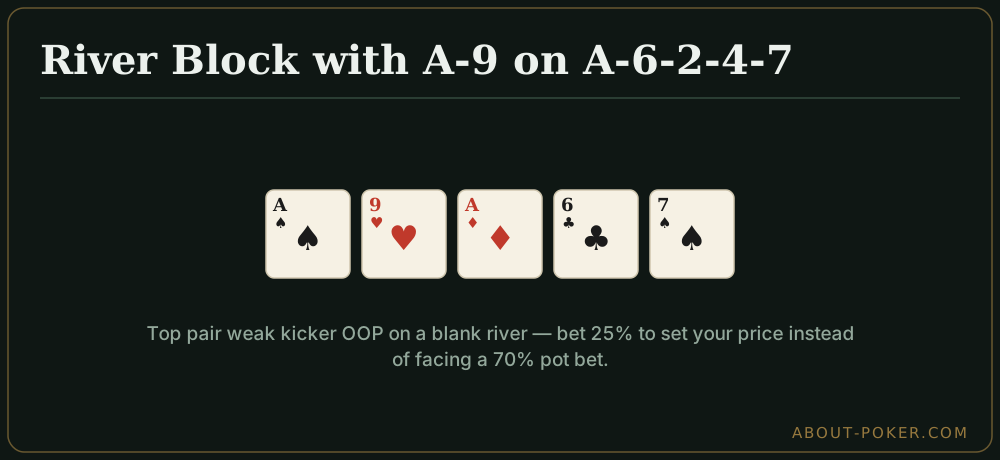
You call a button raise from the big blind with A-9 offsuit. Flop is A-6-2 rainbow, giving you top pair weak kicker. You check-call a small c-bet. Turn is the 4 of clubs; you check-call again. River is the 7 of spades — a total blank. You now have top pair, but a weak kicker, out of position, against a range that includes better aces and plenty of missed draws.
If you check, an aggressive opponent bets 70% pot. You beat their busted flush and straight draws but lose to A-T, A-J, A-Q, A-K. Facing a big bet, this is a coin-flip guess you’d rather avoid. Instead you bet 25% pot as a block. Worse hands — like a stubborn 6-x or a floated K-Q that improbably calls — pay you a little, better aces just call (you’d have lost more if they’d bet), and the busted draws fold. You reach showdown for a quarter-pot instead of risking a three-quarter-pot call. That’s the block bet doing its job: minimizing your loss against value and denying villain the chance to price you off with a big value bet.
Sizing the block bet
Sizing is everything. A blocking bet is typically 20% to 33% of the pot — small enough that setting your own price is clearly cheaper than facing a big bet, but not so tiny that it invites a cheap bluff-raise. If you size it too large, it stops blocking anything and just turns into a normal thin value bet that big hands will raise. Keep it small and consistent so the opponent’s most profitable response is simply to call or fold, not to raise.
The exploitability warning
Good opponents adjust. If you only ever block-bet with medium hands and check your strong ones, observant players will start raising your blocks as bluffs, knowing you’re capped. To stay balanced, occasionally block-bet with a strong hand or a pure bluff so your small river bets aren’t a transparent signal of “medium hand, please don’t raise.” The river is the street where reads and balance matter most — see how to play the river for the wider framework.
Common mistakes
- Blocking in position. Just check back for a free showdown instead.
- Blocking hands that should value bet big. Strong hands want a larger size, not a block.
- Sizing too large. A half-pot “block” defeats the purpose and gets raised.
- Doing it every time. Predictability makes you a target for bluff-raises.
Quick checklist
Are you out of position on the river? Is your hand medium strength — wants a showdown but fears a big bet? Will the opponent bet big if you check but rarely raise a small bet? If all three are yes, a 20–33% pot block bet sets your price, extracts thin value, and dodges a tough decision. Mix in the occasional strong hand or bluff so the move stays disguised, and blocking bets become a quiet, chip-saving weapon.
Frequently asked
What is a blocking bet in poker?
A blocking bet is a small bet, usually made out of position on the river, designed to set your own cheaper price for showdown and prevent the opponent from making a larger bet if you had checked. It blocks the bigger bet you'd otherwise face.
When should you use a blocking bet?
Use a block bet out of position on the river with a medium-strength hand that wants to see a showdown cheaply but fears a large bet if you check. It works best against opponents who would bet big when checked to but rarely raise a small bet.
How big should a blocking bet be?
Small — typically 20% to 33% of the pot. The size must be cheap enough to be worth setting your own price yet credible enough that the opponent isn't incentivized to raise it as a bluff. Too large and it stops being a block.