Turn Bet Sizing
How to size your turn bets: when to fire small, big, or overbet after the flop. Learn how scare cards, draws, and polarization shape your double barrel.
On this page · 5 sections
The turn is where pots get big and mistakes get expensive. A c-bet that gets called on the flop leaves you with a decision that carries far more money, and your sizing has to reflect that both ranges have narrowed. This guide explains how to size the second barrel so you extract value, pressure the right hands to fold, and set up the river.
Why turn ranges are more polarized
On the flop, the preflop raiser often bets a wide, merged range at a small size. By the turn that has changed. Weak hands with no equity have given up, marginal made hands have started checking to control the pot, and the range that keeps firing is skewed toward strong value and semi-bluffs. That polarization is the single most important fact about turn sizing: a more polarized range wants a larger bet, because large bets maximize value from the strong hands and generate maximum fold equity for the bluffs.
That is why turn sizes generally jump up relative to the flop. Where a 33% flop c-bet is routine, the turn barrel is more often 66% to pot-sized, and sometimes an overbet. For the wider question of which hands to keep firing, see barreling the turn.
Sizing by how the turn card changed the board
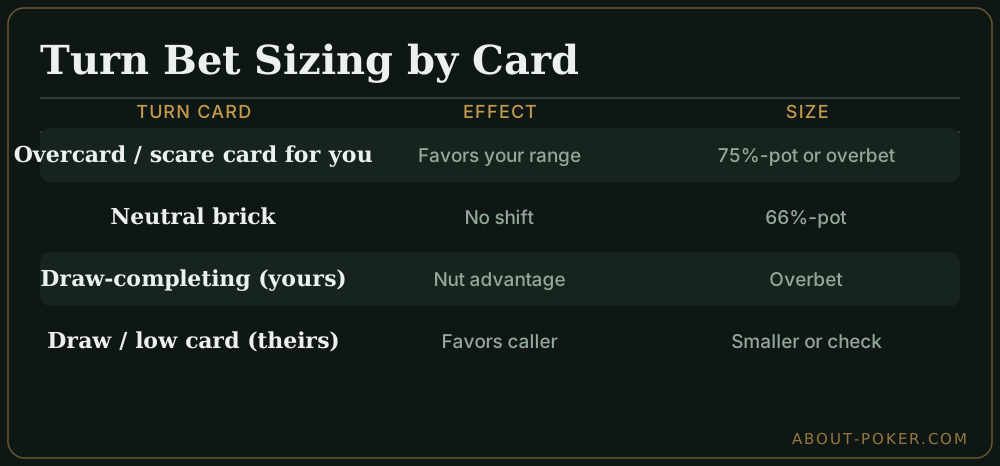
The turn card is not just another card — it either favors your range, favors your opponent’s, or is roughly neutral. Let the card pick your size.
When the turn favors your range — an overcard to the flop, a card that completes a draw you are likely to hold, or a brick that keeps your nut advantage intact — you can size up, betting large or overbetting to leverage that advantage. When the turn is a scare card that hits your range specifically (like an ace on a king-high flop you raised preflop), it unlocks aggressive sizing because your opponent must fear the exact hands you credibly hold. Our barreling a scare card guide covers this pattern. When the turn favors the opponent or brings in obvious draws for them, dial back frequency and sometimes size, or check to control the pot.
A worked example
You open A♥K♥ from the cutoff, the big blind calls, and the flop comes K♣8♦4♠. You c-bet 33% with top pair top kicker and get called. The pot is now about 9 big blinds and the turn is the A♠.
This is close to an ideal double-barrel card. The ace improves you to top two pair, it is an overcard that your cutoff range contains far more often than the big blind’s calling range, and it scares any king the opponent floated the flop with. Your range here is polarized toward strong aces, sets, and two pair plus your natural bluffs. A large turn bet of around 75% of the pot — roughly 7 big blinds — is well justified: worse kings and pocket pairs face a miserable decision, and you get maximum value when you are called by a worse ace or a stubborn king. A tiny turn bet would leave value on the table and let draws continue cheaply.
Now flip the turn to the 7♠, completing a possible 65 straight and adding a spade draw. This card helps the caller more than you, so you would bet smaller, check more, and avoid bloating the pot with a one-pair hand.
Overbetting the turn
An overbet — betting more than the pot — is a powerful turn tool, but only under the right conditions. You need a genuinely polarized range with a strong nut advantage, and you need enough bluffs that also want to bet that size, ideally bluffs that block your opponent’s calling range. Overbet turns work best on cards that shift the nut advantage sharply your way and on boards where your opponent’s range is capped because they would have raised their strongest hands earlier. Used correctly, the overbet grows the pot fast and sets up a big or all-in river. Used carelessly, it isolates you against only stronger hands. See double and triple barreling for how these bets chain across streets.
Common mistakes and a checklist
The most common turn leak is carrying the small flop size into a barrel that wants a bigger one — under-betting your value on cards that favor you. The second is barreling too large on cards that favor the caller, which just donates money into a range that is now ahead. The third is failing to plan the river: your turn size should leave a stack-to-pot ratio that lets you make the river bet you intend, whether that is a shove or a smaller value bet.
Before you size the turn, check:
- Did the turn favor your range, the opponent’s, or neither?
- How polarized is my continuing range — is it big-or-nothing, or merged?
- Does a large or overbet size have the nut advantage and enough blocking bluffs to support it?
- What river bet am I setting up, and does this size leave the right stack behind?
- Am I betting big for value and to pressure, or just because I bet the flop?
Answer those and your double barrel will pressure the right hands while charging the maximum when you are ahead.
Frequently asked
How big should I bet the turn?
It depends on how the turn card changed the board. On cards that favor your range you can bet large or overbet; on neutral cards a pot-sized-to-two-thirds bet is standard. Turn ranges are more polarized than flop ranges, so turn sizes trend larger than flop sizes.
Why are turn bets usually bigger than flop bets?
By the turn, both players have narrowed their ranges. The player who keeps betting is more polarized — strong hands and bluffs — so a bigger size charges the maximum for value and applies real pressure. Small merged sizing is a flop tool, not usually a turn one.
When should I overbet the turn?
Overbet the turn when a card strongly favors your range and your range is polarized — for example when you barrel an ace or a card that completes a draw only you have. Overbets need a nutted top end and enough bluffs that block the opponent's continues.