Barreling a Scare Card
How to barrel a scare card: which turns and rivers scare your opponent, why range and blockers matter, and how to bluff cards that don't help your hand.
On this page · 6 sections
Some turn and river cards genuinely scare your opponent — an overcard, a third flush card, a card that completes the obvious straight. When one of those falls, the player who fits it into their range best gets a huge bluffing opportunity. Barreling a scare card means firing another bet on a card that credibly could have made you a big hand, forcing your opponent to fold the medium holdings they were hoping to reach showdown with. Done selectively, it’s one of the highest-value bluffs in the game; done reflexively, it lights money on fire.
Why scare cards make good bluffs
A bluff works when your opponent can’t tell it apart from a hand you’d bet for value. A scare card manufactures exactly that ambiguity. If you raised preflop and c-bet the flop, then an ace peels off on the turn, that ace fits your range full of ace-x far better than your opponent’s calling range. When you barrel, they can’t rule out that you now hold top pair or better, so they fold the second pairs and weak top pairs they were floating with. You’re borrowing the credibility of the value hands the card could have made. The turn-specific mechanics live in barreling the turn.
The card has to favor your range
Not every scary-looking card is a good barrel. The question is whose range the card fits. Overcards to the flop are ideal barrels when you were the preflop raiser, because you hold far more big cards than a caller. Draw-completing cards work when you had the range and position to keep betting a draw yourself. But cards that pair the board are usually poor bluffing cards — they help the defender’s trips and two pair, and they don’t give you a new credible value story. Always ask: does this card add hands to my range that I’d bet, or to theirs?
Blockers sharpen the bluff
The best scare-card barrels come with blockers to the hands the card is supposed to have made. If the third heart lands and you hold the ace of hearts, you block the nut flush, so your opponent is less likely to have it and you’re less likely to be running into it when called. Holding a blocker both raises your fold equity and lowers your risk. The full logic of choosing bluffs by what they block is in blockers in poker. When you can pick a scare-card bluff that also blocks the nuts, you’ve stacked two edges.
A worked example
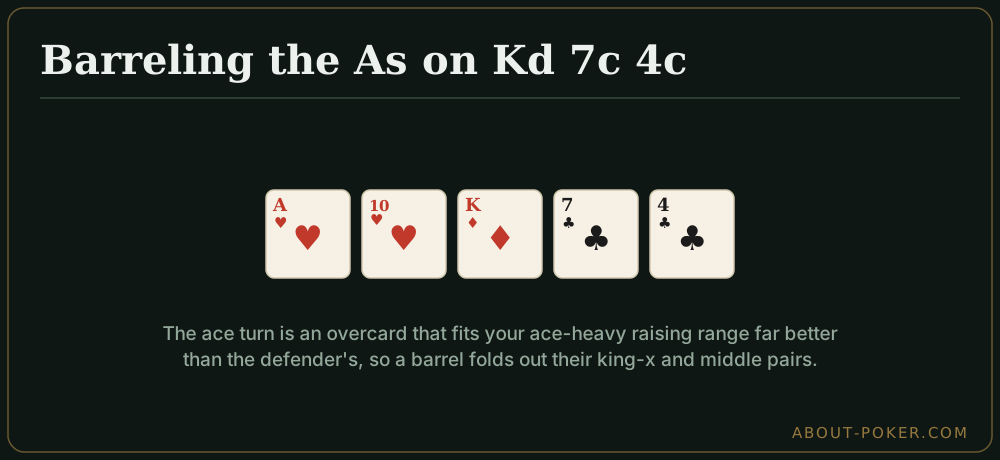
You open Ah Th from the button, the big blind calls, and the flop comes Kd 7c 4c. You c-bet 6 into 12 and get called. The turn is the As — an overcard that pairs nothing on the board but hits your range hard, since you hold plenty of ace-x and the big blind holds far fewer. You barrel again, say 18 into 24. From the defender’s seat, that ace is terrifying: a lot of their king-x and middle pairs are now crushed if you have an ace, and they can’t be sure you don’t. They fold most of their one-pair hands. Your Ah Th missed the flush draw entirely, but the card did the work — you’re representing exactly the range the ace helps. Even better, you actually turned top pair, so this particular barrel is closer to value than bluff, but the mechanism is identical when you hold air.
Common mistakes barreling scare cards
The classic error is barreling any scary card regardless of whose range it favors — firing a board-pairing card that helped your opponent, or a flush card when you were the caller and they were the raiser. Another is barreling with hands that block your opponent’s folding range rather than their calling range, which reduces fold equity. A third is over-barreling against players who simply don’t fold; a scare-card bluff needs a thinking opponent who can lay down medium hands. Against a station, save the bet. The escalation across streets is covered in double and triple barreling.
A quick checklist
Before firing a scare-card barrel, ask: Does this card fit my range better than my opponent’s? Is it an overcard or draw-completer I can credibly rep, rather than a board-pairing card that helps them? Do I hold blockers to the nutted hands the card is supposed to have made? Is my opponent capable of folding medium-strength hands? And do I have a plan for the river if I’m called? When the answers line up — the card favors you, you block the nuts, and the opponent can fold — barreling a scare card is one of the most reliable ways to win pots you have no showdown value in.
Frequently asked
What is a scare card?
A scare card is a turn or river that threatens to have improved a range — most often an overcard to the flop, a card that completes an obvious draw, or a card that brings a flush. It's scary because it credibly could have made a strong hand, which is what makes it good to bluff.
Why bet a scare card as a bluff?
Because the card lets you credibly represent a hand you'd bet for value. If an ace or a flush-completing card falls and it fits your betting range better than your opponent's, they have to fold a lot of medium hands, and your bluff prints.
Do I need the scare card to help my actual hand?
No — that's the point. You barrel a scare card precisely when it doesn't improve you but does threaten your opponent. The best bluffs also hold blockers to the hands the scary card is supposed to make.
Which scare cards are best to barrel?
Cards that hit your range harder than your opponent's — overcards when you're the preflop raiser, and draw-completing cards when you had the range and positional advantage. Pair-the-board cards are usually worse because they help defenders' trips and reduce fold equity.