Floating in Position
Floating in position means calling a bet with a weak hand to bluff a later street. Learn which hands and boards to float, and a full worked example.
On this page · 6 sections
Floating in position means calling a bet with a hand that isn’t strong enough to raise for value but has a plan to win the pot later. You’re not calling because you like your hand right now — you’re calling because you have position, your opponent’s betting range is wide, and you intend to take the pot away when they slow down. It’s one of the most reliable ways to punish players who c-bet too often and give up too easily.
The mechanics of a float
When you float, you call the flop with the intention of betting a later street if your opponent checks, or of representing a strong hand when the board changes. Position is what makes it work: you act last, so you get to see whether they fire again before you commit more chips. If they check the turn, that’s your cue — they’ve likely given up, and you bet to fold out their air. If they bet again, you can fold cheaply, having risked only one street’s worth of chips. The general concept across positions is covered in floating in poker.
Which hands and boards to float
The best floats carry backup equity, so you can still win even when your bluff gets called:
- Overcards that can hit top pair (A-high, K-high).
- Backdoor draws — a backdoor flush or straight that turns into a real draw or semi-bluff.
- Gutshots and weak pairs that have showdown value or can improve.
- Blockers to your opponent’s value hands.
The ideal board is dry and static — think A-7-2 rainbow. Your opponent c-bets this wide, their range is capped, and any scare card on the turn (a second broadway, a flush-completing card) lets you represent a hand they can’t beat. Wet, dynamic boards are worse for floating because your opponent’s continues are stronger and the turn changes their equity too. This board-reading skill is the core of wet vs dry board texture.
A worked hand
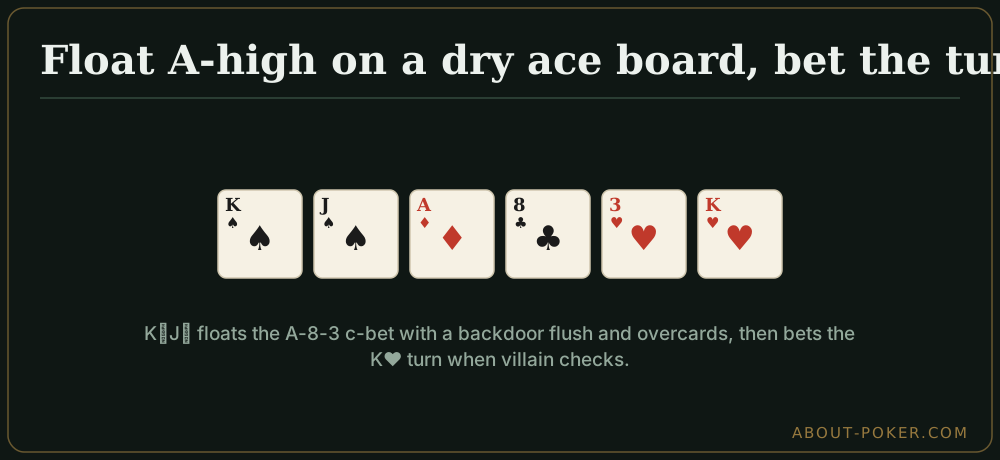
The cutoff opens and you call on the button with K♠J♠. Flop comes A♦8♣3♥ — a dry, ace-high board. The cutoff c-bets 33% pot. You have king-high with a backdoor flush draw and two overcards to the eight and three. A raise here folds out nothing you beat and gets called by every ace. But floating is excellent: their c-bet range is wide, their range is capped to mostly weak aces and air, and you have position plus backdoor equity.
You call. The turn is the K♥, giving you a pair of kings plus you now block some of their king-x. The cutoff checks — a classic give-up. You bet 60% pot. Your king is often good at showdown now, and if they had air they fold, if they had a busted draw they fold, and only the aces call (and you have a pair to fall back on). You’ve turned a flop float into a pot won either by improvement or by pressure. Even if the turn had bricked, their check would have let you bluff with your backdoor equity as a backup.
Float versus raise
Choose the float when raising accomplishes nothing useful — it folds out the hands you beat and gets called by the hands that beat you. Raise instead when you have a strong hand that wants to build the pot, or when you want to deny equity to draws. On the A-7-2 type boards, floating is usually superior to raising a marginal hand because the caller’s range is too weak to fold to a raise anyway and too strong to value-raise into. For the aggressor’s side of this exchange, see continuation bet strategy.
Common mistakes
- Floating with pure air. Zero equity means you win only when they fold. Add a backdoor draw or overcards so you have a second way to win.
- Floating out of position. The whole edge comes from acting last. Calling to float from the blinds gives up that advantage.
- Not following through. If you float the flop and then check the turn when they check, you’ve wasted the plan. The float only pays off if you actually apply pressure.
- Floating against stations. Players who never give up on the turn make floating unprofitable — they’ll fire again and you’ll fold your equity away.
Floating checklist
- Do I have position so I act last on every street?
- Is my opponent’s c-bet range wide and capped?
- Does my hand have backup equity — overcards, a backdoor draw, blockers?
- Is the board dry enough that a turn scare card lets me apply pressure?
- Will this specific opponent give up when checked to on the turn?
If the answers line up, floating in position quietly becomes one of the most profitable bluffing lines you own — because most players c-bet far more often than they can defend.
Frequently asked
What does floating in position mean?
Floating in position is calling an opponent's flop bet with a weak or marginal hand, planning to take the pot away on a later street when they check or the board changes. Your positional advantage lets you see their action first before committing more chips.
Which hands are good to float with?
The best floats have some backup equity — overcards, a gutshot, a backdoor flush draw — plus blockers or the ability to improve. Pure air with zero equity is a weaker float; a hand that can also win at showdown or hit a draw gives you multiple ways to win.
When should you float instead of raise?
Float when a raise would only fold out worse hands and get called by better, when you have position to realize equity, and when your opponent c-bets a wide range that often gives up on the turn. Raise instead when you want to deny equity or build a pot with a strong hand.
What boards are best for floating?
Dry, static boards where your opponent's c-bet range is wide and their range is capped — like A-7-2 rainbow — are ideal. Their bet is often a bluff or a weak pair, and a scare card on the turn lets you take it away.