Floating Out of Position
Floating out of position means calling a bet with a weak hand from the blinds to steal later. Learn the risks, the probe-bet plan, and a worked hand.
On this page · 6 sections
Floating out of position is calling a bet from the blinds or an early seat with a hand too weak to raise, intending to win the pot on a later street. It’s the same idea as an in-position float, but stripped of the advantage that makes floats so reliable. Out of position you act first on every street, so you never get to see your opponent’s decision before making your own. That makes it a sharper tool that cuts both ways — powerful when timed right, expensive when forced.
Why out of position is harder
The core value of a float comes from position: you call, your opponent checks the turn to reveal weakness, and you bet to steal. Out of position, that sequence breaks. When the turn comes you have to act first. Your choices are to lead out — betting into a range that might be strong enough to raise — or to check and hope your opponent checks back so you can try again on the river. You’ve lost the free information. This is the same structural disadvantage explained in playing out of position postflop, and it’s why out-of-position floats require tighter hand selection and a firmer plan.
The probe-bet plan
The cleanest follow-up to an out-of-position float is the probe bet. Here’s the sequence: you call the flop c-bet from the big blind. The turn comes and the preflop raiser checks back the flop instead of firing again — that check signals they don’t have much. Now you lead the turn, probing into the weakness they just showed. Because they declined to bet, they rarely have a hand strong enough to continue, and your probe takes it down. This is the out-of-position player’s main way to reclaim initiative, and it’s covered in depth in probe betting in poker.
Note the requirement: the probe works after the flop checks through. If your opponent keeps betting, floating out of position just bleeds chips — you don’t get the free window a probe needs.
Which hands to float with
Because you can’t cheaply gather information, lean on hands with real backup equity:
- Draws — open-enders and flush draws that can improve to the best hand.
- Overcards with a backdoor draw attached.
- Blockers to your opponent’s value range that reduce their strong combos.
- Avoid pure air — out of position it has no way to recover when the plan stalls.
A worked hand
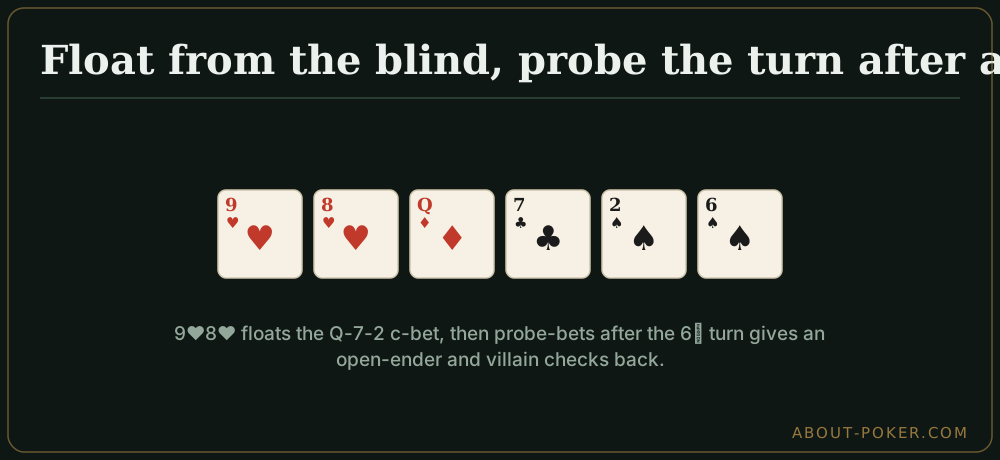
You defend the big blind with 9♥8♥ against a cutoff open. Flop is Q♦7♣2♠ — you have nothing but two backdoor draws and a gutshot to the 6 (via T-J-… actually you need 6-5 or T-J; you hold a backdoor straight and backdoor flush). The cutoff c-bets 33%. Rather than fold immediately, you float, keeping your backdoor equity and planning around their turn action.
Turn is the 6♠, giving you an open-ended straight draw (a 5 or T completes it) plus a backdoor flush freeze. The cutoff, who often c-bets this flop wide, checks back. That check is your signal. You lead a probe bet of 55% pot. You now have genuine equity if called, and their checked-back range is full of weak queens and give-ups that fold to a turn lead. If they call, you still have eight outs to a straight. If they fold, you scooped it with a busted-looking float. The float created the opportunity; the pickup of equity and their weakness made the probe correct.
Common mistakes
- Floating without a follow-up card in mind. If you don’t know what turns you’ll probe, you’re just calling to fold.
- Leading into a range that never gave up. If the opponent barrels the turn, your float had no plan — fold the flop instead next time.
- Choosing pure air. Out of position, you need equity as a fallback because you can’t wait out the opponent’s decision.
- Probing when they’d double barrel anyway. Against aggressive players who fire turns relentlessly, checking to induce or folding is often better than a float.
Out-of-position float checklist
- Does my hand have backup equity or strong blockers?
- Is my opponent the type to check back turns and give up?
- Do I have a specific probe-bet plan for the turn cards I’ll lead?
- If they keep betting, can I fold cheaply without being pot-committed?
- Am I floating because it’s genuinely profitable — not just because I hate folding?
Floating out of position is a real weapon, but only against opponents who c-bet wide and then check-surrender. Against anyone who keeps firing, the honest move is to fold and wait for a better spot. For the broader concept across seats, see floating in poker.
Frequently asked
What is floating out of position?
Floating out of position is calling a bet from the blinds or an early seat with a weak hand, planning to bluff a later street. It's harder than floating in position because you act first and can't wait to see if your opponent bets again.
Why is floating out of position risky?
You act first on every street, so you either lead into a range that might raise you or check and hope your opponent checks back. You lose the informational advantage that makes in-position floats reliable, so it demands tighter hand selection and a clear plan.
How do you follow up a float out of position?
The most common follow-up is a probe bet — leading the turn after the preflop raiser checks back the flop, which signals weakness. You can also check-raise the turn if you pick up equity, but leading into a checked-through flop is the cleaner steal.
Which hands should you float out of position with?
Prefer hands with real backup equity — draws, overcards, or backdoor equity — and blockers to your opponent's value. Pure air is much worse out of position because you can't cheaply see if the opponent gives up before committing more chips.