Playing Draws Multiway
Draws lose value in multiway pots because someone often has a piece. Learn correct pot odds, when to semi-bluff, and how to play flush and straight draws 3-way.
On this page · 6 sections
A draw that is a monster heads-up can be a trap in a four-way pot. When more players see the flop, the math and the tactics both shift. Your raw equity to make the hand does not change — a flush draw is still roughly nine outs — but the odds that someone already holds a made hand you will have to beat go way up, and your ability to win the pot by betting goes way down. Playing draws multiway is about leaning harder on your pot odds and implied odds while pulling back on the semi-bluffing that works so well in a heads-up pot.
Why draws behave differently multiway
Two forces pull in opposite directions when a pot goes multiway.
First, fold equity collapses. Heads-up, a semi-bluff only needs one opponent to fold. Three-way, you need two players to fold, and the chance that at least one of them has a hand worth continuing rises fast. You cannot bet everyone off their hands the way you can one-on-one.
Second, pot odds and implied odds improve. More callers mean a bigger pot relative to the price you must pay to continue, so your draw needs to hit less often to profit by calling. And when you do hit, several opponents can pay you off. This is the core reason drawing hands remain playable multiway — you shift from betting to realize equity toward calling to realize it.
Pot odds and equity: the real numbers
A nine-out flush draw has about 35% equity to complete by the river with two cards to come, or roughly 19% (about 4-to-1 against) on any single card. An open-ended straight draw with eight outs runs about 31% by the river, 17% per card.
Multiway, use per-card odds and compare to your immediate price. Say the pot is 90 after a 30 flop bet and one call, and it is 30 to you on a flush draw. You are getting 150-to-30, or 5-to-1, against a hand that is 4-to-1 to hit on the turn — an easy call before you even count implied odds. That extra dead money from multiple players is exactly why draws call profitably in these spots. See our pot odds fundamentals for the head-to-head baseline.
When to semi-bluff anyway
Semi-bluffing is not dead multiway — it is just reserved for your strongest draws. Good candidates:
- Combo draws: a flush draw plus an open-ended straight draw (around 15 outs, over 50% equity by the river). Even called by everyone, you often have the equity edge.
- Draws with overcards or a pair, adding outs and some showdown value.
- Nut draws on dynamic boards where you can barrel credibly if you hit and still have blockers to the strongest hands.
The logic: with a big draw you are not really bluffing — you are building a pot you expect to win a large share of the time, and any folds are a bonus. Weak or medium draws should mostly check and take the good price to call.
A worked example
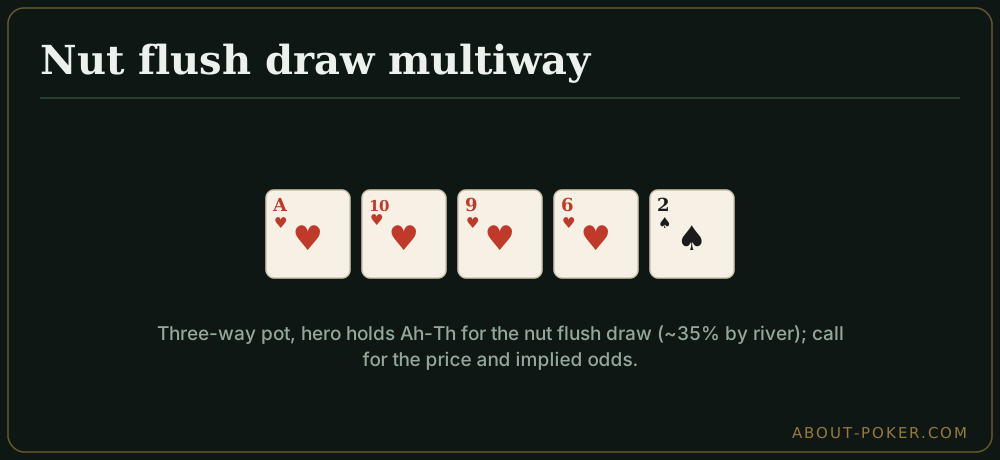
Three players see a flop of 9h-6h-2s. You hold Ah-Th — the nut flush draw with an overcard. The preflop raiser bets 20 into a 30 pot, one player calls, and it is 20 to you into a growing pot of 70.
Calling is clearly correct: you are getting 70-to-20 (3.5-to-1) on a draw that is 4-to-1 per card but 1.8-to-1 to hit by the river, and your implied odds are excellent because both opponents can stack off if a heart lands or you pair your ace. Raising here is thinner — with two opponents you are unlikely to fold both out, and you would be inflating the pot as a draw without the fold equity to justify it. So you call, plan to continue on any heart or ace, and let the board texture guide your turn decision. If a blank turn checks around, you take a free card. If the aggressor barrels big, you re-evaluate your price rather than committing.
Position and board texture
Position matters even more multiway because you have less control. In position you can take free cards when the action checks to you and apply pressure selectively. Out of position, you are stuck guessing, so favor check-calling your draws and be wary of check-raising unless the draw is huge — a raise commits chips you may not want in against multiple opponents.
Board texture sets the ceiling on your draw’s value. On a two-tone, connected board, plenty of other players will also be drawing, so your non-nut draws are worth less; getting there does not guarantee the pot. The nut flush draw is far more valuable than a middling one precisely because multiway pots punish second-best hands. Read more in our multiway pot strategy guide.
Common mistakes and a checklist
- Semi-bluffing medium draws multiway. You need too many folds. Just call and take your price.
- Overvaluing non-nut draws. A king-high flush that runs into the ace-high flush multiway is a stack-loser.
- Ignoring implied odds. The upside of drawing is getting paid by multiple opponents — factor it in when calling.
- Bloating the pot out of position as a bare draw with no plan for the turn.
Before continuing with a draw multiway, ask: How many outs, and are they clean? What price am I getting right now? Is this a nut draw or a dominated one? Can I realize my equity in position, or am I guessing out of position? Answer those honestly and you will call the profitable draws, fold the trash, and reserve your aggression for the monster draws that can win against a whole table.
Frequently asked
How do you play draws in multiway pots?
Play draws in multiway pots more cautiously than heads-up. Semi-bluff less often because more players means someone is more likely to hold a strong hand, but lean into your pot odds when you have a big draw, since the pot is larger relative to the call.
Should you semi-bluff a flush draw multiway?
Usually less than heads-up. With three or more players, fold equity drops sharply because you need everyone to fold. Semi-bluff mainly with strong draws that also have significant equity when called, and check-call more of your medium draws.
Are pot odds better for draws in multiway pots?
Yes, the pot odds are often better because more callers build a larger pot, and implied odds improve since multiple opponents can pay you off. That partly offsets the reduced fold equity, making calling with draws more attractive than bluffing.