Playing Monotone Flops
Monotone flops (three of one suit) compress equities and reward controlled play. Learn how to size bets, use suit blockers, and when to check on flush boards.
On this page · 6 sections
Monotone flops — three cards of one suit, like Q♥8♥3♥ — are the texture that trips up more players than any other. A flush is already on the board, so the usual instinct to bet big for value or protection backfires badly. Equities compress in a way you rarely see elsewhere, and the winning approach is patient and controlled: small sizings, disciplined frequencies, and heavy reliance on suit blockers to choose your bluffs.
Why Equities Compress
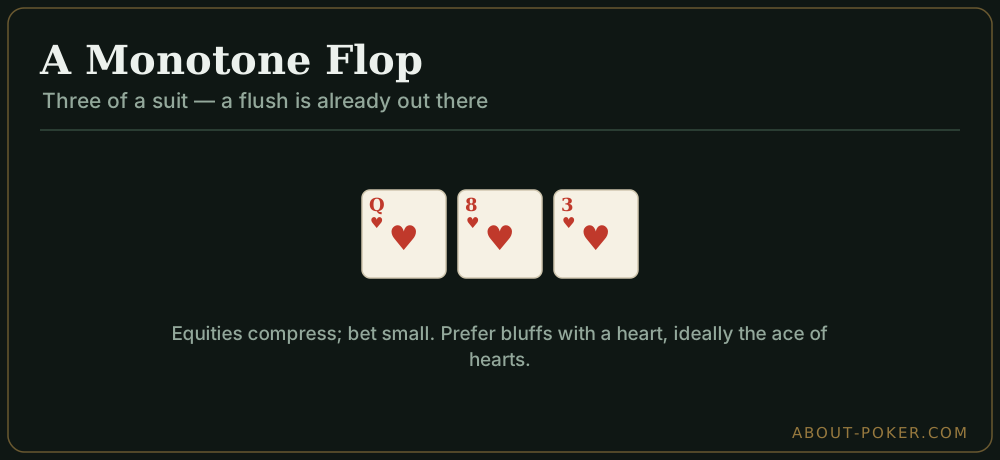
On most boards there is a wide gulf between the best and worst hands. On a monotone flop that gulf collapses. A made flush is a monster, but a single card of the suit gives anyone a one-card flush draw worth nine outs — and those hands are everywhere in both ranges. At the same time, a normally strong offsuit hand like top two pair becomes shaky, because a fourth card of the suit on the turn or river can flip the winner. When the best hands are rare and the marginal hands are plentiful, equities run close together, and close equities argue against big, polarizing bets. The c-betting monotone boards page digs into the exact frequencies.
Bet Small and Controlled
Because equities are flat and neither range smashes a three-suited board, the right c-bet is small — about one-third pot — at a moderate frequency. A small bet still charges the naked one-card draws for their outs, keeps the pot manageable on a texture where a single card reverses the hand, and lets you continue cheaply with your vulnerable made hands. A large bet is a trap: it only gets called by made flushes and the strongest draws, folding out precisely the hands you would rather keep in.
A Worked Example
You open A♥7♣ from the cutoff, the big blind calls, and the flop comes Q♥8♥3♥. You have no pair, but you hold the ace of hearts — a one-card nut-flush draw plus the best possible blocker. Any heart on the turn or river gives you the nut flush, and just as importantly, your A♥ means your opponent cannot hold the nut flush or draw to it. This is an ideal small c-bet: you have real equity and you block their best continuing range.
Contrast that with A♥Q♠. You flopped top pair, but on a monotone board that hand is only modest — it has no flush and folds out nothing worse that would pay it. Here checking is often better than betting, because a bet just isolates you against flushes and strong draws.
Suit Blockers Drive Your Bluffs
The card of the board’s suit in your hand is the single most important factor on a monotone flop. Holding the ace of the suit blocks the nut flush and the strongest draws, so those hands make your best bluffs — you fold out more and get drawn out on less. Holding a low card of the suit is weaker but still useful. Hands with none of the suit are your worst bluffing candidates because your opponent’s flush range is fully intact. For the underlying logic, see blockers in poker.
Playing Your Draws and Made Flushes
A one-card flush draw is a strong holding here — nine outs, and the higher your suit card the better, since you want to be drawing to the nuts, not to a hand that pays off a bigger flush. Play these the way you would any strong draw: mix betting for semi-bluff value with checking to keep the pot controlled, as covered in playing draws postflop. When you flop an actual made flush, do not blast it — bet small or check to keep worse hands in and to disguise your strength, because a big bet on a monotone board screams “flush” and gets no action from the marginal hands you want to bill.
Checklist for Monotone Flops
- Understand that a flush is already possible; equities compress and big bets lose value.
- C-bet small (about one-third pot) at a moderate frequency, not your whole range.
- Bluff with hands that hold a suit card, especially the ace, and give up hands with none.
- Play one-card draws to the highest suit possible; slow down with low draws.
- Do not overbet made flushes — small sizings keep worse hands in and protect your stack.
Frequently asked
What is a monotone flop?
A monotone flop is a board where all three cards share a suit, such as Q♥8♥3♥. A flush is already possible, and any single card of that suit makes a one-card flush draw with nine outs to the nuts or near-nuts.
How should you bet a monotone flop?
Bet small and at a controlled frequency. Equities bunch together because so many hands hold a flush card, so a one-third-pot bet manages the pot while charging draws, rather than a big bet that only gets called by flushes.
Why do suit blockers matter on monotone boards?
Holding one card of the board's suit — ideally the ace — reduces how many strong flushes and draws your opponent can have. That makes your bluffs succeed more often and is the main tool for choosing which hands to fire.