Playing Middle Pair
Middle pair is a bluff-catcher, not a value hand. Learn when to check-call, when to bet, and when to fold second pair with a worked hand example.
On this page · 6 sections
Middle pair — pairing the second card on the board, like Q-9 on a K-9-4 flop — sits in an awkward middle zone. It’s too strong to fold to a single bet on most boards, but too weak to bet aggressively for value. The skill is recognizing that middle pair is fundamentally a bluff-catcher: a hand whose main job is to keep opponents honest and reach showdown, not to build a big pot. Play it that way and it wins plenty of small pots; treat it like top pair and it becomes a leak.
What middle pair actually beats
Start by being honest about your hand strength. Middle pair beats bluffs, ace-high, worse pairs, and busted draws. It loses to top pair, overpairs, two pair, and sets. So on a typical board, your equity is fine against a bluffing range and poor against a value range. That’s the textbook definition of a bluff-catcher — a hand you call with when opponents bet too often, and fold when they only bet with the goods.
Because of this split, betting middle pair yourself usually backfires. If you bet, worse hands fold and better hands call or raise. The only hands you get value from are the ones you already beat and that would have bet or bluffed anyway. That’s why the default is to check and let opponents put money in with worse.
The check-call default
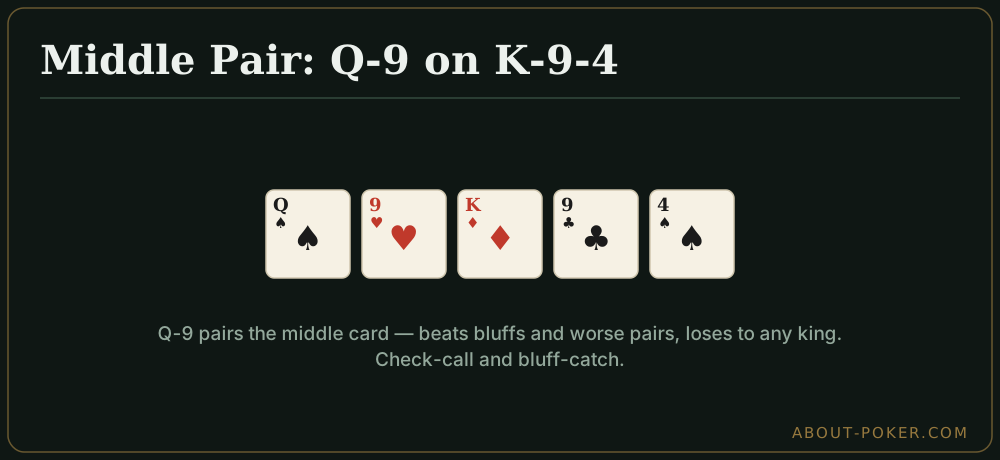
The strongest line with middle pair in position is often to check back the flop or turn to control the pot and get to showdown, then reassess. Out of position, check-calling one or two streets is standard against an aggressive opponent who barrels a lot of air.
Consider what you accomplish by check-calling: you cap the pot size, you don’t get raised off your equity, and you catch bluffs. This is closely tied to pot control — you’re deliberately keeping the pot small because your hand wins small pots and loses big ones. It’s the same logic that makes weak top pair a control hand rather than a value hand.
A worked example
You call a button open from the big blind with Q-9 suited. Flop comes K-9-4 rainbow, giving you middle pair. You check, villain c-bets 33% pot. Calling is clear — you beat all their floats, ace-highs, and worse pairs, and the price is cheap.
Turn is the 7 of spades, a blank. You check again, villain fires 60% pot. This is where discipline matters. Against a habitually aggressive opponent, calling is still correct: their turn barreling range includes plenty of Q-J, J-T, and A-x that you beat. Against a tight, passive player who rarely double-barrels air, you can start leaning toward a fold, because their second bet is weighted toward better hands.
River is the 2 of clubs. Villain checks. You check back and win at showdown against their missed draws. Notice you never bet — betting would only fold out the hands you beat. By playing your middle pair as a bluff-catcher, you extracted a call’s worth of value on two streets and reached a free showdown on the third.
When to bet middle pair anyway
There are exceptions. On a very dry board where you’re the aggressor and villain’s range is capped, a small bet can deny equity to overcards. Middle pair also gains value when it comes with a backdoor draw or a good kicker, since you have extra ways to improve. And if you’re using it as a semi-bluff component of a float, the pair adds showdown equity to an otherwise bluff-heavy line. But these are the minority of spots — the default remains checking.
How board and opponent shift the plan
- Wet boards hurt middle pair badly. More draws mean more turn and river cards that either beat you or scare you off. Fold more.
- Dry boards let you bluff-catch comfortably, since fewer scare cards arrive.
- Aggressive opponents make your bluff-catcher more valuable — call more.
- Passive opponents rarely bluff, so their bets mean strength — fold more. If you compare it to top pair, middle pair should call down far less often.
Quick checklist
Before committing chips with middle pair, ask three questions. Am I ahead of a bluffing range? (Usually yes — lean toward calling.) Will worse hands call a bet? (Usually no — so don’t bet.) Is this opponent capable of triple-barreling air? (If not, fold to the third bet.) Answer those honestly and middle pair becomes a quiet, reliable pot-winner instead of a source of spew.
Frequently asked
What is middle pair in poker?
Middle pair means you've paired the middle card on the board — for example holding Q-9 on a K-9-4 flop pairs the nine, the second-highest card. It usually beats bluffs and worse pairs but loses to top pair.
Should you bet or check with middle pair?
Middle pair plays best as a check-call or check-back hand rather than a bet. It has decent showdown value but folds out worse and gets called by better, so betting big is rarely right. Use it to bluff-catch and to control the pot.
Is middle pair worth calling a bet with?
Often yes on the flop and turn against a wide betting range, because it beats missed draws and worse pairs. On the river against a big bet from a tight player, it becomes a marginal bluff-catcher and can be folded.