Playing Low Flops
Low flops like 7♦5♣2♠ favor the preflop raiser's range. Learn who has the range advantage, how to c-bet small and often, and when to slow down.
On this page · 6 sections
Low flops — three small cards like 8♣5♦2♥ or 7♦6♣3♠ — look uninspiring, but they are some of the most profitable boards to play as the preflop aggressor. The reason is simple: your range hits them fine, your opponent’s range mostly misses, and there is very little draw structure to complicate the decision. Get the fundamentals right here and you print money with a lot of hands that never even make a pair.
Who Has the Range Advantage
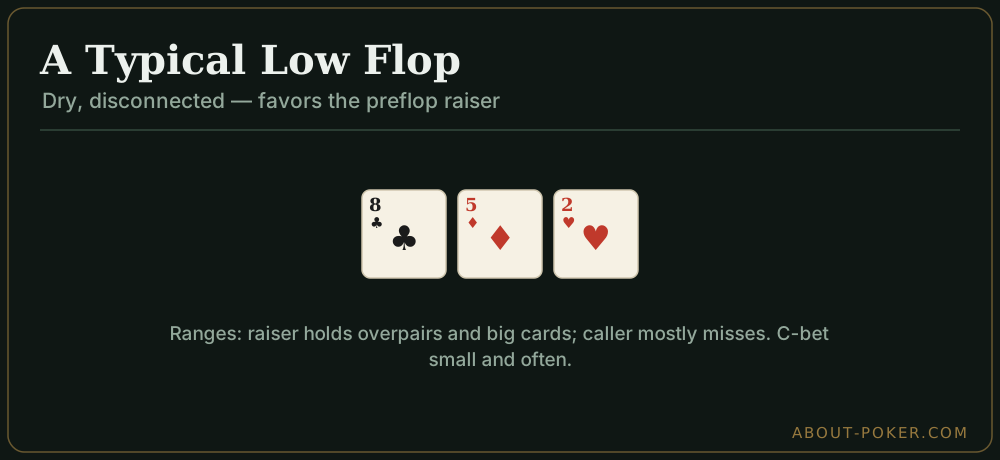
When you raise preflop and get called, you arrive on a low flop with a range packed with high cards and overpairs. Hands like A-K, A-Q, K-Q, and every pocket pair from tens up are still very much alive — the overpairs are the nuts and the big cards have two overcards plus backdoor equity. Your opponent, meanwhile, called with a range that connects poorly with tiny cards. They have some sets and small pairs, but far more A-high and K-high hands that flopped nothing.
This lopsided equity distribution is the textbook condition for aggression. If you want the full framework behind it, the board texture and range advantage page walks through how to read who a flop favors. On low, disconnected boards, that answer is almost always “you.”
C-Bet Small and Often
Because you hold the range advantage and the board is dry, the correct approach mirrors any dry flop c-bet plan: bet small — about one-third pot — at a high frequency, often 70% or more of your range. A small bet accomplishes three things at once. It charges the two overcards in your opponent’s hand for their six outs, it lets your air hands take down the pot cheaply, and it sets up cheap barrels on later streets.
You do not need a big bet here. There are no flush draws and few straight draws to punish, so a large sizing only inflates the pot with your value hands while giving your bluffs a worse price. Save the overbets for boards where equities are polarized.
A Worked Example
You open A♥K♠ from the cutoff, the big blind calls, and the flop comes 8♣5♦2♥. You have ace-high with two overcards — six outs to a pair that is likely best — plus a backdoor flush and backdoor straight. This is a mandatory c-bet. Fire one-third pot.
If called, the turn is where you evaluate: a card that pairs your ace or king gives you a strong hand to barrel again, while a total blank lets you fire a second small bet against a capped, floated range. If you brick and get raised, you can fold with a clear conscience — you had a cheap bluff with real equity, and folding it costs almost nothing.
Betting Your Overpairs
Overpairs are the strongest common hand on a low flop, and they want to bet — not slowplay. There are two overcards to nearly every low board, so an unimproved hand like Q-Q on 8♣5♦2♥ is vulnerable to any turn that brings an ace, king, or picture card. Betting builds the pot while you are ahead and denies equity to those overcards. For the broader plan on stacking these hands off, see playing overpairs postflop.
The rare exception is the very driest board where you dominate so heavily that checking to induce a bluff on the turn is worth more than a small extra bet now. Against a passive, straightforward opponent, though, just bet — they will pay you off with worse pairs and stubborn ace-highs.
When to Slow Down
A high c-bet frequency does not mean betting every single time. Slow down when the board picks up connectivity you cannot represent well, when you are out of position against a station who never folds, or when you hold a hand like bottom pair that prefers to check and realize its equity cheaply rather than bloat a pot as a thin value bet. Multiway pots also demand caution: extra players mean more chances someone flopped a set or two pair, so trim your bluffs and lean toward value.
Quick Checklist
- Identify the range advantage first — on most low, dry flops it is yours as the raiser.
- C-bet small (about one-third pot) and often; the dry texture rewards frequency over size.
- Bet overpairs for value and protection; only slowplay on the very driest boards.
- Barrel turns that improve you or blank out, and give up cleanly when raised with pure air.
- Tighten up multiway and against calling stations — value bets go up, bluffs go down.
Frequently asked
Who has the advantage on a low flop?
The preflop raiser usually does. Their range is full of overpairs and big cards that still have showdown value, while the caller's range rarely connects hard with a board like 8♣5♦2♥. That nominal advantage is what justifies a high c-bet frequency.
How big should you c-bet a low flop?
Small — around one-third pot — at a high frequency. The board is dry, few draws are possible, and a small bet denies equity to the two overcards in your opponent's hand while keeping your own bluffs cheap.
Should you slowplay an overpair on a low flop?
Usually no. Overpairs want to bet for value and protection because there are two overcards to almost every low board. Only consider checking on the very driest boards where you have almost no worry about being outdrawn.