Playing Middle Set
Middle set is a monster that can still be beaten. Learn how to bet for value, protect against draws, and read set-over-set danger when playing middle set.
On this page · 6 sections
Flopping a set is one of poker’s great feelings, and middle set — the middle card of the board paired with your pocket pair — is usually a genuine monster. It’s hidden, it’s almost always ahead, and it turns opponents’ one-pair hands into ATMs. But “middle” is a reminder built into the name: there’s a bigger set out there, and coordinated boards can leave you behind a straight or flush. Playing middle set well means extracting maximum value while staying alert to the rare disasters.
Fast-play by default
The default with middle set is aggression. Bet the flop, bet the turn, and don’t be shy about building a big pot. A set is disguised in a way that top pair and overpairs never are, so opponents pay you off with hands they’d fold to an obvious monster. Every street you check for deception is usually a street of lost value.
This is the heart of playing sets for value: the hand is strong enough and hidden enough that you rarely need trickery. Just get money in while worse hands can still call. Overpairs, top pair, and combo draws will all put chips in against a well-sized value bet, and those are exactly the hands you’re beating.
Protect on wet boards
The main reason to bet middle set — beyond value — is protection. On coordinated boards with flush and straight draws, a passive line invites disaster: you let a draw come in for free and lose a pot you were crushing.
Say you hold 8♠ 8♦ on 9♥ 8♥ 5♣. You have middle set on a board dripping with equity — flush draws, straight draws, and gutshots everywhere. Slow-playing here is a mistake; you must bet, and bet a healthy size, to charge all that drawing equity. A hand that’s 90%+ against one pair can slide toward a coin flip if you let two draws see the turn and river for free. The full treatment of these spots lives in playing a set on a wet board: dynamic texture means fast money, big sizes, and no free cards.
A worked example
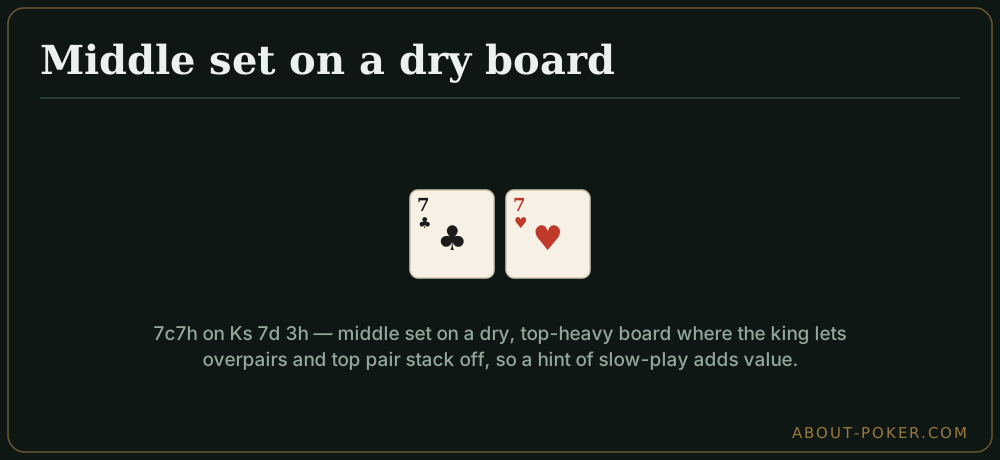
You call a raise from the big blind with 7♣ 7♥. The flop comes K♠ 7♦ 3♥ — middle set, and a beautiful one. This is a dry, disconnected board with a king that hits your opponent’s preflop raising range hard (AK, KQ, overpairs).
Here you want them to keep firing. Check-call the flop to keep their bluffs and second-best hands in, then check-raise or lead the turn to build the pot. The king means overpairs and top pair feel safe stacking off — they can’t put you on exactly 77. This is one of the few spots where a hint of slow-play adds value, precisely because the board is dry enough that fast-betting would fold out the air you want to keep. On a wet board you’d blast; on this dry, top-heavy board you let them hang themselves. That texture-based decision is the same instinct behind slowplaying big hands — slow-play only when fast play would kill your action.
Reading set-over-set danger
Middle set’s nightmare is top set. If you hold 7♦ 7♣ on K♠ 7♦ 3♥ and the money goes in fast and huge against a tight player, the hands that eagerly stack off include KK — top set, and you’re drawing to one out. You can’t fold middle set every time, and you shouldn’t; set-over-set is rare enough that folding to protect against it costs more than it saves. But calibrate: against a nit who only gets it in with the nuts on a paired-safe board, a mountain of aggression is a yellow flag worth respecting.
Beyond set-over-set, watch coordinated runouts. On 9♥ 8♥ 5♣ your middle set can lose to a turned or rivered straight or flush. When the obvious draw completes and a passive opponent suddenly wakes up, slow down — pot control beats paying off the one hand that got there.
Common mistakes
The first is slow-playing on wet boards. Cute checks on draw-heavy textures cost you both value and protection; fast-play those spots. The second is the opposite error — over-slow-playing dry boards until you’ve bet everyone out. Match your speed to the texture. The third is refusing to ever consider set-over-set, and then stacking off for 200 big blinds against a rock who’s never bluffing. Middle set is a monster, but it’s a middle monster.
Checklist for playing middle set
Ask: Is the board wet or dry? Wet means fast, big, protective betting; dry means you can slow-play a street to keep action alive. Which of my opponent’s hands will pay me off, and am I sizing to get value from them? And is there a credible top-set or completed-draw story from a tight player pushing hard? Answer those, fast-play the obvious spots, and middle set will be one of your biggest winners.
Frequently asked
How do you play middle set?
Almost always fast — bet and raise for value. Middle set is usually the best hand and is well hidden, so building the pot on the flop and turn maximizes value against overpairs, top pair, and draws. Only slow down when the board gets dangerous or when a very tight opponent shows enough aggression to represent top set or a completed draw.
Is middle set a monster?
Yes. A set wins the pot the vast majority of the time and is disguised, so opponents pay it off with top pair and overpairs they'd never stack off against an obvious hand. Its main vulnerabilities are top set (set over set) and completed straights or flushes on very coordinated boards.
Should you slow-play middle set?
Rarely. On wet, draw-heavy boards, slow-playing lets opponents draw out cheaply and costs you value from the many hands that will call a bet. Fast-play middle set on coordinated boards for protection and value; reserve slow-playing for dry boards where fast betting would fold everything out.