Playing Paired Flops
Paired flops like J♦J♣4♠ remove combos and reward small, high-frequency c-bets. Learn who has the advantage, how blockers work, and how to attack paired boards.
On this page · 6 sections
Paired flops — boards like J♦J♣4♠ or 9♠9♥2♣ — feel awkward to a lot of players, but they are among the easiest textures to attack once you understand what the pairing does to everyone’s range. When a rank pairs on the flop, it quietly removes combinations of strong hands from the deck, flattens equities, and hands the initiative to whoever came in with the stronger, tighter range. That is usually the preflop raiser.
Why the Pair Changes Everything
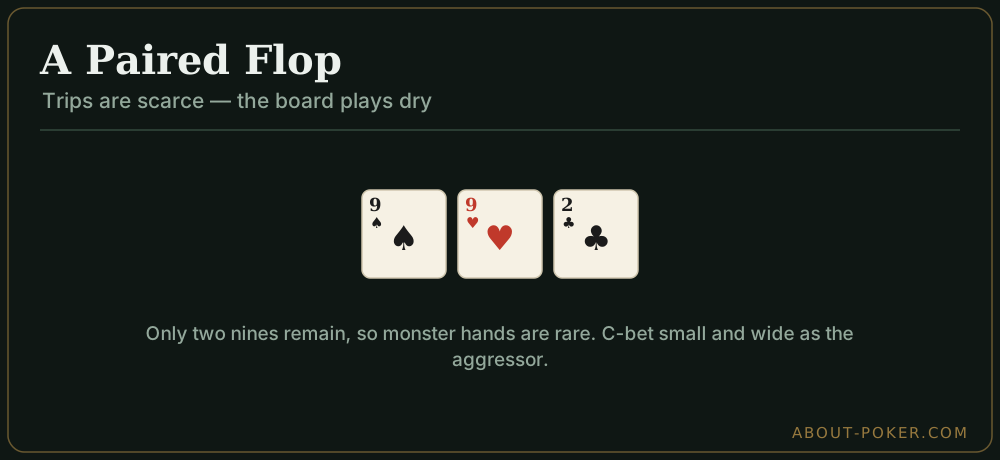
On an unpaired board, two pair and sets are live for both players. Pair the board and those possibilities shrink. On J♦J♣4♠, the only way to have trips is to hold a jack, and there are just two jacks left in the deck — so trips are genuinely rare for everyone. That scarcity is the whole story: because monster hands are so uncommon, the board plays much drier than its raw cards suggest, and nobody can credibly represent a huge range of value.
That flatness favors the aggressor. As the preflop raiser you hold more overpairs, more big cards, and a stronger overall range than the caller, who arrived with a wide, weak collection of hands. If you want to see how the same idea generalizes, the c-betting paired boards page covers the frequencies in more detail.
Bet Small, Bet Wide
The standard play on a paired flop is a small c-bet — a quarter to a third of the pot — at a very high frequency. Because equities run close together and there is almost nothing to protect against, size does not buy you much. A tiny bet still folds out the raw overcards, still charges any gutshot, and lets you continue with your whole range on cheap terms. There is rarely a reason to bet big on a dry paired board; save large sizings for the rare paired boards that also carry a flush draw.
A Worked Example
You open K♣Q♣ from the button, the big blind calls, and the flop is 9♠9♥2♣. You have king-high with a backdoor flush and backdoor straight — no made hand, but plenty of equity and a great bluffing profile. Fire a one-third-pot c-bet. Your opponent can almost never have a nine, their overpairs are few, and most of their range is unpaired high cards and small pairs that fold to sustained pressure.
If the turn brings a club or a straight card, you pick up a real draw and can barrel again with confidence. If it bricks, a second small bet still works well against a range that has mostly given up. This is the leverage a paired board gives the aggressor: cheap, repeatable pressure against a capped opponent.
Using Blockers to Pick Your Spots
Blockers matter more on paired boards than almost anywhere else. Holding one of the paired cards — a jack on J♦J♣4♠ — makes it dramatically less likely your opponent has trips, which shifts that hand from a mediocre value bet toward a good barreling candidate. Conversely, when you want to bluff, prefer hands that block the few value combinations your opponent can have. For the full framework, see blockers in poker.
Playing Your Trips
When you do flop trips, the goal flips from denying equity to extracting maximum value. Trips are very strong and rarely need protection on a dry paired board, so you can afford to bet small early and let the pot grow naturally, or check once to induce action from a hand that would fold to a bet. The right line depends on the kicker and your opponent’s tendencies — playing trips on a paired board breaks down when to slowplay and when to build the pot fast.
Common Mistakes and a Checklist
The biggest error is over-respecting the board — checking back strong hands because “the board is paired,” or folding decent equity to a small bet that represents almost nothing. The pair helps the aggressor, not the defender.
- Recognize that pairing removes combos and flattens equity, favoring the raiser.
- C-bet small (a quarter to a third pot) at a high frequency on dry paired boards.
- Prefer bluffs that hold one of the paired cards or block your opponent’s few strong hands.
- Bet trips for value; slowplay only against opponents who will bet if you check.
- Do not over-fold to small bets — your opponent rarely has a real hand here either.
Frequently asked
Who has the advantage on a paired flop?
The preflop raiser almost always does. Pairing the board removes many of the two-pair and set combos from both ranges, and the raiser's overpairs and big cards dominate the flat, weak range the caller shows up with.
How should you bet a paired board?
Small and frequently. A one-quarter to one-third pot bet across most of your range works well because equities are flat, few draws exist, and your opponent can rarely continue with much strength.
How do blockers work on paired flops?
Holding one of the paired cards makes it far less likely your opponent has trips, so those hands become weaker for value but better as bluffs. Cards that block your opponent's few strong holdings are the ones you want to barrel.