Playing Overpairs vs a Raise
How to play overpairs when you're raised: read whether the raise is value-heavy or draw-heavy, use position and board, and decide to fold, call, or 3-bet.
On this page · 6 sections
An overpair — a pocket pair higher than every card on the board — feels like a monster, and against a single bet it usually is. But when you get raised, the picture changes fast. Now you have to figure out whether your one-pair hand is still ahead or whether you’re staring at the top of your opponent’s range. Playing overpairs versus a raise is about resisting the reflex to stack off with any big pair, reading the specific raise, and picking the line that keeps you out of the pay-off-the-nuts trap.
An overpair is still just one pair
The trap with overpairs is that they look far stronger than they play. Aces on a Q-7-2 board is a great hand against a bettor, but against a check-raise or a flop raise it’s still one pair, and one pair loses to sets, two pair, and completed draws. The strength of an overpair against a raise is entirely relative to the raising range. The general framework for handling these hands is in playing overpairs postflop; here the focus is specifically the moment you get raised.
Read the raise: value-heavy or draw-heavy
Everything hinges on the raiser’s mix. On a dry board like K-7-2 rainbow, there are almost no draws, so a raise is value-heavy — sets and two pair — and your overpair is often in deep trouble. On a wet board like 9-8-7 two-tone, the raiser has a mountain of draws and combo draws, so the raise is draw-heavy and your overpair is actually beating a big chunk of the range right now. The wet-board version of this problem, where your overpair is constantly under threat, is worth studying on its own in playing overpairs on wet boards.
Position and pot control
Position dictates how comfortably you can continue. In position you can call a raise, control the size of the pot, and re-evaluate each street cheaply — a natural fit for a strong-but-vulnerable hand. Out of position it’s much harder: you’ll face more barrels, you can’t easily take free cards, and your showdown value is harder to realize. That’s why out of position you fold slightly more of your weaker overpairs and lean on pot control in poker with the ones you keep, keeping the pot small so one pair doesn’t have to make a stand for stacks.
A worked example
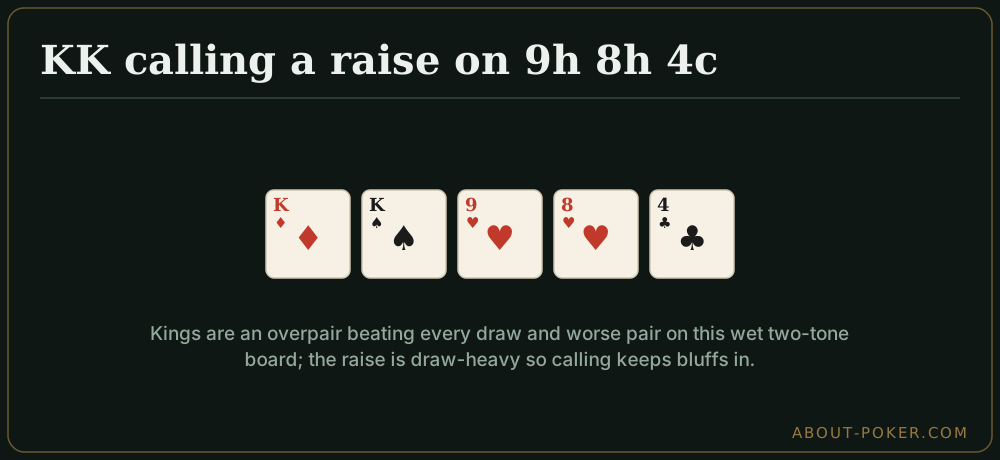
You open Kd Ks from middle position and the button calls. The flop is 9h 8h 4c and you c-bet 6 into 10. The button raises to 20. This is a wet, two-tone, connected board. A typical button raising range here includes flush draws, straight draws like J-T and T-7, combo draws, and some sets and two pair. Your kings are an overpair that beats every draw and every worse pair — you’re ahead of the large draw portion and only behind sets and the occasional two pair. Calling is clean: you keep the draws in, control the pot, and re-evaluate the turn. If a heart or a straightening card lands and you face another big bet, you can slow down. Contrast that with the same raise on Kd 7s 2c: there kings still hold, but against a passive raiser you’d be far more willing to fold to sustained aggression because the range is so value-heavy.
Call versus 3-bet
Calling is the default with most overpairs facing a raise. It keeps worse hands and bluffs in the pot, controls the size, and avoids blowing up against the nuts. 3-betting bloats the pot and usually folds out everything you beat while getting called only by hands that crush you. Reserve the re-raise for two cases: when a lot of worse value and draws will still call and pay you, or when you’re deep-stacked on a draw-heavy board and want to charge the draws a premium right now rather than let them realize equity cheaply. With aces specifically you can 3-bet a touch more, since nothing higher can be out there and you dominate the whole overpair category.
A quick checklist
Before you commit chips, ask: Is the board wet or dry, making the raise draw-heavy or value-heavy? Is this opponent capable of raising as a bluff or a semi-bluff? Am I in position to control the pot, or out of position and vulnerable? Is my overpair near the top of the overpair category, or a lower one that a higher overpair could beat? Continue when you beat the draws and light value, fold when a credible raise is almost entirely sets and two pair, and keep the pot small when you’re unsure. Play overpairs this way and you’ll stop stacking off with one pair while still winning the pots those big pairs deserve.
Frequently asked
Should I fold an overpair to a raise?
Sometimes. Against a passive player who only raises sets and two pair, folding a lower overpair on a coordinated board can be correct. Against an aggressive player or on a draw-heavy board, overpairs usually continue because they beat the draws in the raising range.
Is aces different from a smaller overpair?
Yes. Aces block the top of your opponent's value range less on most boards, but more importantly they can't be beaten by a higher overpair and they dominate the whole overpair category, so they play far more comfortably against a raise than nines or tens.
Should I 3-bet or call with an overpair facing a raise?
Usually call. 3-betting bloats the pot and mostly folds out the hands you beat while getting called by sets and two pair. Reserve raising for spots where a lot of worse hands and draws will pay you, or when you're deep and want to charge draws heavily.
How does position change how I play an overpair?
In position you can call and control the pot, seeing free cards and re-evaluating cheaply. Out of position an overpair is harder because you'll face more barrels and can't as easily realize showdown value, so you fold a bit more and 3-bet your strongest overpairs more.