Playing the River in Position
Position on the river is a huge edge. Learn when to value bet, bluff, or check back after seeing your opponent act, with a worked thin-value example.
On this page · 5 sections
Position is worth chips on every street, but nowhere more than the river. When you act last with all five community cards down, you have seen everything your opponent does and there are no more cards to come — the guessing is over. You can value bet knowing your opponent has already shown interest, bluff when their line screams weakness, or simply check back and win a free showdown with a hand that could not profitably bet. The player out of position has to commit chips into the unknown; you get to respond. Learning to weaponize that last-to-act advantage is one of the highest-return skills in no-limit hold’em.
Why the river is different in position
Earlier streets carry uncertainty — more cards can change everything. The river removes that. Hands are made, ranges are mostly defined, and your job is a clean three-way choice: bet for value, bet as a bluff, or check back. Position hands you the information to pick correctly because your opponent must act first, or has just checked to you.
That is the whole edge: you decide with maximum information. Out of position, a player who bets risks being raised and a player who checks invites a bet they must guess against. In position, you sidestep both problems. Our broader river strategy guide covers the fundamentals; here we focus on how position sharpens each decision.
The three river decisions
Value bet when worse hands will call. This is the bread and butter. If you hold a hand that beats a meaningful chunk of the hands your opponent would call with, bet — and size it to the strength of your hand and the calling range. Position lets you value bet thinner than you ever could out of position, because you are not worried about being raised off your hand after you have already seen a check.
Bluff when your opponent’s range is weak and capped. If they checked the river after a passive line, they rarely hold the nuts. A well-chosen bluff — ideally with blockers to their strongest calls — picks up a pot they would have won at showdown. Choose bluffs that unblock the hands you want them to fold and block the hands they would call with.
Check back for showdown value or pot control. When your hand is too weak to get called by worse but still beats some of their range, checking back guarantees a cheap showdown. This is disciplined pot control — you refuse to turn a modest winner into a bluff-catcher against a raise.
A worked example of thin value
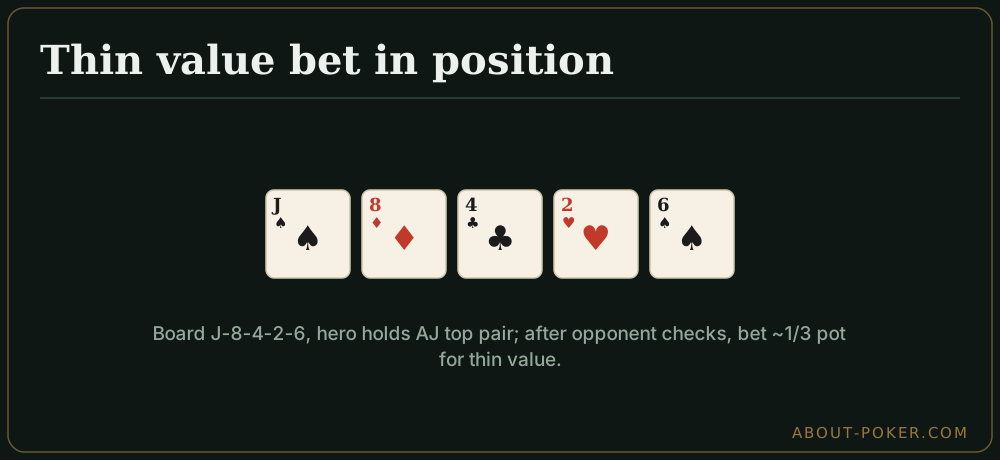
You raise A-J offsuit on the button, the big blind calls, and the board runs out J-8-4-2-6 with no flush completing. You bet the flop, both check the turn, and now it is checked to you on the river.
You hold top pair, decent kicker. Out of position you might check this down, fearing a raise. In position, after your opponent has checked, you should fire a thin value bet of around a third to half pot. Ask the key question: what worse hands call? Plenty — a pair of eights, a weaker jack like J-T or J-9, even second pair convinced you are stabbing. All of those pay off a small bet. The hands that beat you (two pair, sets) would usually have bet or raised earlier, so the check in front of you caps their range and makes it unlikely you are up against a monster. By betting, you extract value from a swath of worse hands that would simply check back and show down if you checked. That extra small bet, collected across thousands of rivers, is a large chunk of a winning player’s edge — and it exists only because you had position.
Responding when they bet into you
Sometimes your opponent bets or leads the river into you. Now position becomes a filter. Their bet defines their range: is it a value-heavy line, or does it look like a missed draw bluffing? With a bluff-catcher, weigh the price against how often they are bluffing — a hand that beats their bluffs but loses to their value is a pure call-or-fold decision, and position at least means it is the last decision. With a strong hand, you can raise for value, confident the action ends with you.
Common mistakes and a checklist
- Checking back every marginal hand. Position exists so you can value bet thin — do not waste it by playing scared.
- Bluffing into uncapped ranges. If your opponent could still have the nuts after their line, a bluff just donates chips.
- Value betting so large that only better hands call. Size thin value bets small enough to get paid by the weak hands you are targeting.
- Ignoring blockers when bluffing. The cards in your hand tell you how likely their fold is.
Before you act on the river in position, run the checklist: Will worse hands call a bet? If not, is their range capped enough to bluff? If neither, does my hand have showdown value worth checking back? Answer those three in order and every river decision in position becomes a calm, information-rich choice rather than a gamble. Position is a gift — on the river, spend it on thin value and well-timed bluffs, and take the free showdown when neither is there. To learn the full picture, pair this with value betting fundamentals.
Frequently asked
How do you play the river in position?
Playing the river in position lets you act last with full information after your opponent checks or bets. Value bet when worse hands call, bluff when your opponent's range is weak and capped, and check back marginal hands to realize showdown value cheaply.
When should you check back the river in position?
Check back the river when your hand is too weak to value bet but has showdown value, or when betting only gets called by better hands. Checking back guarantees a cheap showdown and avoids being raised off a hand that can win at showdown.
Should you thin value bet the river in position?
Yes, thin value betting is one of the biggest edges of position. When you can identify worse hands that will call — like second pair paying off top pair — a small value bet extracts chips your opponent would keep if you checked back.