Putting Players on a Range
Stop guessing one hand and start reading the whole range — a street-by-street method for narrowing an opponent from preflop to river, with a worked example.
On this page · 6 sections
The habit that separates winning players from everyone else is that they never ask “what does he have?” — they ask “what can he have?” Putting someone on a single hand is a coin flip you will lose most of the time, because opponents arrive at the same spot holding dozens of different hands. Putting them on a range — the whole set of hands consistent with their actions — is correct by construction, and it lets you make the play that is best against everything they could hold. It begins before the flop, with assigning a preflop range, and gets narrower with every street.
Start with the preflop range
Every range read starts from position and preflop action. A player who opens from under the gun has a tight range — big pairs, strong broadways, some suited connectors. A player who cold-calls a raise on the button has a different, more capped range — pairs and suited hands that flat rather than three-bet. A player who defends the big blind has the widest range of all. Before a single community card appears, you should have a rough starting range in mind. If you skip this step, everything downstream is guesswork.
Each action is a filter
Once the flop comes, treat every action your opponent takes as a filter that either keeps a hand in the range or removes it. A check keeps weak and medium hands and removes most hands that want to build a pot. A bet removes hands that would rather see a free card. A large sizing removes marginal hands that size down; a small sizing removes the biggest hands that want to grow the pot. On a scary turn, a check removes most of the nutted hands that would keep betting. By the river, applying this filter street by street, you are usually left with a small, readable set of hands. This is the mechanics of narrowing ranges on the flop extended across the whole hand.
A worked example
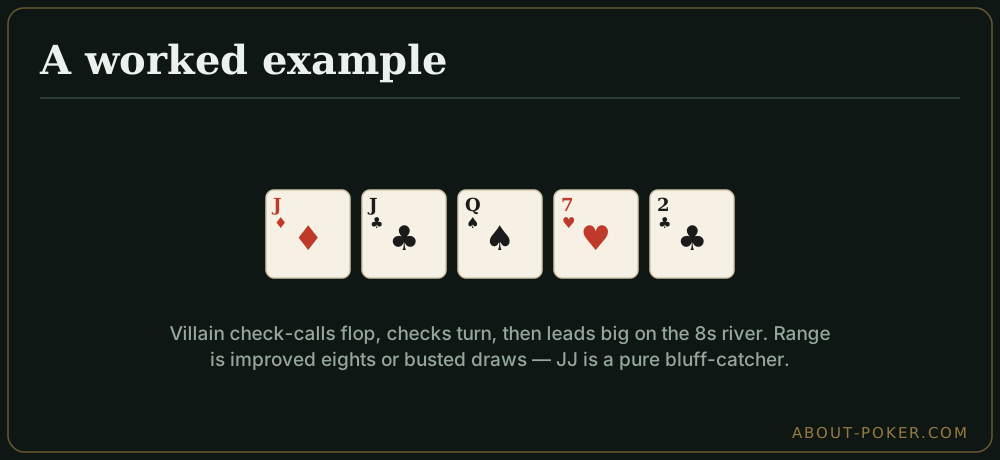
You raise on the button with Jd Jc, the big blind calls. Flop is Qs 7h 2c. Villain checks, you c-bet, villain calls. Turn is the 4d. Villain checks, you check behind for pot control. River is the 8s. Villain leads out for a large bet. What is his range?
Preflop, defending the big blind, he had a wide range. His flop check-call keeps queens, sevens, some backdoor and gutshot draws, pocket pairs like 8s through Ts, and floats — and removes most sets and two-pair that would raise. His turn check keeps that same medium-strength cluster. Now the river 8s pairs a possible 8 and completes little else, and he leads large into you. That river bet is the loud filter: check-calling twice and then leading big is very rarely a queen (he’d usually check-call again) and very often either a hand that just improved (a set of eights, or an eight that made two pair) or a busted draw turned bluff. Against that polarized range, your jacks are a bluff-catcher — you beat the busted draws and lose to the improved hands. The correct decision now flows from the range, not from a hunch about one hand. If his bluffs outnumber his value combos, you call; if not, you fold.
Weight the range with combos
A range is not just a list of hands — some hands have more combinations than others, and that weighting decides close spots. In the example, ask how many combos of value versus bluff he can hold. Sets of eights: he needs pocket eights, three combos. Two pair with an eight: a small handful. Busted draws that would bluff: often more combos than the value, if he defended enough draws on the flop. Rough combo counting, covered in counting combos at the table, turns “he’s polarized” into an actual call-or-fold number.
Common range-reading mistakes
Watch for these:
- Anchoring on the hand you fear. People assign the one hand that beats them and fold too much. Read the whole range, including the bluffs.
- Forgetting to remove hands. A range that never narrows is useless. Each street should shrink it.
- Ignoring sizing. A small bet and a huge bet mean different ranges from the same player. Let sizing filter, too.
- Static ranges. Update for the specific opponent — a maniac’s river-lead range has far more air than a rock’s.
A repeatable checklist
Run this every hand: (1) assign a preflop range from position and action; (2) at each street, remove the hands that would have played differently; (3) weight what’s left by combos; (4) make the play that is best against the whole remaining range, not against your fear. Do this consistently and hand reading stops being a mysterious talent and becomes a procedure — one that quietly wins you the close pots everyone else guesses their way through.
Frequently asked
What does putting a player on a range mean?
It means assigning your opponent the full set of hands they could hold given their actions, rather than guessing one specific hand. You start with the hands consistent with their preflop action and remove hands street by street as their bets, checks, and sizings rule combinations out. The range, not a single hand, guides your decision.
Why is a range better than putting someone on one hand?
A single hand read is almost always wrong because opponents show up with many holdings in the same spot. A range is right by construction — it contains every hand they could have — and lets you make the play that is best against the whole distribution, which is how consistent winners actually think.
How do I narrow a range across streets?
Start with a preflop range from their position and action, then subtract hands at each street that would have played differently. A check on a scary turn removes most nutted hands; a big river bet removes most weak ones. Each action is a filter that either keeps a hand in the range or takes it out.
Do I need to count combos to read ranges?
Not precisely at first, but rough combo awareness sharpens every read. Knowing there are more combinations of one-pair hands than of sets, for example, tells you a range is usually weighted toward the weaker holdings. Counting combos turns a fuzzy range into a decision you can defend.