Playing a Flush Draw Out of Position
Flush draws lose value out of position. Learn when to check-raise, when to check-call, and how to play a flush draw OOP with a worked hand example.
On this page · 6 sections
Flush draws are strong hands — until you’re out of position with one. The nine outs don’t change, but your ability to realize that equity does. Out of position (OOP) you act first on every street, so you can’t check to see a free card, you can’t control the pot as cleanly, and a smart opponent can price you out or check back to deny your equity. Playing a flush draw OOP well is mostly about choosing between two lines — check-raise or check-call — and almost never about leading into the raiser.
Why position hurts a flush draw
A flush draw’s value comes from two sources: the times you make the flush, and the times you can bluff opponents off better hands. Position magnifies both. In position you can check behind to take a free card, or bet when checked to for fold equity. Out of position you get neither for free. If you check, the aggressor bets and denies your free card. If you lead, you fold out the hands you dominate and get called by everything that beats you.
That’s why the OOP flush draw wants to weaponize the check itself. This is a core theme of playing out of position postflop: use the check-raise and the check-call to reclaim the initiative that position took away.
The two main lines: check-raise or check-call
The check-raise is your aggressive line. You check, let the preflop raiser continuation-bet, then raise. A flush draw is a near-perfect check-raise semi-bluff: you win the pot immediately when they fold, and when called you still have around 35% equity to complete by the river. Even better, check-raising lets you play a big pot with a hand that can improve to the nuts. Lean toward this on dynamic, two-tone boards where your raise represents a lot of made hands. The check-raise on the flop is the single most powerful tool for the OOP draw.
The check-call is your control line. You check, they bet, you just call. This keeps the pot small, disguises your hand, and lets you continue peacefully. Prefer check-calling when the board is dry (fewer credible check-raise bluffs), when your opponent barrels turns aggressively (so you get paid when you hit), or when your specific draw is weaker and you don’t want to bloat the pot as a semi-bluff.
A worked example
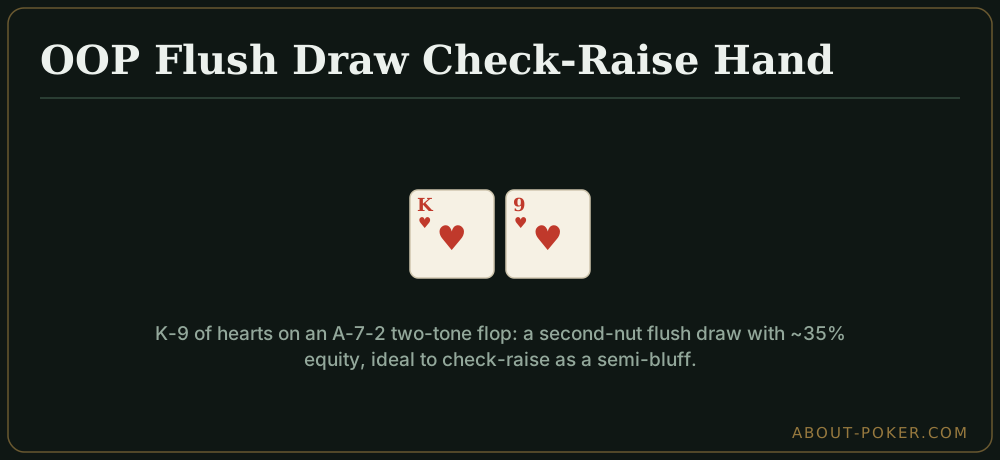
You defend the big blind with K♥ 9♥ against a button open. Flop comes A♥ 7♥ 2♣ — you have the second-nut flush draw. You check.
The button c-bets a third of the pot. Now you have a decision. A check-raise here is excellent: you have nine outs (about 35% equity), your K-high flush draw blocks some of their nut-flush combos, and your raise represents sets, two pair, and aces. If they fold, you win a pot you had no pair in. If they call or shove, you still hit roughly a third of the time and you’ll stack them when your flush comes in.
Compare that to check-calling: fine, but more passive. You’ll see the turn, but you surrender the fold equity that made your hand worth so much. Against a button that c-bets almost everything, the check-raise prints money. This is standard semi-bluff logic from playing draws postflop.
Playing the turn after you check-raise
If you check-raise the flop and get called, plan your turn before it arrives. When you brick, you have to decide: fire again as a bluff or check and give up. Firing a second barrel keeps the pressure on and denies equity, but it commits more chips with a hand that’s still just a draw. Check-calling is safer when you have position-independent showdown value or a backdoor to pick up.
When you hit your flush on the turn, keep betting for value — you now have a monster and want to build the pot. Just size up on wet boards so you’re not giving cheap cards to the hands still drawing behind you.
Common mistakes
- Donk-leading the flop. Leading into the raiser with a flush draw usually just folds out worse and isolates you against better. Check to keep your check-raise and check-call ranges intact.
- Always check-calling. Purely passive play lets opponents realize their equity and denies you the immediate wins that make draws profitable.
- Check-raising too big or too small. A raise that’s too small gives correct odds to everything; too big folds out the marginal hands you want to keep in when you’re semi-bluffing. Aim for a raise to roughly 3x their bet on most textures.
- Ignoring your specific flush. A nut or second-nut draw plays more aggressively; a low flush draw (which can be dominated) prefers pot control.
Quick checklist
- OOP flush draws split between check-raise (aggressive) and check-call (control).
- Check-raise more on wet boards and against wide c-bettors.
- Remember your equity: roughly 35% by the river, about 4-to-1 on the next card.
- Plan your turn barrel or give-up before the card comes.
- Almost never donk-lead; keep your checking range strong.
Handled this way, an out-of-position flush draw stops being a liability and becomes a hand that wins pots two different ways.
Frequently asked
How do you play a flush draw out of position?
Out of position, split flush draws between check-raising (as semi-bluffs) and check-calling. Check-raising builds the pot when you have fold equity plus your draw's equity; check-calling keeps the pot manageable and disguises your hand. Leading (donk-betting) is usually weaker because it lets the aggressor play perfectly against you.
Should you check-raise a flush draw?
Often yes. A flush draw makes an excellent check-raise semi-bluff because you can win immediately when they fold, and you still have roughly 35% equity to hit on the turn or river when called. Check-raise more on dynamic boards and against opponents who c-bet a wide range.
What are the odds of hitting a flush draw?
With nine outs, a flush draw hits about 35% of the time by the river from the flop, and about 19% (roughly 4-to-1 against) on any single card. That equity is why semi-bluffing works even when you're currently behind.