Reading Check-Raises
How to read a check-raise: what it polarizes to by street and board, how to count value vs bluffs, and a framework for continuing, folding, or 3-betting.
On this page · 7 sections
A check-raise is one of the most information-rich actions in poker, because it costs the raiser a lot to make it — they’re committing extra chips out of position after showing weakness with a check. That expense means a check-raise is almost always polarized: strong made hands that want to grow the pot, plus draws and air used as semi-bluffs, with very little in between. Reading one correctly means figuring out the value-to-bluff mix for this board against this player, and then answering with the right hands. Get that read and you’ll stop paying off the nuts and stop folding the best hand to a draw.
What a check-raise polarizes to
Because the middle of the range checks and calls, a check-raise sheds mediocre hands and keeps the extremes. On the value side: sets, two pair, strong top pairs, and made straights or flushes — hands strong enough to want stacks in. On the bluff side: open-enders, flush draws, combo draws, and the occasional pure air with a blocker. The exact balance is what you’re reading. A thinking player builds a check-raise range that’s roughly balanced so you can’t exploit it; most players skew heavily one way, and knowing which way is your edge. The mechanics of building the raise are covered in check-raising in poker; here we’re on the receiving end.
Board texture sets the mix
The board tells you which way a check-raise leans. On a wet, coordinated flop like 9-8-7 two-tone, the raiser has an abundance of draws and combo draws, so a check-raise is draw-heavy — you should continue more of your strong made hands because you’re beating a big chunk of the range right now. On a dry flop like K-7-2, there are almost no draws to bluff with, so a check-raise is value-heavy — the raiser is repping sets and two pair, and your marginal hands should fold. This is the direct application of range-versus-range thinking to a specific action: same raise, opposite meaning, because the board changed what bluffs are available. The flop-specific dynamics are laid out in check-raising the flop.
A worked example
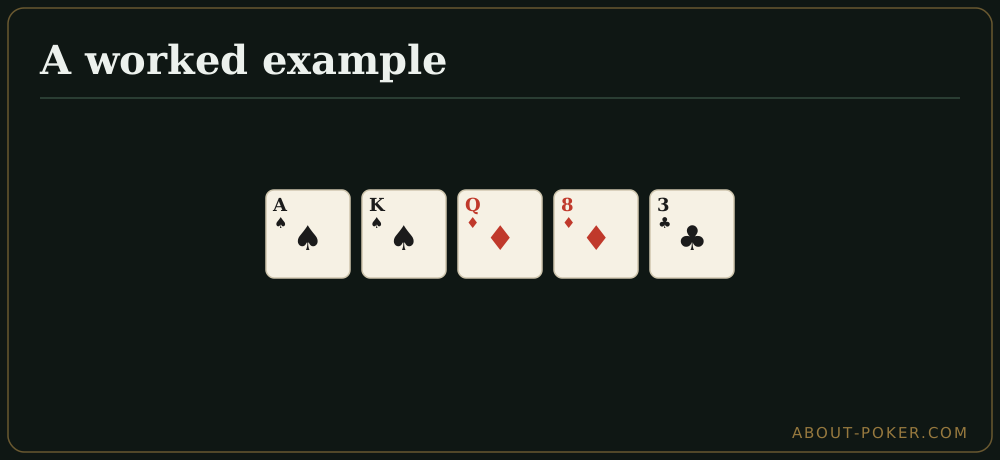
You c-bet 33% pot with A♠ K♠ on Q♦ 8♦ 3♣ and the big blind check-raises to 3.5x your bet. First, texture: two diamonds and a queen-high board give the raiser plenty of draws — flush draws, JT/T9 straight-draw types, plus sets and QX two pair for value. Second, count. Value: QQ/88/33 sets (about 7-9 combos after removal), Q8s/Q3s/83s two pair (a handful), maybe AQ if he’d play it this way — call it roughly 10 value combos. Bluffs: diamond flush draws, JTs/T9s open-enders, KdJd type combos — easily 12+ combos on this wet board. So the range is bluff-leaning, and your AK has two overcards plus the nut-flush-blocking A♠ (irrelevant to diamonds, but you hold no diamond, so you don’t block his draws). You have six outs to top pair and are ahead of his bluffs’ current equity but behind his value. Against a balanced, draw-heavy check-raise, calling one is defensible with the overcards; against a player who never bluffs here, you fold. The decision hinges entirely on the combo count — the same arithmetic from counting combos at the table.
The continue / fold / 3-bet framework
Once you’ve read the mix, sort your hand into one of three buckets. Continue (call) with hands that beat the bluffs and have equity or showdown value against the value hands — strong top pairs on wet boards, good draws, sets that don’t want to blow up the pot yet. Fold hands that only beat air and have no equity — third pair with no draw against a value-heavy raise is a clear muck. 3-bet your very best made hands (for value against a draw-heavy range) and your best semi-bluffs (draws with blockers that fold out his weaker value). The mistake is a mushy middle: calling with hands that neither beat his value nor have the equity to draw out.
Reading the player, not just the board
Board texture gives you the baseline; the player adjusts it. A tight-passive live regular who check-raises is telling you the truth almost every time — their bluff frequency is near zero, so respect it and over-fold. An aggressive online reg on a wet board is check-raising a properly balanced or even bluff-heavy range, so you defend wider and don’t hand them free folds. Track who check-raises rivers as a bluff and who only ever does it with the nuts; that single note changes correct play more than any solver output.
Common mistakes
The biggest leak is treating every check-raise the same — folding good hands to draw-heavy raises on wet boards, or calling down value-heavy raises on dry ones. The second is ignoring position and stack depth: a check-raise from a short stack is more committing and more value-heavy, while deep stacks allow more speculative check-raise bluffs. The third is failing to have a 3-bet response at all, so you only ever call or fold and let balanced raisers realize equity for free. And the fourth is auto-continuing top pair “because it’s top pair” without checking whether the board even supports the bluffs you’d be beating.
A quick checklist
Facing a check-raise, run four questions. Does the board support draws — is this raise likely value-heavy or bluff-heavy? Count it: how many value combos versus bluff combos? Where does my hand fit — beats value, beats bluffs, or beats neither? And what do I know about this specific player’s bluffing tendency? Answer those in order and you’ll continue, fold, or 3-bet for the right reason every time.
Frequently asked
What does a check-raise usually mean?
A check-raise is typically polarized: strong made hands that want to build a pot, plus draws and air used as semi-bluffs. The exact mix depends on the board and the player — on wet boards it's draw-heavy, on dry boards it's much more value-weighted.
Should you fold top pair to a check-raise?
It depends on the board and opponent. Against a balanced check-raiser on a wet board you often continue with strong top pairs because they're beating the draws; against a passive player who only check-raises the nuts, folding a marginal top pair is correct.
How do you play against a check-raise?
Estimate whether the raise is value-heavy or draw-heavy, count the value and bluff combos, and compare to your pot odds. Continue with hands that beat their bluffs and have equity, fold hands that only beat air, and 3-bet your very best hands and best semi-bluffs.
Do most players check-raise enough as a bluff?
No. Most live and low-stakes players check-raise far too value-heavy, especially on dry boards. That means their check-raises should be respected and you can over-fold your bluff-catchers against them profitably.