Slowplay vs Fast Play
Slowplay or fast-play your monster? Learn when checking traps and when betting builds the pot, the two conditions for a slowplay, and a worked flopped-set example.
On this page · 7 sections
You flop a monster. Now comes a tempting, dangerous choice: bet it and build the pot (fast play), or check it and lay a trap (slowplay). Slowplaying feels clever and cinematic, and that’s exactly why beginners overdo it. The truth is that fast-playing wins more money in the vast majority of spots, and slowplaying is a specialist tool for a narrow set of conditions. Knowing which is which is worth a lot of chips.
What each line is trying to do
Fast playing — betting and raising — does the boring, profitable work: it builds the pot over multiple streets, charges draws that might outdraw you, and gets called by all the second-best hands willing to pay now but likely to fold later. Three streets of value from a big pot is where stacks are won.
Slowplaying — checking or flat-calling a monster — trades that immediate value for deception. You give a free card hoping the opponent either improves to a strong-but-second-best hand or decides to bluff into your trap. It only makes sense when betting would win less than checking.
The two conditions for a slowplay
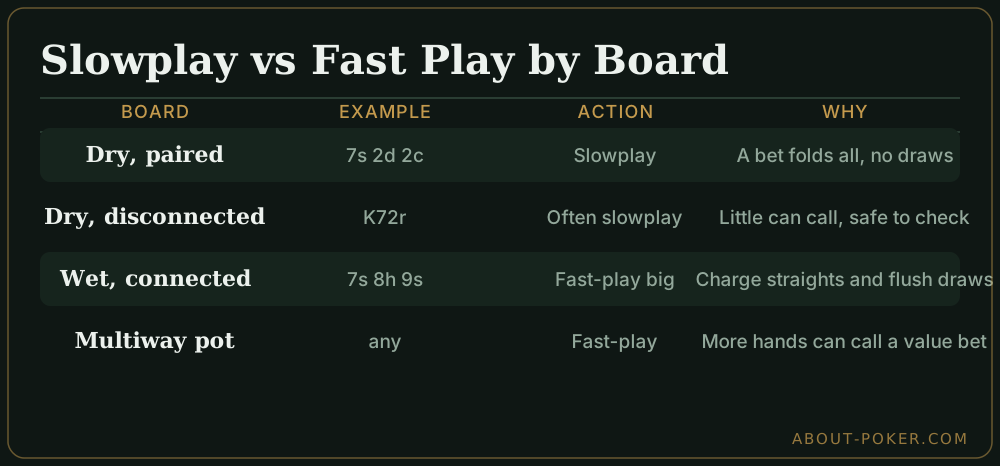
Slowplay only when both of these are true:
- A bet folds out almost everything. If nobody worse can call, betting just wins the small pot now. Checking gives them a chance to catch up or bluff.
- The board is dry and safe. Few or no draws exist, so giving a free card rarely lets a real hand get there. On a dry board, the “free” card is cheap.
Miss either condition — especially on a wet, drawy board — and you should be fast-playing. This is the core lesson of slowplaying big hands: the times it’s right are rarer than they feel.
A worked example: flopped set, two boards
You hold 7♣7♦ and flop a set. Compare two flops.
Board A: 7♠ 2♦ 2♣ (dry, paired). You have a full house essentially locked. Almost nothing your opponent holds can call multiple bets — this board hits their range terribly. If you fire, they fold their air and you win a tiny pot. Both conditions are met: a bet folds everyone out, and the board is bone-dry with no draws to fear. So you slowplay — check, let them catch a pair or decide to bluff, and collect on later streets. This is the rare textbook trap.
Board B: 7♠ 8♥ 9♠ (wet, connected, flush draw). You still have a set, but now the board is a minefield: straight draws, flush draws, two pair, and made straights are all live. Checking here is a disaster — you give free cards to a dozen draws that can beat you and you fail to build the pot while you’re ahead. So you fast-play: bet, and bet big, to charge the draws and grow the pot before a scary card arrives. Slowplaying a set on this board is one of the most common and expensive beginner mistakes.
Same made hand, opposite play — the board texture decides everything.
Why fast-playing usually wins
Most of the money in poker comes from getting called by worse over multiple streets, not from the occasional bluff you induce. When you slowplay, you routinely (a) give free cards that let draws complete, (b) miss a street of value you’ll never get back, and (c) create an awkward, capped situation on later streets when the board changes. Fast-playing sidesteps all three. As a rule, your strong hands and your bluffs both want to bet — that’s what makes a balanced, hard-to-read range, and it’s the backbone of good value betting.
Common mistakes
- Slowplaying on wet boards. The single biggest set-and-flush-draw disaster. Charge the draws.
- Slowplaying multiway. More opponents means more hands that can call a bet — bet for value, don’t trap into a crowd.
- Checking your monster “to be tricky.” Trickiness without a reason just burns value. Have a concrete reason a check earns more than a bet.
- Never slowplaying at all. The opposite leak — on the rare dry, uncallable board, refusing to check means you win pennies with the nuts. Slowplay when both conditions truly hold.
How opponents change the call
Against aggressive opponents who bluff a lot, checking your monster to induce their bluff is more attractive — they’ll do the betting for you. Against passive, fit-or-fold players, slowplaying is terrible: they won’t bet into you and won’t pay a big bet later, so you must fast-play to get any value at all. Read the human, then apply the board-texture test.
Quick checklist
- Is the board dry with essentially no draws? Slowplay is on the table.
- Would a bet fold out everything worse? If yes, checking may earn more.
- Any straight or flush draws present? Fast-play and charge them.
- Multiway pot? Default to fast-playing for value.
- Opponent aggressive? A check to induce bluffs is stronger. Passive? Bet for value.
When in doubt, bet your big hands. Slowplaying is the exception, not the rule. Explore the full postflop hub to learn exactly which boards reward the trap.
Frequently asked
What is slowplaying in poker?
Slowplaying is deliberately playing a strong hand passively — checking or just calling instead of betting or raising — to disguise its strength and induce bluffs or keep weaker hands in. It trades immediate value for deception.
When should you slowplay vs fast play?
Fast-play (bet and raise) most strong hands, especially on wet, draw-heavy boards where you need to charge draws and build the pot. Slowplay only when the board is dry, few hands can call a bet, and checking lets your opponent catch up or bluff into you.
Why is fast playing usually better than slowplaying?
Fast playing builds the pot over three streets, charges draws that could outdraw you, and gets called by second-best hands that would fold to later pressure. Most losses from slowplaying come from giving free cards or missing value when you finally bet a scary board.