Small Bet Strategy
Small bets (25-33% pot) are a range-betting weapon on the right boards. Learn when small bets win, why they let you bet wide, and how to avoid the traps.
On this page · 5 sections
Small bets — roughly 25% to 33% of the pot — are one of the most misunderstood tools in modern poker. Many players treat any small bet as weakness, yet strong players use small bets to fire their entire range on the right boards. Understanding small bet strategy lets you win a stream of small pots cheaply, deny equity, and keep control of the hand. This guide shows you exactly when a small bet is the correct play and when it is a trap.
Why small bets work: range betting
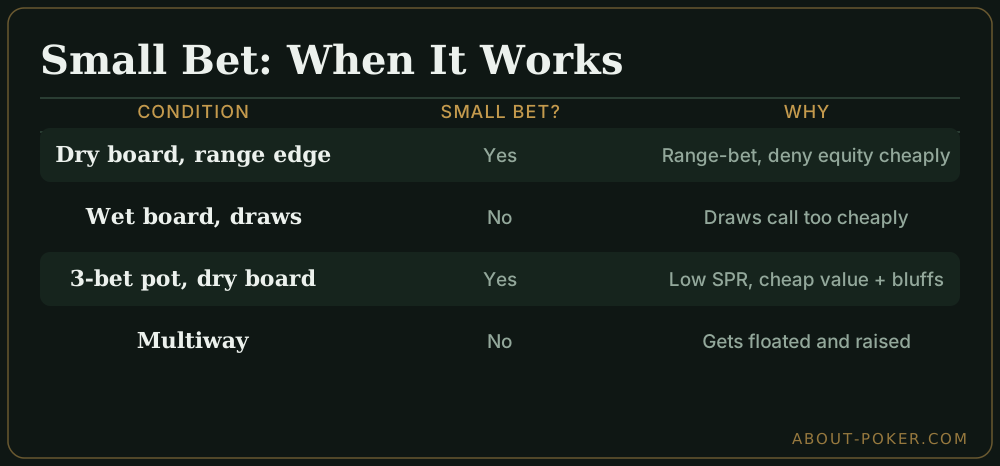
The engine behind small bet strategy is the range bet — betting your whole range at one small size. This works when equities across your range run close together and you hold a range advantage, conditions that appear on dry, static boards. On a board like A♠7♦2♣, the preflop raiser’s range dominates: it is full of aces, sets, and overpairs while missing very little, and the caller’s range is capped and full of hands that whiffed.
Because almost every hand in your range is either ahead or has a cheap draw, you can bet all of them small. Your value hands get thin value and deny equity; your air denies the opponent’s overcards their two-out-of-ten chance to improve. The small size means you risk little to win the pot outright a good share of the time, and it keeps the pot small so you rarely face a big, awkward decision later. For the flop version in detail, see c-betting dry flops.
Equity denial and pot control at a bargain price
Two benefits make the small bet efficient. First, equity denial: overcards, gutshots, and backdoor draws have real equity if given a free card, and a small bet charges them or folds them out. Even a 33% bet takes away the free card a check would grant. Second, pot control: by keeping the pot small on boards where you rarely need to build a huge pot, you avoid inflating the stakes with your many marginal hands.
Crucially, the small size costs little when it does not work. If you bet a third of the pot and get called or raised, you have invested only a small amount and can comfortably give up. That low cost is what lets you bet your entire range, bluffs included, without going broke on the times you are behind. This ties directly into overall continuation bet strategy.
A worked example
You open A♣Q♣ from middle position and the big blind calls. The flop is A♦8♠3♥, a dry, static, ace-high rainbow board. The pot is 6.5 big blinds.
This board is ideal for a small range bet. You have top pair with a strong kicker, but more importantly your whole middle-position range crushes this flop — you have every strong ace, the sets, and the overpairs, while the big blind’s calling range is capped and mostly missed. A c-bet of 2 big blinds (about 30%) does everything: worse aces and pocket pairs call, hands like KQ or JT with two overcards or a gutshot are denied their free card, and the pot stays small enough that you keep control on the turn and river. Betting 5 big blinds (75%) here would be a mistake — it folds out the exact hands you beat and only gets called by better aces or sets, bloating a pot you do not need to bloat.
When a small bet is the wrong choice
Small bets are board-dependent, not a universal default. On wet, dynamic boards — J♠T♠9♥, 9♦8♦6♣ — a small bet lets flush and straight draws call cheaply and realize equity, and it fails to build the pot for your value hands. There you want a larger, more polarized size, or checking a chunk of your range. Multiway pots also punish small bets: with more players, someone connects more often and your cheap stab gets floated or raised, so you should bet larger and more selectively.
The other trap is on the reading side. If you or your opponents bet small only with weak hands and big only with strong ones, the sizes become readable. Some players even use min-bets as a tell — our reading min-bets guide explains how to punish that. The fix is discipline: on the boards where small betting is correct, bet your value and bluffs at the same small size.
Small bet strategy checklist
Before you fire a small bet, confirm:
- Is the board dry and static, with equities running close across my range?
- Do I hold a clear range advantage on this exact board?
- Am I betting my whole range at this size, so the size reveals nothing?
- Is the pot heads-up rather than multiway?
- Am I choosing small to deny equity and control the pot cheaply, not out of fear?
When these hold, the small bet is a high-frequency, low-risk profit machine. When the board turns wet or the pot goes multiway, switch to a larger size and bet less often.
Frequently asked
When should I use a small bet?
Use a small bet of 25-33% pot on dry, static boards where you hold a range advantage. These boards let you bet your entire range cheaply, deny the opponent's overcards their equity, and keep the pot small so you stay in control on later streets.
Does a small bet mean I'm weak?
Not when you bet small with your whole range. Because your value hands and bluffs use the same small size, the size gives away nothing. It only signals weakness when players bet small only with weak hands, which is the leak to avoid.
Why bet small instead of checking?
A small bet denies equity to overcards and gutshots that a check would let see a free card, wins the pot outright a fair share of the time, and starts building value from your strong hands — all at minimal risk on boards where you rarely get raised or run over.