Slowplaying Big Hands
Slowplaying a monster can double your winnings or cost you a stack. Learn the exact conditions that make trapping profitable, with a worked hand.
On this page · 6 sections
Slowplaying — checking or calling with a big hand instead of betting it — is one of poker’s most satisfying and most abused moves. Done right, it turns a hand that would win a small pot into one that wins a stack. Done wrong, it hands opponents free cards and lets them either draw out or escape cheaply. The difference comes down to a handful of concrete conditions. The default with a strong hand is to bet; slowplaying is the exception you reach for only when the specific spot calls for it.
The core trade-off: deception vs. protection
Every time you slowplay, you’re trading two things away for one. You give up protection (charging draws and denying free equity) and immediate value (a smaller pot right now) in exchange for deception (a hidden hand that gets paid more later). That trade is only good when protection barely matters — because opponents have little equity — and when deception meaningfully increases how much they’ll eventually pay.
That single idea tells you when to trap and when not to. If the board is soaking wet with draws, protection is worth a lot, so you fast-play. If the board is bone dry and opponents can’t have much, protection is nearly worthless, so trapping costs you almost nothing and can gain a lot. Understanding wet vs dry board texture is the foundation of every slowplay decision.
Condition one: a dry, static board
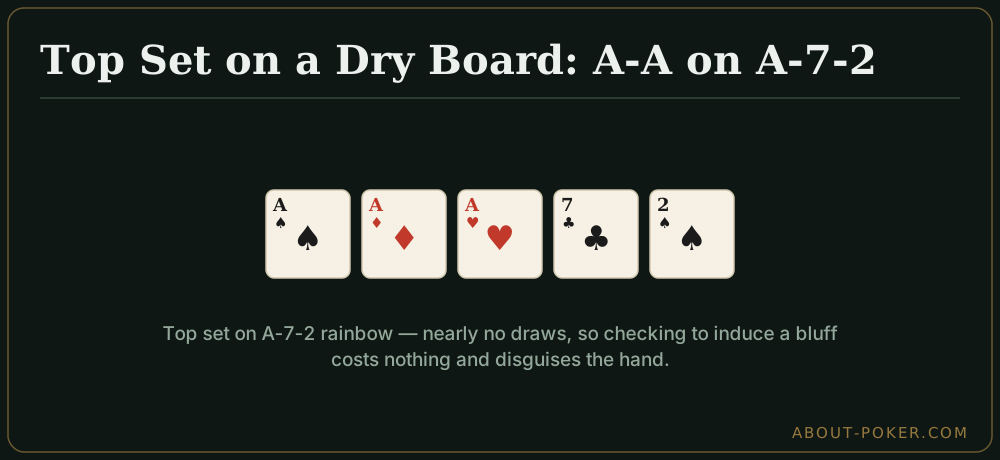
The cleanest slowplay spot is a monster on a dry board. Say you hold A-A on a board of A-7-2 rainbow. You have top set on a board with no flush draws and only the thinnest straight possibilities. If you bet, most of villain’s range — which whiffed entirely — folds. By checking, you let them barrel a bluff, catch a piece of the turn, or simply decide to see another card. Almost no turn card is dangerous, so the free card costs you nothing while the disguise can win you an extra street.
Condition two: a betting opponent
The second great slowplay condition is an aggressive opponent who will bet for you. If villain is a habitual bluffer or barrels relentlessly, checking your monster to induce their bluff is often more profitable than betting yourself. You let them build the pot with hands that would fold to your bet. This is why slowplaying against passive players usually fails — if they won’t bet, checking just checks the pot down. Against aggression, checking weaponizes their own tendency.
A worked example
You have pocket aces on the button. You raise, the big blind calls. Flop comes A-8-3 rainbow — top set on a dry board. Villain checks. Instead of c-betting, you check back. There’s no draw to protect against, and your hand is so far ahead that the only way to lose value is to fold out their air with a bet.
Turn is the 6 of clubs. Villain, sensing weakness after your flop check, leads out 60% pot with something like K-8 (middle pair) or a total bluff. Now you just call, keeping their bluffs and weak pairs in. River is the 2 of hearts. Villain, committed to the story, fires again — now you raise for value and get called by the hands you’ve been trapping. By checking one street on a safe board, you turned a hand that might have won one small bet into a raise that won a big pot. Compare that to trying to value bet three streets yourself, which would have folded out most of villain’s air on the flop.
When NOT to slowplay
- Wet boards. Any two-tone or connected board means draws, and draws mean you must charge them. Fast-play.
- Multiway pots. More opponents means more equity out against you and more chances someone outdraws you. Bet to thin the field and protect.
- Passive opponents. If they won’t bet, you can’t trap — just value bet yourself.
- Deep money with future scare cards. If a slowplay lets a scary turn arrive, you may lose both the pot and the value.
For the mechanics of the move across common spots, see slowplaying in poker.
Quick checklist
Before you check that monster, run through it: Is the board dry enough that a free card is safe? Will my opponent bet for me if I check? Am I heads-up rather than multiway? If all three are yes, slowplaying can double your winnings on the hand. If even one is no — especially the board question — bet, protect your equity, and take the guaranteed value instead of gambling for a bigger pot you might not win.
Frequently asked
What does slowplaying mean in poker?
Slowplaying is deliberately playing a strong hand weakly — checking or just calling instead of betting or raising — to disguise its strength and induce action from opponents on later streets.
When should you slowplay a big hand?
Slowplay when the board is dry, your hand is close to unbeatable, and betting would fold out everything. It also works when an aggressive opponent will bet for you. On wet boards with draws, fast-play instead to charge equity and protect your hand.
What is the risk of slowplaying?
Giving a free card. If the opponent has a draw, checking lets them hit and either beat you or win a pot you should have taken. Slowplaying also builds a smaller pot, so on average it wins less unless the board is genuinely safe.