Triple Barreling the River
Triple barreling the river is the last and biggest bet in a bluff or value line. Learn which cards to fire, sizing, blockers, and a full worked hand.
On this page · 6 sections
Triple barreling the river is the third and largest bet in a line that already fired the flop and turn. By the river there’s no more board to come, so the bet is pure: either you have a hand strong enough to get called by worse, or you’re representing one and forcing a fold. There is no equity to protect and no future street to set up. That clarity is exactly why the river barrel is the most punishing bet to get wrong — and the most profitable to get right.
What the river barrel is really doing
When you reach the river having bet twice, your opponent’s range is already narrow. They folded their trash on the flop and their weak pairs on the turn. What remains is some made hands, some missed draws, and some marginal pairs that decided to call you down. The river bet’s only job is to separate those groups. As a value bet, you want the marginal pairs and busted draws to call. As a bluff, you want everything that isn’t a strong made hand to fold.
Because the range is polarized — you’re betting your strongest hands and your total air, rarely the middle — the river barrel usually wants a large size: 75% pot up to an overbet. A big bet extracts the most from the calls you get and applies the most pressure when you’re bluffing. Read more on closing out hands in how to play the river.
Which rivers to fire
The card that peels off matters more than anything. Fire when the river:
- Completes a draw you would credibly hold given your line (a flush that arrives, a straight card).
- Is a scare card for their range — an overcard or a card that pairs the board in a way that favors you.
- Lets you hold blockers to their strongest calls while unblocking the hands they fold.
Shut down when the river is a blank that only improved the hands that were already calling, or when you unblock their value and block their folds. A missed flush draw in your own hand, for instance, is a great bluff candidate precisely because you can’t have the flush — but you remove nothing from their folding range. This is the heart of blockers in poker.
A worked hand
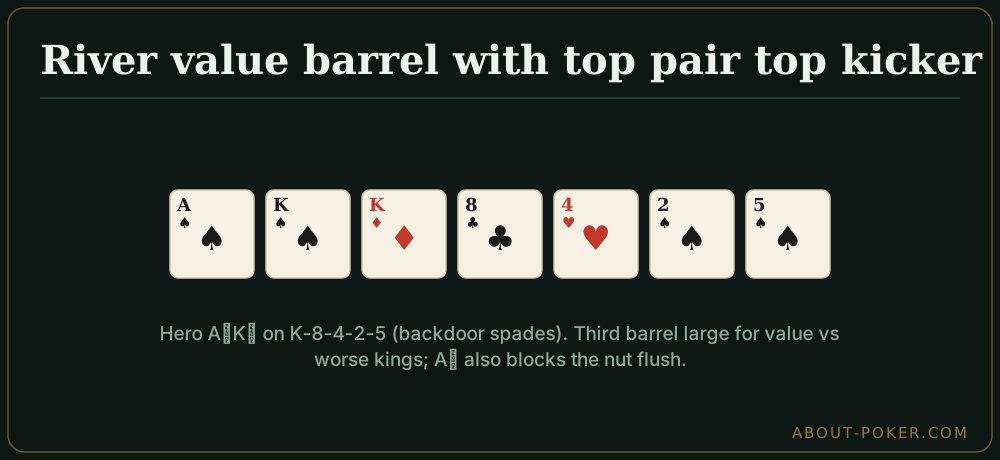
You raise to 2.5bb with A♠K♠ from the cutoff, the big blind calls. Flop comes K♦8♣4♥. You c-bet 33% pot with top pair top kicker; villain calls. Turn is the 2♠, a total blank. You bet again for value — around 66% pot — and villain calls, likely a worse king, a pair like 9s or 7s, or a floated gutshot/backdoor.
River is the 5♠, bringing the backdoor spade flush. Now you hold the A♠ — the nut flush blocker. But look closer: your actual hand, A♠K♠, is a strong value bet as top pair top kicker against the worse kings and second pairs that called twice. So you fire the third barrel for value, sizing large at ~80% pot, and get called by K-J, K-T, and stubborn middle pairs. Same board, if you held A♠Q♠ with a busted flush draw, you’d fire the identical size as a bluff — the A♠ blocks their nut flush and your story is consistent.
Value versus bluff frequency
You can’t only triple barrel with the nuts. Do that and observant opponents fold everything except hands that beat you, and your value bets stop getting paid. You also can’t barrel every missed draw or you become a calling station’s dream. A workable guideline tied to sizing: at a pot-sized bet, aim near one bluff for every two value hands; smaller bets need fewer bluffs, overbets need more. You won’t count combos at the table, but keeping both categories alive keeps you unexploitable. This is the same balancing logic covered in double and triple barreling.
Common mistakes
- Barreling as a bluff with no blockers. If you hold none of their fold-inducing cards and none of their value cards, you’re just donating.
- Under-sizing the value bet. The river is where polarized ranges get paid — a timid 40% bet leaves money on the table against the pairs that will call bigger.
- Firing into a range that only got stronger. If the river paired the board or completed the obvious draw and that helps them more than you, check.
- Giving up on the perfect card because you’re scared of the pot. The scariest-looking runouts are often your best bluffing cards.
River barrel checklist
Before you fire the third bullet, run through this:
- Did I bet the flop and turn with a plan to continue here?
- Does the river help my range more than my opponent’s?
- Do I hold blockers to their calls and unblock their folds?
- Am I bluffing a card I could credibly hold as a made hand?
- Is my sizing large enough to be polarized — not a nervous half-measure?
Answer those honestly and the third barrel stops being a gamble and starts being the most reliable line in your game.
Frequently asked
What does triple barreling the river mean?
It means firing a third bet on the river after you already bet the flop and turn. As a bluff it's the follow-through that forces folds from the missed draws and marginal pairs your opponent floated with; as value it's your final bet with a strong made hand.
When should you triple barrel as a bluff?
Bluff the river when the card completes draws you could credibly hold, unblocks your opponent's folds, and you hold blockers to their strongest calls. Give up when the runout only helped their calling range or you block the exact hands you want them to fold.
What sizing should a river barrel use?
Polarized rivers usually take a large bet — 75% pot up to overbets. Betting big maximizes fold equity as a bluff and maximizes value from the calls you get, which is the whole point of getting to the river with a polarized range.
How many bluffs should I have on the river?
Roughly, if you bet pot the math supports about one bluff for every two value hands. Smaller bets need fewer bluffs, overbets need more. You don't have to count combos live, but avoid the two extremes of never bluffing or bluffing every miss.