Defending vs a Button Steal
Defending vs a button steal means not folding your blinds too often. Learn your defend range, flat vs 3-bet splits, pot odds, and a worked example.
On this page · 6 sections
Defending vs a button steal is about not letting the button run you over. The button opens the widest range of any seat — often 40–50% of hands — precisely because only the two blinds are left to act. If you fold your blinds too readily, the button’s steal is pure profit. Correct defense means calling and 3-betting often enough to make those steals unprofitable. This is the sharpest case of defending the blinds.
Why the button steals so wide
When action folds to the button, only the small and big blind remain. That’s just two opponents — both of whom will be out of position for the rest of the hand — and both already have dead money in the pot. So the button can open a huge range profitably, betting a little to win the 1.5bb of blinds. Your defense is what caps how wide they can get away with it.
The pot odds that make you defend wide
From the big blind, you’re getting a discount because you already have 1bb invested. Against a 2.5bb button open, the math is generous:
- You must call 1.5bb more into a pot that will be roughly 5bb (2.5 + 1 + 1 + your call). You’re getting about 1.5-to-4.5, needing only ~25% equity to continue.
- Almost any two cards with some playability clear that bar against a 40–50% range.
That’s why big-blind defense vs a button open runs so wide — commonly 45–55% of hands. The full big-blind-vs-button defense breakdown covers the exact grid, but the headline is: defend a lot.
From the small blind, it’s different. You have to worry about the big blind waking up behind you, and you’ll be out of position to the button postflop. So you tighten your flatting range and 3-bet more — a polarized small-blind response of value hands plus bluffs is often better than a wide flat.
Flat or 3-bet? Splitting your range
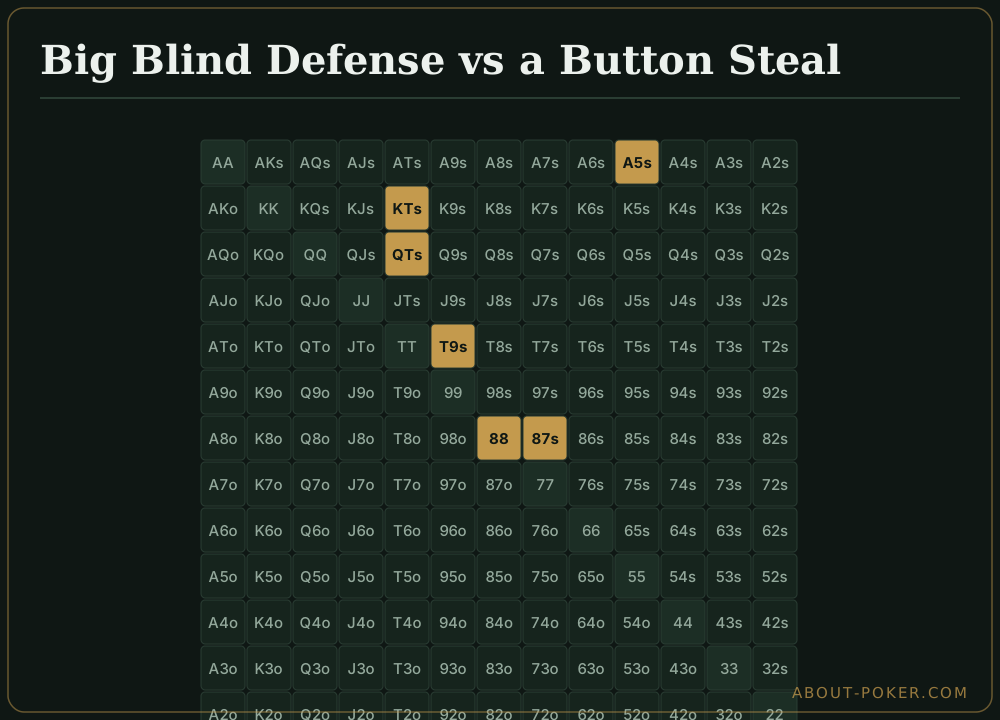
Against a button steal, use both continues:
- Flat the hands that realize equity well but don’t want to bloat the pot: suited connectors (9-8s, 7-6s), medium suited broadways (K-Ts, Q-Ts), small and medium pairs, and suited gappers.
- 3-bet for value with your best hands (A-Q+, T-T+, K-Q suited) and mix in blocker bluffs — suited aces like A-5s to A-2s. Because the button’s range is wide and folds a lot, 3-betting light is highly effective here; see 3-betting light.
Mixing both means the button can’t read your flats as weak or your 3-bets as pure premiums.
A worked example
You’re in the big blind at 100bb. It folds to the button, who opens to 2.5bb. You hold 8♠7♠.
- Fold? No — this is a slam-dunk defend. Getting ~2.5-to-1 immediate odds, 8-7 suited flops pairs, straight draws, and flush draws constantly against the button’s wide range, and it plays well postflop.
- Flat, not 3-bet. 8-7s isn’t a value 3-bet and there are better bluff candidates (suited aces block more of their value). So call the extra 1.5bb.
Flop comes 9♦6♣2♥. You have an open-ended straight draw with backdoor spades — about 8 outs, roughly 31% equity to hit by the river with two cards to come. When the button continuation-bets, you have plenty of equity to continue, and when you hit, your hand is well disguised. This is exactly the kind of playable holding that makes wide big-blind defense correct.
Common mistakes
- Over-folding the big blind. The most common blind leak — folding 60%+ against a button open hands the button free money. Defend closer to half your range.
- Flatting trash out of position. Wide doesn’t mean any two; offsuit disconnected junk (J-4o) realizes equity poorly even at a good price. Prefer suited and connected hands.
- Never 3-betting. A pure-flatting defense lets the button c-bet you off pots relentlessly. Add value and bluff 3-bets to fight back.
- Defending the small blind as wide as the big blind. The SB is out of position to two players; tighten up and lean on 3-bets.
Quick checklist
Facing a button steal, ask: Am I in the big blind (defend wide) or small blind (tighter, more 3-bets)? Does my hand play well postflop and connect with boards? Is it a flat (playable, doesn’t want a big pot) or a 3-bet (value or blocker bluff)? Am I defending enough overall to stop the button stealing for free? Answer those and you’ll turn the button’s favorite spot into a break-even one for them.
Frequently asked
How wide should I defend against a button steal?
From the big blind facing a standard button open of 2.5bb, you defend very wide — often 40 to 55 percent of hands — because you're getting a great price to see a flop and the button's range is loose. From the small blind you defend tighter and 3-bet more, since you'll be out of position postflop.
Should I flat or 3-bet against a button steal?
Do both. Flat the hands that play well postflop but don't want to blow up the pot — suited connectors, medium suited broadways, small pairs. 3-bet your value hands plus blocker bluffs like suited aces. A mixed strategy keeps you from being face-up and lets you punish a wide stealing range.
Why is defending against a button steal important?
The button opens the widest range at the table because everyone left to act is in the blinds. If you fold your blinds too much, the button prints money by stealing. Defending at the correct frequency denies them those cheap steals and forces them to have real hands.