Defending the Big Blind vs a Cutoff Open
How to defend the big blind vs a cutoff open. Learn the correct calling and 3-betting ranges, pot odds, and why cutoff defense is tighter than vs the button.
On this page · 7 sections
Defending the big blind against a cutoff open is close cousin to defending against the button, but with two important adjustments. The cutoff opens a stronger range, and there’s still a player left to act behind you. Those differences tighten your defense and sharpen your 3-betting incentives.
How the cutoff differs from the button
The cutoff opens fewer hands than the button — typically around 25-28% versus 40-50%. A tighter opening range means the cutoff’s average hand is stronger, so you need a bit more to continue against it. On top of that, the button is still to act behind you. If you flat, the button can flat or squeeze, and you might end up multiway or facing extra pressure. Both factors make big-blind defense versus the cutoff modestly tighter than versus the button. For the full picture of who opens what, see poker ranges by position.
Even so, this is still a wide-defense spot. The pot odds remain excellent: against a 2.5x open you call 1.5bb to win about 4bb, roughly 3.7-to-1, needing only ~21% equity. That’s the foundation of defending the blinds.
Calling range vs the cutoff
At 100bb against a 2.5x cutoff open, a solid calling range includes most suited hands (suited aces, suited kings down to about K8s, suited connectors and one-gappers), pairs, and the stronger offsuit broadways and connectors. Compared to your button defense, trim the weakest offsuit hands and the loosest suited gappers — they lose a little value against the cutoff’s stronger range and the button-behind risk.
Hands to fold: weak offsuit combos with poor connectivity such as 73o, 84o, 95o, and the like.
3-betting the cutoff
Your 3-bet range stays polarized and serves double duty by folding out the button behind you:
- Value: 99+, AQs+, AKo, plus AJs/KQs at some frequency
- Bluffs: suited wheel aces (A2s-A5s), suited kings like K9s, and suited connectors (76s, 65s)
3-betting to around 10bb prices in a clean decision and denies the button a cheap flat. For how these raise ranges vary by seat, see 3-bet range by position.
Worked example: KTo in the big blind
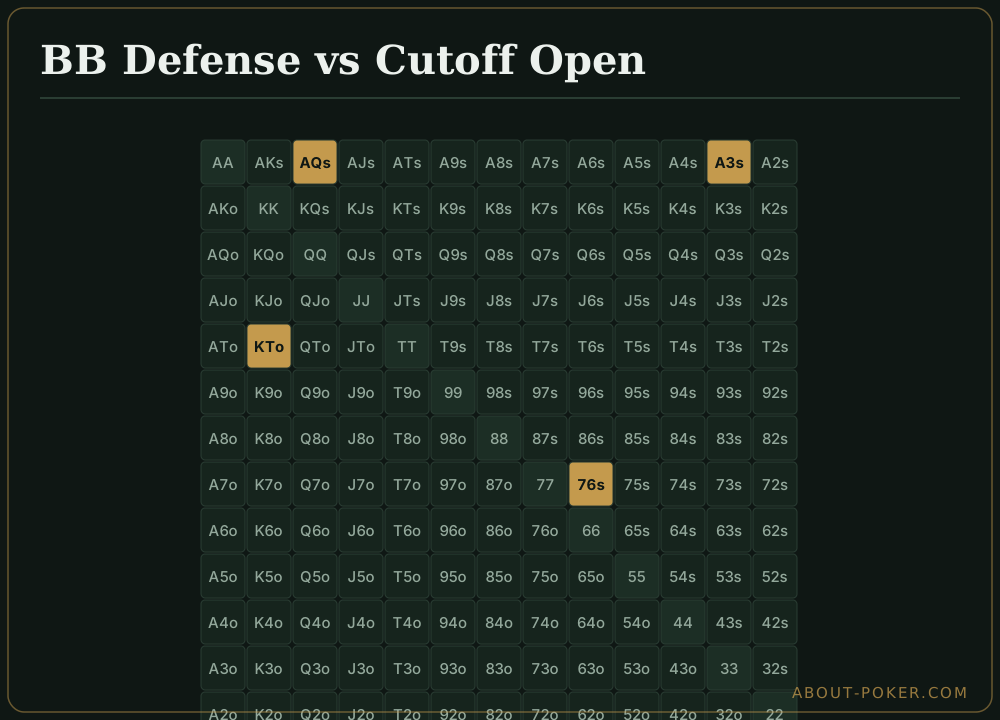
Cutoff opens to 2.5x, folds to you in the big blind with KTo. Effective 100bb.
KTo is a defend. Against the button you might mix in a 3-bet, but against the tighter cutoff range KTo is dominated too often by AK, AQ, KQ, and KJ to make a value 3-bet, and it’s too strong to bluff-fold. So flat-call. It flops top pair well, has straight potential, and realizes reasonable equity even out of position at a 3.7-to-1 price.
Now suppose you held A3s instead. That becomes a 3-bet bluff: the ace blocker reduces the cutoff’s strong ace combos, and the nut-flush potential gives it a good bluffing profile while also folding out the button. And a hand like 84o? Straightforward fold — it can’t flop enough to justify continuing even at a great price against a strong opener.
Adjusting to the cutoff’s sizing and tendencies
The ranges above assume a standard 2.5x open from a competent, balanced cutoff. Real opponents deviate, and your defense should follow.
- Against a min-raise (2x): you are getting an even better price — roughly 4.3-to-1, needing only about 19% equity — so defend wider still. Add more of the weak offsuit hands and loose suited gappers you would fold against a larger raise.
- Against a large open (3x or more): the price worsens (about 3-to-1 against a 3x, needing ~25% equity), and the opener’s range often skews stronger. Tighten your flats, dropping the weakest suited gappers and marginal offsuit hands.
- Against a nit who opens ~18% from the cutoff: their range is loaded with strong hands, so both your calling and bluff-3-bet frequencies should drop; you cannot profitably fight a range that is mostly value.
- Against a maniac opening 40%+: treat them almost like a button opener — defend very wide and 3-bet more for value, because their opening range is stuffed with hands worse than yours.
Postflop: why position and range shape still hurt
Defending wide from the big blind means you play the rest of the hand out of position with a capped range — you rarely have the very strongest hands because you would have 3-bet those. That has two practical consequences. First, check to the opener on most flops and let them make the first bet; your range is not strong enough to lead into theirs profitably on many boards. Second, defend against continuation bets using your equity, not your pair strength alone: backdoor draws, gutshots, and overcards all add up, and folding too much to a single c-bet is the classic way big-blind defenders bleed the value they earned by calling preflop. The wide preflop price only pays off if you continue at a reasonable rate afterward rather than surrendering every flop you miss. For how these defending frequencies compare across seats, see poker ranges by position.
The takeaway
Defend wide, but a notch tighter than versus the button. Respect the cutoff’s stronger range and the live button behind you by trimming your weakest continues, and use a polarized 3-bet range that both extracts value and clears the button out of the pot.
Frequently asked
How wide should I defend the big blind against a cutoff open?
Wide, but tighter than versus the button — roughly 40-45% of hands at 100bb against a 2.5x open. The cutoff opens a stronger range than the button, and there's still one player behind (the button) who can wake up, so you continue with slightly fewer hands.
Is defending vs the cutoff tighter than vs the button?
Yes. The cutoff's opening range is stronger than the button's, so on average you're up against better hands. You also have the button left to act, adding a small risk of a squeeze. Both factors trim your defending range compared to the button.
Should I 3-bet the cutoff from the big blind?
Yes, with a polarized range of value hands (big pairs, AK, AQ) and blocker bluffs (suited aces, suited connectors). A 3-bet also folds out the button behind you, reducing the chance of getting squeezed or playing a multiway pot.