How to Play Ace-Two Offsuit (A2o)
A2o is a weak offsuit ace with a valuable ace blocker. Learn where Ace-Two offsuit opens, when to use it as a 3-bet bluff, and how to play its top-pair and.
On this page · 7 sections
Ace-two offsuit (A2o) is a weak offsuit ace, but the ace itself does real work. The deuce is a dead kicker, so A2o is often dominated when it flops top pair — yet the ace gives you a powerful blocker for 3-bet bluffing and the potential to make the wheel (5-4-3-2-A). Unlike A2 suited, it has no flush draw, so its value leans on the blocker and its position. A2o is a hand you play for its leverage, not its raw strength.
Where A2o belongs preflop
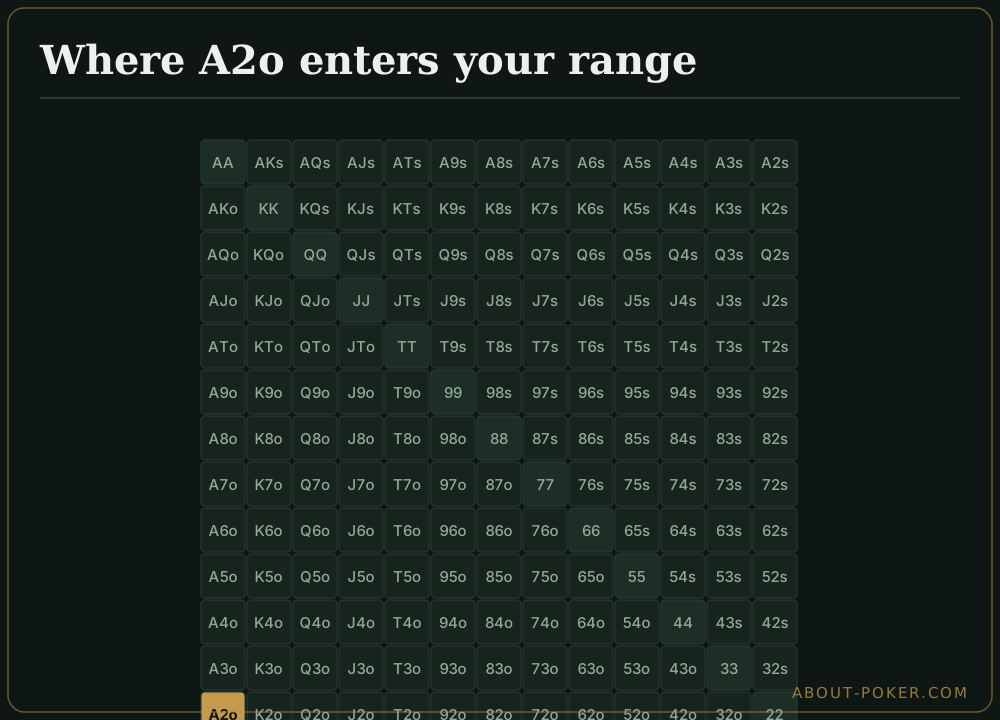
In a standard 6-max game, A2o opens comfortably from the cutoff, button, and small blind, where you are attacking wide and any ace with a blocker earns a seat. From early and middle position, fold it — the ranges you face there contain too many better aces, and A2o is dominated far too often to open profitably. The preflop opening ranges chart shows precisely which seats can enter with the marginal offsuit aces.
Blind defense is another home for A2o. In the big blind against a late-position raise at a good price, you close the action cheaply with a hand that has an ace blocker and wheel potential, so calling is fine. Against tight early opens you should fold, since domination is likely.
Where A2o shines is as a 3-bet bluff. From the blinds or button against a late open, the ace in your hand blocks a big chunk of your opponent’s strongest continuing range — AA, AK, and AQ. That makes A2o a textbook light 3-bet: it folds out marginal hands and, when called, still has the ace to make top pair or a wheel. It is never a 3-bet for value; the deuce kicker is far too weak.
Why the ace blocker matters
Blocker value is the whole reason A2o is more than trash. When you 3-bet and hold an ace, there are fewer combinations of AA and ace-broadway hands left for your opponent to call with, so your bluff succeeds more often. Meanwhile the deuce keeps you honest: when you do get called and flop a pair of aces, your kicker plays poorly and you should control the pot rather than build a big one against a range that may out-kick you.
That makes A2o a “blocker and pot-control” hand. You are leaning on the ace to pressure preflop and to make disciplined, smaller bets when you connect.
A worked example
You are in the big blind with A♣2♦, and the cutoff opens to 2.5bb. You elect to 3-bet as a bluff to 10bb.
This is a strong spot for A2o precisely because of the ace blocker. Holding an ace, you reduce the cutoff’s AA and ace-broadway combos, so they fold often enough to make the 3-bet profitable on its own. When they call, you can flop top pair or pick up a wheel draw with a four and a five on the board. If the flop comes A♥-9♠-4♣, you have top pair, deuce kicker — a hand to c-bet small for pot control, not to stack off with, since better aces dominate you.
Now suppose you simply flatted A2o in the big blind and the flop came K♥-Q♠-7♦. You have ace-high and no draw. Check and give up cheaply; there is nothing to continue with.
How A2o compares to its neighbors
Among offsuit aces, A2o is one of the weakest by kicker, roughly level with A3o and A4o, though those hands make slightly better straights. It plays clearly worse than A2 suited, which adds nut-flush potential on top of the same blocker and wheel outs. In blind-versus-blind pots, where ranges stretch widest, A2o becomes a strong steal and re-steal tool; for those dynamics see blind vs blind play.
Playing the flop: three textures to know
Because A2o’s whole plan is blocker-and-pot-control, how you play flops matters more than the preflop decision. Three common textures:
- You flop top pair (ace-high board). You have top pair, worst kicker. In a single-raised pot as the preflop aggressor, bet small once for protection and information, then be ready to check back or fold to real aggression — a raise usually means a better ace or two pair. Do not build a big pot; your kicker is the problem.
- You flop a wheel draw (a four and a five, or a three and a four with your ace). Now you have a genuine draw with backdoor and gutshot equity. This is where A2o’s straight potential earns its keep — you can barrel or semi-bluff because you have outs to back up the pressure.
- You completely miss. Ace-high, no draw, dry board. Give up. There’s no reason to fire a second bullet with a hand that has no equity and no fold-equity story left. Check and move on cheaply.
How opponent type changes A2o
Against a tight, straightforward player, the 3-bet bluff is at its best: the ace blocker plus their honest folding tendency means your light re-raise picks up the pot uncontested most of the time. Against a loose, sticky caller who never folds preflop, drop the bluff entirely — you’ll just build a pot with a dominated hand and get called down by better aces. Against aggressive regs who four-bet bluff a lot, A2o’s ace blocker actually makes it a reasonable five-bet bluff candidate in the right dynamic, again because it removes their strongest continuing combos. Read the opponent first; A2o is a leverage hand, and leverage only works against players who can fold.
A quick decision checklist
- Early or middle position, unopened: fold.
- Cutoff, button, or small blind, unopened: open to about 2.5bb.
- Big blind facing a late open at a good price: defend by calling.
- Blinds or button facing a late open, opponent can fold: 3-bet bluff for the ace blocker.
- Postflop with top pair: bet small for pot control, never stack off.
The practical takeaway: open it from late position, defend it at a good price, lean on it as a 3-bet bluff for its ace blocker, and play top pair for pot control rather than stacks. The ace is the asset — the deuce is just along for the ride. For the full seat-by-seat picture see preflop opening ranges, and for the widest spots of all, blind vs blind play.
Frequently asked
Is A2 offsuit a good hand?
It is a marginal but useful hand. A2o is one of the weaker offsuit aces because the deuce is a dead kicker, but the ace blocker and wheel potential make it playable from late position and a decent 3-bet bluff in the right spots.
Should I 3-bet with A2 offsuit?
Sometimes, as a bluff. A2o makes a good light 3-bet from the blinds or button against a late open because the ace blocks many of the strong hands (AA, AK, AQ) your opponent would continue with. It is not strong enough to 3-bet for value.
Where can I open A2 offsuit?
Mostly from late position — the cutoff, button, and small blind in 6-max games. From early and middle position it is generally a fold because it is dominated by better aces so often. It is also a routine big-blind defend at a good price.