How to Play Five-Two Suited (52s)
Five-two suited is a two-gap low suited hand near the bottom of the deck. Here is the narrow set of spots 52s is playable and how to fold it everywhere else.
On this page · 6 sections
Five-two suited (52s) is a two-gap low suited hand and sits near the very bottom of what a winning player will voluntarily play. Those two gaps between the five and the two badly limit its straight potential — it can essentially only make the wheel (A-2-3-4-5) as a straight, and even then only when the exact right cards fall. What keeps 52s from being pure trash is that it is suited, so it can make a flush. That thin flush lifeline is the only reason it ever appears in a range. Heads-up against a random hand, 52s wins only about 41% — clearly below a coin flip. The honest verdict is that 52s folds in nearly every spot, with rare life only in the cheapest big-blind defenses.
Why 52s is so weak
Two things make a suited hand playable: connectedness for straights and high cards for strong pairs. 52s has almost neither. Its two gaps mean it makes the fewest straights of the low suited hands, and its low cards make weak, easily dominated pairs. Compared to a one-gap hand like five-three suited, 52s flops meaningfully fewer straight draws, which is exactly what makes small suited hands profitable. That leaves the flush as its sole route to a big pot.
The one spot: cheap big-blind defense
The single situation that gives 52s a look is defending the big blind at a steep discount. When a late-position player makes a small raise, you close the action, and the pot lays you a large price, 52s can occasionally slip into your defending range. You are already invested through your blind, no one can raise behind you, and suitedness gives you a flush to chase.
This is the widest frontier of correct blind defense: you defend a far broader range than you would ever open, and hands like 52s qualify only at the very best prices against the widest ranges. As an open it is essentially always a fold — even on the button, your preflop opening ranges should show 52s below the line, because suited connectors and one-gappers get in long before a two-gap low suited hand.
A worked example
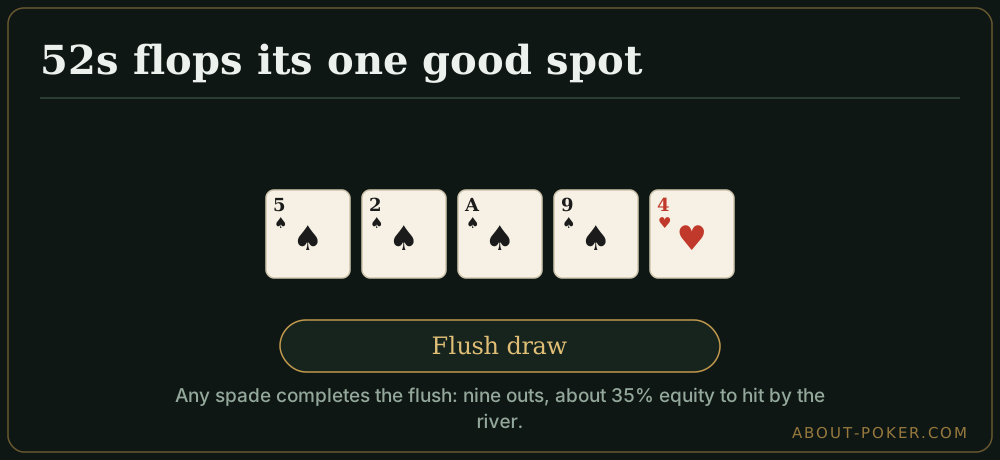
You defend the big blind with 5♠2♠ against a button open and the flop comes A♠-9♠-4♥.
This is the flop 52s needs: a flush draw, with any spade completing your flush — nine outs, about 35% equity to hit by the river with two cards to come. You can check-call a reasonable bet with this much equity and the upside of winning a big pot when a spade lands. There is even a backdoor wheel angle if a three then a card completes it, but the flush is your real story here.
Now change the flop to K♥-Q♦-7♣, and you hold five-high with no pair and no draw — a trivial check-fold to any bet. That contrast is the whole strategy for 52s: continue only when you flop real equity, and give up cheaply the many times you flop nothing.
How the spot changes with the raiser and the price
Not every big-blind defense is the same, and 52s is sensitive to both who raised and how much. Against a button open, the raiser’s range is at its widest, so your hand needs the least to justify a call — this is the friendliest spot 52s ever sees. Against a cutoff open the range tightens a little; against anything from earlier positions the raiser is strong enough that 52s slides back below the line. The rule of thumb: the later the raise and the smaller it is, the more a bottom hand like 52s can peek into your defending range.
Price matters just as much. A min-raise (2x) lays you a huge discount to close the action, and that is where marginal suited junk earns its rare keep. Bump the open to 3x or larger and your pot odds worsen, your implied odds on a thin flush do not improve enough to compensate, and 52s should simply fold. Because it realizes equity poorly out of position — you will often flop a weak draw and get barreled off it — you want the cheapest possible entry or none at all. Against a raise plus a caller (a multiway pot), the price improves but so does the chance someone holds a better flush, so treat 52s as a fold unless the discount is genuinely large.
Stack depth and the implied-odds trap
52s is an implied-odds hand: its entire value model is “get in cheap, hit a flush, win a big pot.” That model only works when stacks are deep enough to pay you off. At 100bb or deeper, the rare flopped flush can win a stack, which is what makes the occasional defense break even. Short-stacked — say 20 to 30bb — the implied odds evaporate because there is not enough money behind to reward the flush, and 52s becomes a pure fold even from the big blind. Never let the “but it’s suited” instinct override the stack math: a flush draw you cannot get paid on is not worth chasing.
The same logic separates 52s from a hand like five-three suited. Both are cheap suited defends, but the one-gapper flops more straight draws, giving it a second way to win a big pot and a slightly wider band of playable prices. 52s has only the flush, so it needs the very best of everything — latest position, smallest raise, deepest stacks — to be worth a single chip.
The right mindset
Play 52s as a fold-first hand. Never open it in a standard game, defend it only from the big blind at a genuine discount, and postflop continue solely with flush draws, strong two pair, or a rare wheel draw. Its tiny profit comes from the occasional flop where suitedness turns nothing into a real threat — and from the discipline to release it the far more common times it flops air.
Frequently asked
Is five-two suited worth playing?
Rarely. 52s is a two-gap low suited hand near the bottom of playability. Its only realistic home is defending the big blind at a deep discount against wide late-position raises. From every other seat it is a fold.
Should you open five-two suited?
Almost never. 52s sits below even wide button-opening ranges in most games. Folding it is the correct low-risk default and costs you essentially nothing. Suited one-gappers and connectors get in long before this two-gapper.
How do you play 52s after the flop?
Only continue when you flop a flush draw, a strong made hand like two pair, or a rare wheel straight draw. Its flush potential is the main reason to see a flop. On any board without a draw or strong pair, check and fold.