How to Play Nine-Seven Suited (97s)
Nine-seven suited is a playable one-gap connector that flops straights, flushes, and draws. Learn where to open 97s, when to 3-bet bluff, and how to play it.
On this page · 6 sections
Nine-seven suited (97s) is a one-gap suited connector — the kind of speculative hand that wins pots you never expect. It makes both straights and flushes, its made hands are disguised, and it flops enough draws to apply real pressure. Heads-up against a random hand it holds roughly 54% equity, but that number understates its value: 97s earns its money by flopping big draws in position and stacking opponents who cannot put you on a straight.
Where 97s enters the opening range
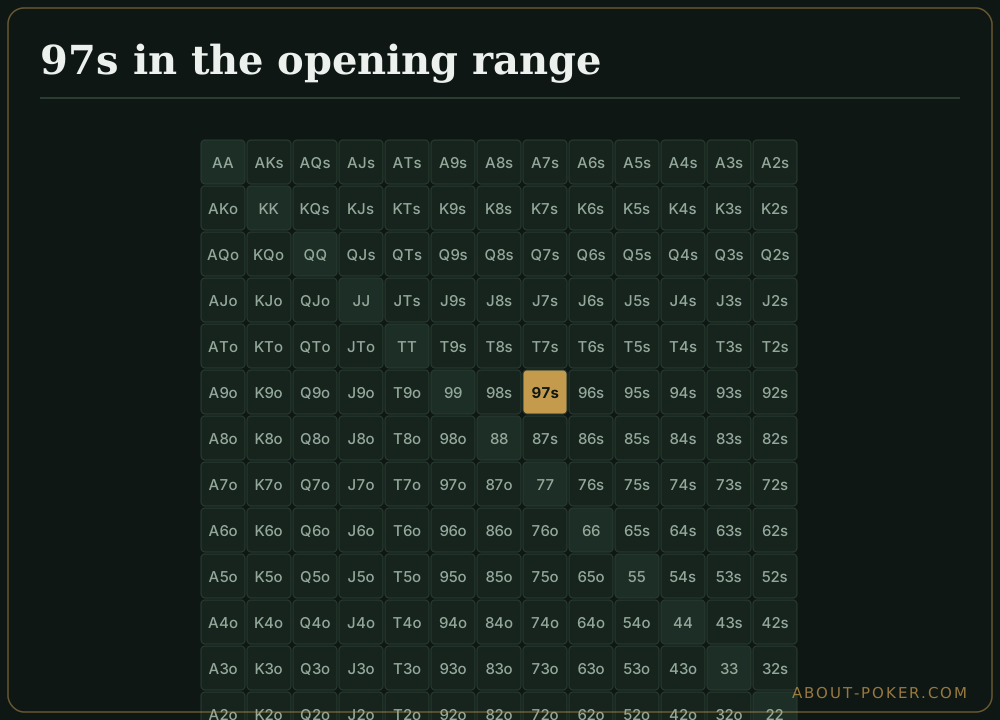
97s is a fold from early position in a standard 6-max game and a comfortable open from the cutoff, button, and small blind. The one-gap structure costs it a little compared to the true connectors, so it slides down the range relative to 98s. In late position, though, the combination of fold equity and postflop playability makes it a clear raise-first-in candidate. Check exactly where it belongs using your preflop opening ranges, and open it consistently once the earlier seats have folded.
From the big blind it is a routine defend against most opens because you are getting a price and the hand realizes equity well when it connects. It is one of the many suited hands that fill out a wide, playable defending range.
A reasonable 3-bet bluff
97s makes an acceptable 3-bet bluff from the button and blinds, especially against cutoff and button opens. It keeps decent equity when called, plays cleanly postflop, and its nine and seven do not block the weak broadway and offsuit-ace hands you are trying to fold out. That makes it a better bluff structurally than something that blocks the folding range. It is a notch below jack-nine suited and the true connectors, so slot it into the bottom of your 3-bet range rather than treating it as a default bluff.
A worked example
You hold 9♠7♠ on the button. The cutoff opens to 2.5bb and you call. The flop comes T♥-8♦-2♣.
This is the flop 97s dreams about: an open-ended straight draw, with any jack or six completing the nuts. You have eight clean outs, which is roughly 31.5% equity to improve by the river with two cards to come, plus extra value from any backdoor spade or a pair. Semi-bluff this flop by betting, and plan to barrel turns that either complete your draw or add equity. When you hit the straight it is almost invisible — an opponent with top pair or an overpair rarely folds, and you win a big pot.
Postflop discipline
97s thrives on connected, middling boards and struggles on dry, high ones. On T-8-2 or 8-6-3 you have monster equity and can play fast; on A-K-4 rainbow you have almost nothing and should surrender cheaply. The pairs it makes are frequently dominated — a seven-pair or nine-pair often runs into a better kicker — so treat one-pair hands as bluff-catchers rather than automatic value bets. The rule with 97s is simple: bet your draws hard, keep your marginal pairs cheap, and lean on position to control the size of the pot.
How stack depth and opponents change the plan
97s is worth the most when stacks are deep and you can win a big pot the times you hit. At 100bb or more, the implied odds behind your straights and flushes are the whole point of playing the hand: you call an open in position, flop a big draw, and get paid off when it completes because your line is disguised. As stacks get shorter the equation flips. At 40bb, implied odds shrink and the hand loses value, so open it a touch less from the small blind and lean toward calling rather than 3-bet bluffing, since a jam with 97s gets called by too many hands that flip or beat you. At 20bb and below in a tournament, 97s is mostly a fold outside of very late-position steals — there is not enough room left to realize its drawing equity.
Opponent type matters just as much. Against a calling station who never folds top pair, 97s is excellent: your straights and flushes get maximum value and you rarely need fold equity. Against a tough, aggressive regular who barrels and bluff-raises, tighten up — your marginal pairs turn into liabilities and your semi-bluffs get punished. The hand wants passive, sticky opponents postflop and tight, foldy opponents preflop.
A quick decision checklist
Before you put chips in with 97s, run through this:
- Position: Am I on the cutoff, button, or small blind? If earlier, fold.
- Stack depth: Do I have enough behind (roughly 40bb-plus) to get paid when I hit?
- Board texture postflop: Did I flop a draw or a strong pair, or just a weak dominated pair?
- Opponent: Will a passive caller pay off my made hands, or is a tough player waiting to bluff-raise me off my equity?
If the answers point to good position, deep stacks, a drawing board, and a payable opponent, 97s prints money. If not, it is an easy fold. For the neighboring one-gappers, compare it with jack-nine suited and lean on your preflop opening ranges whenever the seat is in doubt.
Frequently asked
Is nine-seven suited a good hand?
It is a solid speculative hand in the right seats. 97s is a one-gap suited connector that flops straight draws, flush draws, and disguised straights. It is not strong enough to open from early position in a full 6-max game, but it opens profitably from the cutoff, button, and small blind and defends fine in the big blind.
Should you open 97s under the gun?
In most 6-max games, no. With four or five players left to act, 97s does not have the raw strength to open profitably under the gun. It becomes a comfortable open from the cutoff onward, where fold equity and position let its playability shine.
Can you 3-bet bluff nine-seven suited?
Yes, occasionally. 97s is a fine 3-bet bluff from the button or blinds against a late-position open because it retains good equity when called and unblocks the hands you want your opponent to hold. It sits below true connectors like 98s and T9s in priority, so use it to round out a bluffing range rather than as a first choice.