How to Play King-Queen Offsuit (KQo)
KQo is a strong broadway that opens from every seat but plays carefully against 3-bets and 4-bets. Learn KQo preflop ranges and how to handle domination.
On this page · 6 sections
King-queen offsuit (KQo) is a strong broadway hand that opens from every seat, flops premium top pairs, and makes the nut broadway straight. It sits a clear notch below the true premiums, though, because the hands that continue against it — AK, AQ, KK, QQ — dominate it. KQo is a hand you play aggressively early in the hand and thoughtfully once real money threatens to go in. Getting it right means opening confidently, choosing your 3-bet spots, and folding when a tight range fights back.
Where KQo belongs preflop
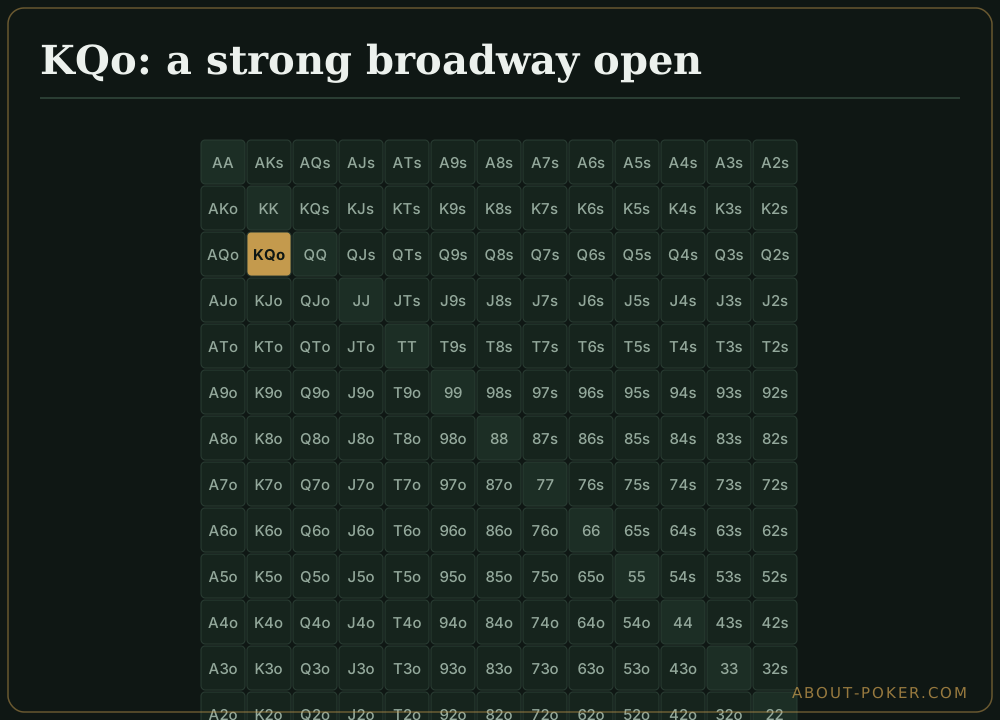
KQo is a universal open at most table configurations:
- Early position (UTG): open at nearly every table. KQo is near the top of your UTG range, especially at 6-max. At a very tight full-ring game some ranges tighten it, but it’s a standard raise almost everywhere.
- Middle and late position: an easy, automatic open.
- Small blind: raise (not limp) when it folds to you.
- Big blind: defend widely, and mix in the occasional 3-bet against late openers.
Because KQo opens from everywhere, the real skill is in how you respond to raises. Anchor the opening frequencies in the preflop opening ranges and see how the range shifts by seat in poker ranges by position.
The domination problem
KQo’s defining weakness is domination by the very hands that continue. Both of your cards are high, which sounds great, but it means every hand that wants to play a big pot against you — AK, AQ, KK, QQ, and even KJ dominating one card — has you in bad shape. When you flop top pair with the king, AK and AQ have you outkicked; when you flop a queen, the kicker problems multiply.
This is why KQo is a strong opening hand but a cautious calling hand against 3-bets. The wider your opponent’s range, the more worse kings and queens they hold, and the better KQo looks. The tighter their range, the more it’s stacked with the hands that dominate you.
3-betting and facing 3-bets
As a 3-bet, KQo works best against wide late-position openers whose ranges are full of worse broadways and suited junk you dominate. Against a tight UTG open, 3-betting inflates the pot against a range that’s ahead of you, so flatting in position or folding is usually better. The 3-bet range guide covers where KQo fits as a value raise versus a flat.
When you open and get 3-bet, the decision hinges on position and the 3-bettor’s range. In position with a fair price, calling is fine — KQo flops top pairs, gutshots, and the broadway straight. Out of position against a tight 3-bettor, folding is often correct because domination will cost you postflop. The defending against 3-bets guide details how to build a continuing range that doesn’t leak chips.
A worked example
You open K♦Q♠ from the button. The big blind 3-bets and you call in position. The flop comes K♣ 8♥ 3♠ — you’ve flopped top pair, second kicker, a strong but not invincible hand.
The big blind continuation-bets and you call, controlling the pot rather than raising into a range that has you dominated when it’s strong. Turn is the 5♦, a brick. The big blind bets again; you call once more, still ahead of worse kings, second pairs, and bluffs. River is the 2♣. If the big blind fires a large third barrel, slow down: a tight 3-bettor betting three streets big on this runout is often exactly AK, KK, or a set, all of which beat you. KQo top pair is a bluff-catcher by the river here — call if the price is right against a bluff-heavy player, fold against a range that’s mostly value. The lesson repeats across broadway offsuit hands: you win with top pair against worse, and you lose stacks by refusing to fold to the hands that dominate you.
Postflop in one paragraph
KQo’s postflop story is top pair and straights. When you flop top pair, bet for value against worse kings and pairs, but be ready to pot-control against strong ranges since AK and AQ have you outkicked. When you flop the broadway straight (on QJ10, KQJ-type runouts), play it fast — it’s a monster that often gets paid by two pair and sets. When you miss, KQo carries two overcards, gutshot potential, and backdoor equity, making it a fine one-barrel bluff on the right boards. The through-line is discipline: KQo makes strong hands, but it’s dominated often enough that folding top pair to real aggression is a core winning skill.
Where to go next
KQo is a premium-adjacent broadway: open it everywhere, 3-bet it against wide ranges, and respect domination against tight ones. Calibrate your opens with preflop opening ranges, sharpen your value 3-bets in the 3-bet range guide, learn to continue correctly with defending against 3-bets, and tie it together at the preflop strategy hub.
Frequently asked
Is KQ offsuit a good hand?
Yes, KQo is a strong broadway hand and a standard open from every position, including under the gun at most tables. It makes strong top pairs and broadway straights, but it's dominated by AK, AQ, KK, and QQ, so it should be played firmly preflop and cautiously against heavy aggression.
Should I 3-bet with KQ offsuit?
Sometimes. KQo is a reasonable value 3-bet against wide late-position openers, since it dominates the many worse kings and queens they open. Against tight early-position raisers it's often better to flat call or fold, because you're dominated by their AK, AQ, and big pairs.
How do I play KQ offsuit against a 3-bet?
In position with a good price you can call, since KQo flops top pairs and straights. Out of position against a tight 3-bettor it's frequently a fold, because you'll often be dominated. When you do continue, be disciplined postflop — top pair with KQo is strong but not a hand to stack off lightly.