How to Play King-Ten Offsuit (KTo)
King-ten offsuit is a marginal late-position open and blind defender that is easily dominated. Learn where KTo plays, when to fold, and how to play it postflop.
On this page · 7 sections
King-ten offsuit (KTo) is a marginal broadway hand that looks stronger than it plays. Two big cards are appealing, but KTo makes dominated top pairs and lives in the shadow of the many hands that beat it — AK, KQ, KJ, AT, and every pair above tens. It wins about 59% heads-up against a random hand, but that number flatters it: the moment real money goes in, the hands still fighting you are usually the ones that have it crushed. Treat KTo as a late-position steal and a blind defender, not a hand for big pots.
Where KTo belongs preflop
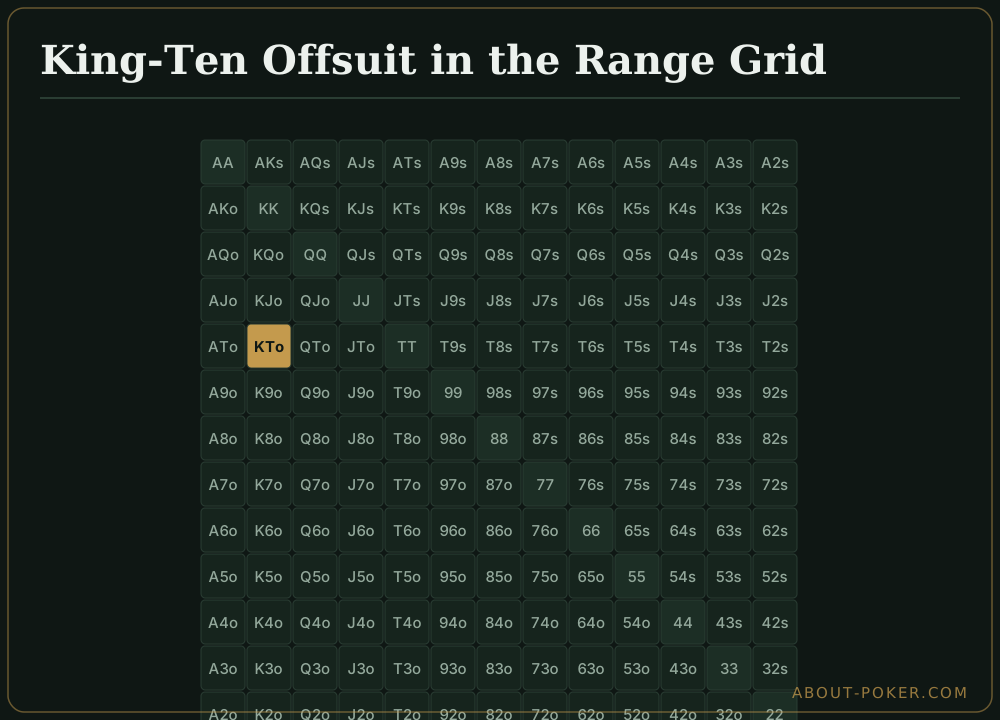
By position, KTo is a late-only open with strong blind-defense value:
- Early and middle position: a fold in most games. Opening a dominated offsuit broadway out of position invites trouble against tighter ranges.
- Cutoff and button: a standard open, where KTo steals blinds and flops enough top pairs and straight draws to fight for the pot.
- Small blind: open (raise) rather than limp when it folds to you.
- Big blind: defend against late-position opens; KTo is a comfortable defend given the price and its broadway potential.
Ground the exact borders in the preflop opening ranges and note how KTo shifts from an early fold to a routine late steal — the same late-position pattern that governs ace-ten offsuit, which is a slightly stronger sibling because its ace outkicks more of the field.
The domination problem
KTo’s core weakness is domination. When it flops top pair with a king, it is regularly outkicked by AK, KQ, and KJ. When it flops a ten, it is beaten by better tens and overpairs. So even though KTo often flops “top pair,” that pair is frequently second-best against a continuing range. This is why KTo is usually a call or fold rather than a 3-bet against tight opens — 3-betting folds out the junk you beat and gets action from AK and KQ, which dominate you.
Against wide ranges — a loose button open or a blind-vs-blind battle — KTo is ahead of enough weak kings, weak tens, and air to defend widely and occasionally 3-bet as a bluff. Choosing the right response to your specific opponent, rather than trusting the raw two-broadway look of the hand, is the whole skill.
A worked example
You defend the big blind with K♠T♦ against a cutoff open and the flop comes K♥-7♣-3♦. You have top pair, medium kicker.
Against a wide stealing range this is a good but not great hand. You can check-call a continuation bet — you beat all the worse kings, weak pairs, and floats — but you should not turn it into a huge pot. On the turn, if it bricks, check-calling again is fine against a range full of bluffs and worse kings, while staying alert that KQ, AK, and sets exist. If your opponent suddenly bets big on the river, respect it: your kicker problem means you are often drawing dead to the exact hands that fire three barrels. That “call down but don’t blow up” line is the essence of KTo — it wins medium pots and loses small ones when played with discipline.
Postflop in one paragraph
When KTo flops top pair, it is a call-down or thin-value hand, not a stack-off — the ten kicker loses too many kicker wars for you to want a giant pot with one pair. When it flops a straight draw (QJ or J9 textures give you gutshots to the nuts), you can semi-bluff with real equity. When it flops middle pair or air, it is a give-up or a single bluff. And remember: KTo is one of the widest hands in your big-blind defending range, so most of its profit comes from cheaply realized equity in single-raised pots, not from playing it aggressively for stacks.
How stack depth changes KTo
The correct KTo strategy shifts with effective stacks. At 100 big blinds and deeper, domination is expensive: when you flop top pair and the money starts going in, you are frequently drawing to two or three outs against AK and KQ, so deep stacks argue for tighter play and smaller pots. As stacks shorten, the picture improves. At 20 to 30 big blinds — common late in tournaments — KTo becomes a comfortable open-shove or 3-bet-jam from late position, because there is no dangerous postflop street where your kicker gets punished; you get your equity in preflop and realize all of it. In short, KTo is a better all-in hand than a deep-stacked postflop hand. The deeper the money, the more the kicker problem costs you.
KTo against different opponent types
Reading the player, not just the position, decides how wide you play KTo. Against a tight, straightforward regular, treat top pair with caution — when they raise, they usually have the better king or a set, so you fold more and bluff less. Against a loose, aggressive player who opens too wide and barrels light, KTo climbs in value: you flop ahead of their range often, and you can call down lighter because their betting range is full of worse kings and pure air. Against a passive calling station, KTo’s thin top pairs turn into straightforward value — bet for value when you pair, but never bluff, since they won’t fold. The hand’s marginal, domination-prone nature means opponent tendencies swing its profitability more than almost any premium would.
A short KTo checklist
Before you put KTo in the pot, ask: Am I in late position or the big blind? Is the opener wide enough that I’m not walking into AK, KQ, and KJ? Are stacks short enough that I can get in preflop, or deep enough that I must play a small, disciplined pot postflop? If it’s an early-position spot against a tight range, fold without regret — the same discipline that governs ace-ten offsuit and every dominated broadway. Fold it up front, steal with it late, and defend it cheaply, and KTo quietly earns its keep.
Frequently asked
Is king-ten offsuit a good hand?
KTo is a marginal broadway that opens only from late position and defends the big blind. It flops decent top pairs and broadway draws but is dominated by AK, KQ, KJ, AT, and pairs. Play it as a steal and a blind defender, not a big-pot hand.
Can you open king-ten offsuit under the gun?
No. KTo is a fold from early and usually middle position because too many dominating hands continue against you. It becomes a standard open only from the cutoff and button, and it defends the big blind against late raises.
Should you 3-bet king-ten offsuit?
Only against wide ranges as an occasional bluff. Against tight opens KTo is a fold, since the hands that call or 4-bet a 3-bet — AK, KQ, AA-JJ — dominate it. Most of the time it is a call or a fold, not a 3-bet.