How to Play Queen-Nine Offsuit (Q9o)
Q9o is a weak offsuit queen that opens only from the button and small blind. Learn its narrow range, the domination problem, and how to play it postflop.
On this page · 6 sections
Queen-nine offsuit (Q9o) is a hand that looks reasonable and plays worse than it looks. It has two decent-looking cards, but no flush potential like its suited counterpart, a queen that is frequently dominated, and a nine kicker that mostly rides along for the trip. That combination keeps Q9o at the very bottom of the hands you can open, and it should spend far more time in the muck than in the pot.
Where Q9o belongs preflop
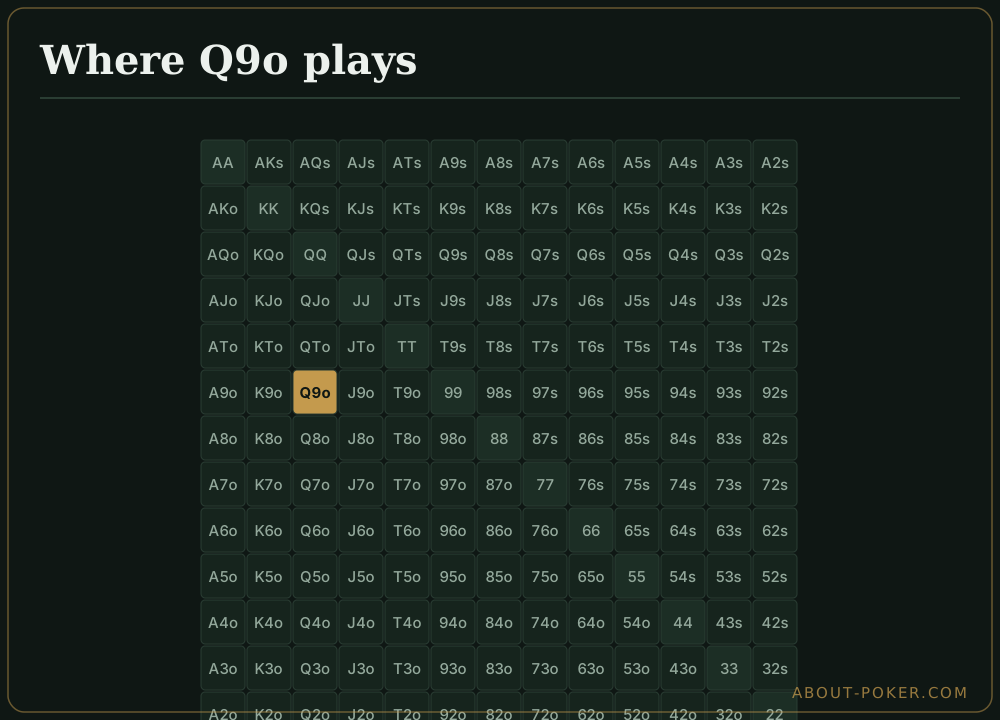
By seat, Q9o is a late-position-only hand:
- Early and middle position: fold. Opening a dominated offsuit queen into a full field is a losing proposition; the players behind hold too many better queens, kings, and aces.
- Cutoff: a fold at a full ring, a borderline open only at short-handed tables. Lean toward folding when the button and blinds are active.
- Button: a standard steal. This is the seat where Q9o earns its keep, mostly by picking up the blinds uncontested and playing in position when called.
- Small blind: open as a raise against folded action rather than completing. Limping a dominated hand out of position is a leak.
- Big blind: defend selectively against late opens, using the price the blind provides.
If those borders feel fuzzy, ground yourself in the preflop opening ranges and see how they widen seat by seat in poker ranges by position.
The domination problem
The defining weakness of Q9o is domination. When you flop top pair with the queen, you are often caught between two bad outcomes: ahead of a hand that will not pay you off, or behind A-Q, K-Q, or Q-J that will. The nine is a filler kicker — it rarely improves the hand and almost never plays as a good kicker of its own.
The suited version at least makes a queen-high flush to justify the risk. Q9o has no such safety net. Its value is entirely high-card and top-pair, both of which are thin, which is exactly why it opens only from the button and small blind and folds in every wider seat.
Facing a raise: fold or defend the big blind
When someone else has opened, Q9o becomes a fold-heavy hand:
- Facing an open: fold. You are dominated by the opener’s better queens and by kings and aces, and you have no flush draw to recover with.
- Big blind vs a late open: defend a portion of the time at a good price, and be willing to fold on later streets when the board does not help.
- As a 3-bet: essentially never for value, and rarely as a bluff. There are better blocker-bluff hands; see how they get selected in the 3-bet range breakdown.
A worked example
You open Q♥9♠ from the button and the big blind defends. The flop comes Q♦ 7♣ 3♠ — you have flopped top pair, weak kicker.
You bet, the big blind calls. On the turn 5♦, this is a pot-control spot rather than a value-betting one. If you keep firing, the hands that call or raise are usually better queens; the hands you beat will fold. Check back or bet small and plan to showdown cheaply. Q9o’s top pair wins a small pot often and loses a big pot occasionally, so your job is to keep the pot small when your kicker is exposed.
Contrast that with the same Q♥9♠ played from middle position at a full table. You would be opening into more players who dominate you, and even that same flopped top pair would face pressure from a range that has you beaten more often. Same cards, far worse spot — which is why Q9o opens late and folds early.
Postflop in one paragraph
Q9o’s friendly flops are the ones where it makes top pair in position and can control the pot, or a middle pair with a nine it can showdown cheaply. It has no flush draw, so semi-bluffs are limited to gutshots and the occasional open-ender. When it flops nothing, queen-high has weak showdown value, so treat those as bet-once-or-give-up hands. The through-line is restraint: a dominated queen with a dead kicker does not want to build big pots.
Where to go next
Q9o is a narrow button-and-blind steal hand, not a hand for the front of the table. Compare it to the more flexible Q9 suited, anchor the positional logic in poker ranges by position, and connect it all through the preflop strategy hub.
Frequently asked
Is Q9 offsuit a playable hand?
Only marginally. Q9o opens from the button and small blind and defends some big blinds, but it folds from early and middle position. Without a flush draw, its value rests on a queen that is often dominated and a nine kicker that rarely wins on its own.
Should I 3-bet Q9 offsuit?
Almost never. Q9o is a poor value 3-bet because it is dominated by the hands that continue, and it is a mediocre bluff because the queen and nine block little of an opponent's value range. Prefer better bluff candidates or simply fold it.
Can Q9 offsuit call a raise?
Rarely, and mostly only as a big-blind defend at a good price. Against an open from earlier position it is usually a fold, because you are dominated, out of position, and lack the flush equity that makes Q9 suited more forgiving.