How to Play Queen-Seven Suited (Q7s)
Queen-seven suited is a bottom-of-range steal hand you play only from late position. Learn how to play Q7s, when to fold, and why it is mostly a flush draw.
On this page · 7 sections
Queen-seven suited (Q7s) is a bottom-of-the-barrel playable hand. The two ranks are three apart, so it makes very few straights, and the seven is a throwaway kicker. What little value it has comes almost entirely from being suited — a queen-high flush draw — plus the fold equity you can generate from late position. Q7s is a steal hand and nothing more. If you are not on the button or occasionally the small blind, the correct play is almost always to fold it.
Q7s is a button-first hand
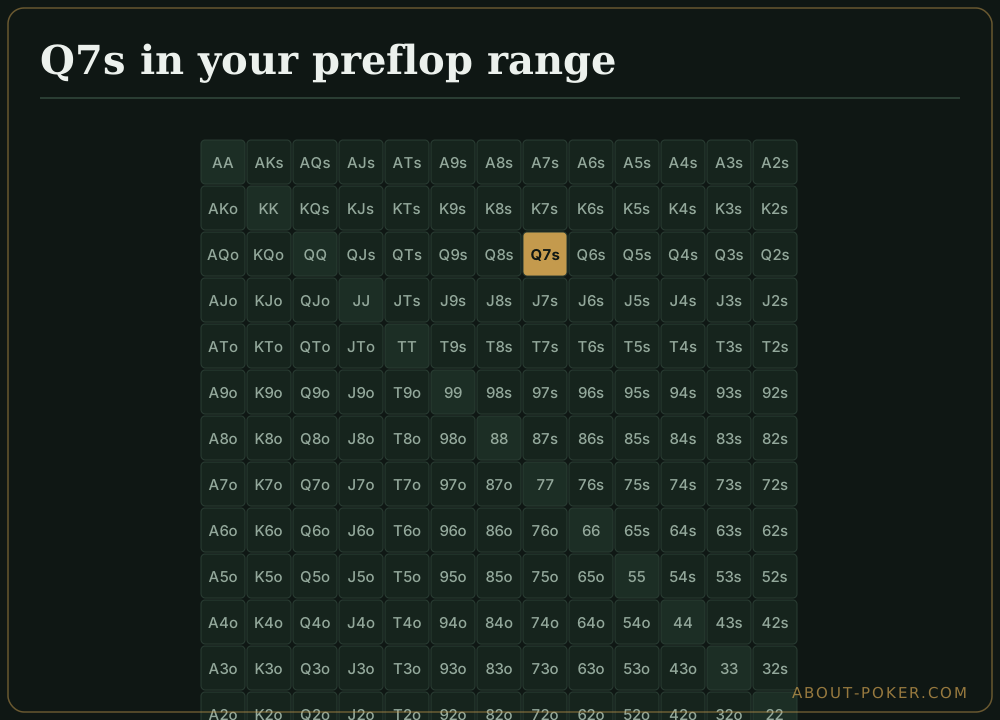
In most 6-max preflop opening ranges, Q7s is a raise-first-in only from the button, and marginally from the small blind as a steal. It is a fold from under the gun, early and middle position, and the cutoff in tighter games. The logic is entirely positional: on the button you attack two capped blind ranges with the last say in the hand, and the flush draw keeps you from being completely helpless when called. Strip away the position and the fold equity, and Q7s has no reason to be in your range.
It is a full tier weaker than queen-eight suited — the extra gap removes even more straight combinations and pushes the hand to the very edge of playability.
What Q7s can make
Realistically, Q7s wants to make a flush or a flush draw. It can flop a weak top pair with a queen, but that kicker is so soft it is rarely worth much in a raised pot. Its straight potential is thin and disconnected. When it whiffs the flush board, it is an easy check-fold. When it flops the flush draw, it has a real, barrel-able hand — and that swing from “nothing” to “big draw” is the entire reason the suited version is playable at all.
A worked example
You open Q7s on the button and only the big blind calls. The flop comes K-9-4 with two of your suit. You have flopped a queen-high flush draw — nine outs to a flush, worth roughly 35% equity by the river against a made hand. You have no pair and no straight draw, but nine clean outs plus fold equity against the big blind’s many missed hands makes a small continuation bet a reasonable semi-bluff.
Now change the flop to K-9-4 rainbow with none of your suit. Suddenly you have queen-high, no pair, no draw, and almost no equity. This is a check-back or a check-fold, not a bluff spot. That contrast is the whole story of Q7s: it is a fine hand when it flops the flush draw and total air the rest of the time, so your postflop decisions hinge almost entirely on whether the draw arrived.
Defending and folding from the blinds
From the big blind, Q7s is at best a marginal defend against a button open where you are getting a strong price and closing the action; against anything from earlier positions, fold it. From the small blind, do not flat it — a 3-bet-or-fold framework, as covered in defending the blinds, keeps you from playing this weak hand out of position in bloated pots.
Common Q7s mistakes
Most of the money lost with Q7s comes from playing it as if it were a stronger hand than it is. Watch for these leaks:
- Opening it from the cutoff or earlier. The single most common error. In a full cutoff range Q7s is right at or just past the edge, and in most solver-driven ranges it is a cutoff fold. Save it for the button.
- Overvaluing top pair. When a queen flops and you have “top pair,” the seven kicker means you are behind almost every other queen your opponent can hold, plus better made hands. Treat a bare queen as a bluff-catcher or a pot-control hand, not a hand to build a big pot with.
- Calling a 3-bet. Q7s has weak blockers and no straight potential to fall back on. Facing a 3-bet after you open, fold — do not flat it into a reopened, bloated pot out of position.
- Barreling a whiffed board. When the flush draw does not arrive, Q7s is air. Fire once as your standard c-bet if the board favors you, but do not run a three-street bluff with a hand that has no equity to fall back on.
How the flop texture decides the hand
Because Q7s lives on its flush draw, the flop’s suit distribution matters more than its ranks. Sort flops into three buckets and your decisions get easy:
- Two of your suit — this is the hand you were hoping for. You have nine flush outs (about 35% by the river) plus fold equity, so semi-bluff: c-bet, and continue barreling on later streets when you pick up more equity or the board keeps favoring your range.
- A queen with no flush draw — a marginal made hand with a bad kicker. Play small: check or make one thin value bet, control the pot, and be ready to fold to real aggression.
- Complete miss, no draw — queen-high air. Take the free card or make a single continuation bet on a favorable board, then give up. There is nothing here worth committing chips to.
Note how buckets two and three cover the large majority of flops. That is the honest reality of Q7s: it flops something you want to keep firing with only around a third of the time, which is exactly why it is a button-only steal and never a hand you go looking to play. For the next hand up in the class, see queen-eight suited.
The bottom line
Q7s is a positional steal hand that lives and dies by its flush draw. Do not overvalue top pair, do not defend it out of position against strong ranges, and do not turn it into a 3-bet bluff. Open it on the button, barrel it when the flush draw shows up, and fold it cleanly the moment it becomes a weak one-pair hand in a big pot. Played with that discipline, Q7s adds a little steal frequency to your late-position game without leaking chips elsewhere.
Frequently asked
Is queen-seven suited a good hand?
Q7s is a weak, bottom-of-range hand. It is only playable as a button or small-blind steal and, at most, a marginal big-blind defend. The queen and seven are too disconnected to make many straights, so the hand relies almost entirely on its flush draw. Fold it from most positions.
Should you open queen-seven suited?
Only from the button in most games, and occasionally the small blind as a steal. It is a clear fold from every earlier position. When you open it, you are attacking the blinds with position and fold equity, not raising for value.
Can you 3-bet queen-seven suited?
No, essentially never as a standard play. Q7s has weak blockers and poor straight potential, so it is a bottom-tier 3-bet bluff at best. Fold it to raises rather than 3-betting, and reserve your light 3-bets for hands with better blockers and playability.