How to Play Queen-Six Suited (Q6s)
Queen-six suited is a marginal button-only steal hand that plays almost purely as a flush draw. Learn how to play Q6s and when it is a clear fold.
On this page · 7 sections
Queen-six suited (Q6s) is a bottom-tier hand that barely qualifies as playable. The queen and the six are four ranks apart, so meaningful straights are almost off the table, and the six is a worthless kicker. Everything Q6s has going for it lives in one word: suited. It flops a queen-high flush draw often enough that, combined with the fold equity of a button steal, it can be opened at the very bottom of a late-position range. Outside of that narrow use case, Q6s is a fold.
Q6s is a button steal and little else
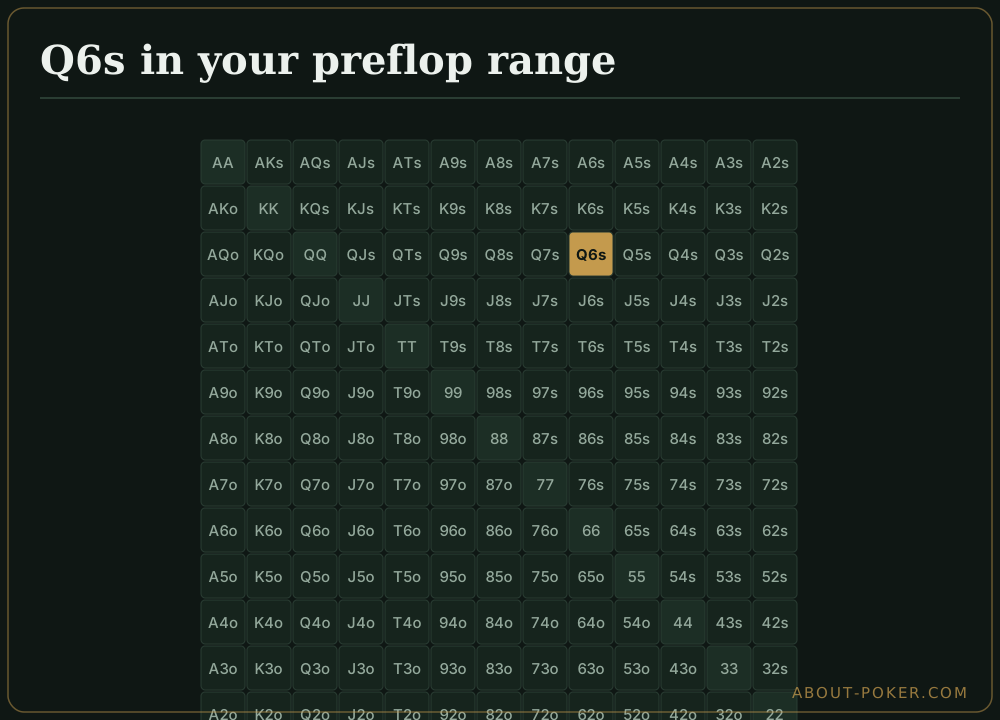
In standard 6-max preflop opening ranges, Q6s appears only as a button raise-first-in, with a rare small-blind steal. It is a fold from under the gun through the cutoff. The reason is purely positional: on the button you attack the two blind ranges with position, fold equity, and a backup flush draw for the times you get called. Take away those advantages and the hand has nothing — no real straight potential, no strong kicker, and a top pair that is dominated whenever it hits.
It is even weaker than queen-seven suited: the wider gap strips away nearly all the straight combinations that give a suited hand its extra playability.
Q6s is basically a flush draw
Be honest about what this hand is: a vehicle for the queen-high flush draw. It can flop a fragile top pair with a queen, but the six kicker makes that pair almost worthless in a raised pot. Its straight equity is minimal. So Q6s divides sharply into two flop types — flush-draw boards, where it has a genuine barrel-able hand, and everything else, where it is an instant check-fold. Your postflop life with Q6s is decided almost entirely by whether two of your suit show up.
A worked example
You open Q6s on the button and the big blind calls. The flop comes K-8-3 with two of your suit. You have a queen-high flush draw — nine outs, roughly 35% equity by the river against a made hand — but no pair and no straight draw. Nine outs plus fold equity against the big blind’s many air hands makes a small continuation bet a defensible semi-bluff.
Swap the flop to K-8-3 rainbow with none of your suit and everything changes: you hold queen-high with no pair, no draw, and near-zero equity. That is a check-back or check-fold, never a bluff. The contrast could not be sharper, and it defines how to play Q6s — bet the flush draws, abandon the whiffs, and never manufacture action without equity behind it.
From the blinds: mostly fold
From the big blind, Q6s is at best a thin defend against a button open where the price is very good and you close the action; against opens from earlier seats, fold it without a thought. From the small blind, never flat it — a 3-bet-or-fold approach, as described in defending the blinds, keeps this weak hand from bleeding chips out of position in inflated pots.
Common mistakes with Q6s
The first and biggest mistake is opening Q6s from too early a seat. Players see “suited queen” and treat it like a broadway hand, but from under the gun or middle position you run straight into a wall of better queens, aces, and kings that dominate you, and you have no position to make the hand play well postflop. Fold it there every time. The second mistake is overvaluing top pair. When you flop a queen, your six kicker is nearly worthless — any opponent continuing with a queen almost certainly has a better kicker, and you are drawing thin. Do not build a big pot with one pair and a dead kicker. The third mistake is calling a 3-bet with Q6s “because it is suited.” Suitedness buys you a flush draw, not a license to play a dominated hand out of position for a raised price. When you open and face a 3-bet, fold; the hand is a raise-or-fold, not a caller.
How opponent type changes the play
Q6s wants weak, capped opponents. Against a tight big blind who only defends strong hands, your steal picks up dead money often and your flush-draw flops face a range that folds a lot to a continuation bet — ideal. Against a loose, sticky caller who defends wide and never folds a pair, the picture worsens: your fold equity shrinks preflop and postflop, and your queen-high often has to actually win at showdown, which it rarely does. Against an aggressive opponent who 3-bets frequently, tighten up and simply fold Q6s more often preflop rather than opening into a raise you cannot profitably continue against. The hand’s thin edge comes almost entirely from stealing and semi-bluffing versus players who fold; against those who do not fold, Q6s quietly becomes a fold.
The bottom line
Q6s is a button-only steal that functions as a flush draw with a queen attached. Do not overvalue the queen, do not defend it against strong ranges, and do not 3-bet it. Open it on the button, semi-bluff it when the flush draw appears, and fold it cleanly everywhere else. Treated as the fringe hand it is, Q6s adds a sliver of stealing frequency to your late-position game without becoming a leak that costs you real money.
Frequently asked
Is queen-six suited a good hand?
Q6s is a weak hand that is only marginally playable as a button steal. The queen and six are far apart, so it makes almost no straights and relies on its flush draw for equity. It should be folded from nearly every position other than the button and, occasionally, the small blind.
Should you open queen-six suited?
Only from the button in most 6-max ranges, and rarely from the small blind as a steal. Everywhere earlier it is a fold. When you open Q6s you are stealing the blinds with position and fold equity, not raising a hand with real value.
Can you 3-bet queen-six suited?
No, it is not a standard 3-bet. Q6s has weak blockers and negligible straight potential, so it makes a poor bluff-3-bet. Fold it to opens rather than 3-betting, and use hands with stronger blockers for your light 3-bet bluffs.