How to Play Queen-Nine Suited (Q9s)
Queen-nine suited is a late-position steal and blind-defend hand with sneaky straight and flush equity. Learn how to play Q9s without overplaying it.
On this page · 7 sections
Queen-nine suited (Q9s) sits right on the boundary between a playable hand and a fold. It is a one-gapper with a queen-high flush draw, which means it can make the second-nut straight (with a jack-ten-eight run of cards) and flops enough draws to defend and steal profitably from the right seats. But the nine is a soft second card and the gap between the two ranks costs you some straight equity compared with a true connector. Play Q9s as a positional steal-and-realize hand, not as something you commit stacks with lightly.
Where Q9s belongs in your opening range
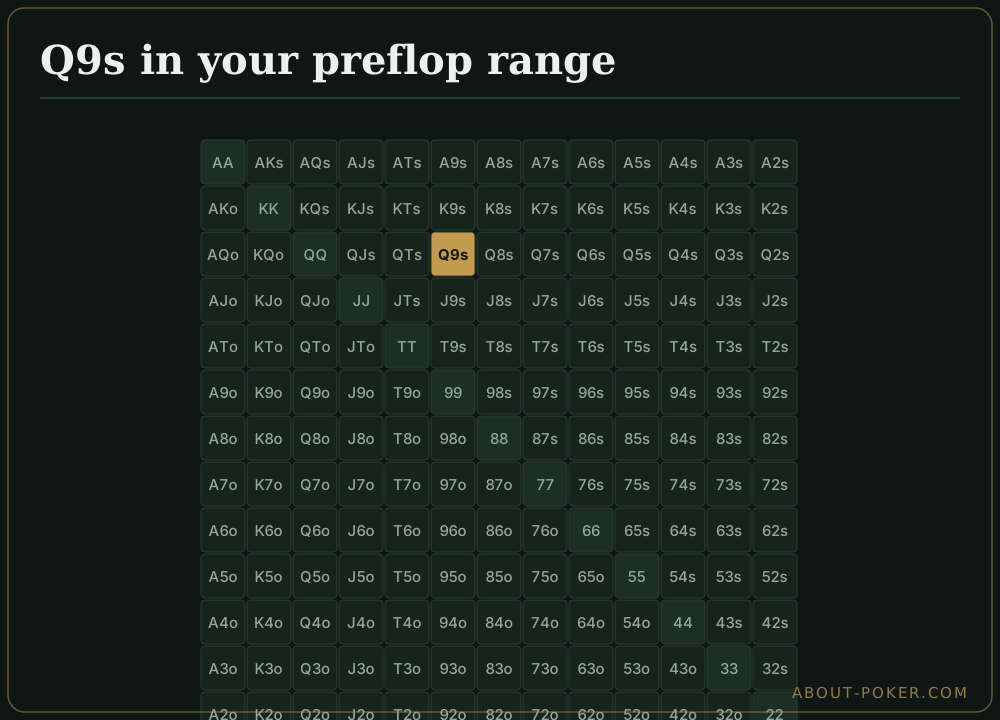
Q9s is a raise-first-in from the cutoff, the button, and the small blind in standard 6-max preflop opening ranges. It is usually a fold under the gun and in early middle position, where the ranges you face are too strong and you will be out of position too often. From late position, though, it is a clean steal: it applies fold pressure to the blinds while retaining enough flop equity that a call does not leave you stranded.
The suit is doing heavy lifting here. Offsuit Q9 is a marginal-to-trash open, but the flush draw plus the disciplined structure of a one-gap Broadway hand pushes the suited version over the line in late position.
Straight and flush texture
Q9s flops well on connected, Broadway-heavy boards. It makes flush draws with any two of its suit, top pair with a queen, and both open-ended and gutshot straight draws around the J-T zone. This gives it a similar profile to queen-ten suited, just a notch weaker because of the gap. When it connects, it usually connects with equity you can barrel — draws, not just thin pairs.
A worked example
You open Q9s on the button and the big blind calls. The flop comes J-T-4 with two of your suit. You have flopped an open-ended straight draw — any king or eight completes the straight — plus a queen-high flush draw. Counting outs, that is roughly 8 straight outs and 9 flush outs, with a small overlap, for about 15 clean outs.
With 15 outs you have close to 54% equity against a single made hand by the river, which makes this a mandatory continuation bet as a semi-bluff. You want folds, but you are also thrilled to get called because you improve so often. That is the whole reason Q9s is worth playing at all: on the boards where it hits, it hits with real, aggressive equity rather than a fragile pair.
Playing Q9s from the blinds
From the big blind, Q9s is a routine defend against a single raise from late position — you are getting a price and closing the action. Against early-position opens it is closer to a fold, since those ranges dominate you. From the small blind, avoid flat-calling; a 3-bet-or-fold framework, as covered in defending the blinds, keeps you out of the messy out-of-position spots where Q9s bleeds value.
How Q9s changes by opponent type
The same hand is a very different animal depending on who is in the pot. Against a tight, straightforward player who only continues with strong hands, Q9s loses much of its value: your top pair is dominated when they call, and they fold the hands you could bluff. Downgrade it — steal a bit less, give up on later streets faster, and do not pay off big bets with a queen.
Against a loose-passive opponent who calls too much and folds too little, Q9s gains value in a different way. Your draws get paid when they hit because the calling station will not fold their weak pairs, and your top pair can bet for thin value against their range of worse queens and middle pairs. Here you bet your made hands and draws for value and simply bluff less.
Against an aggressive player who barrels and floats, lean on Q9s’s equity rather than its showdown value. It flops enough draws to call down or check-raise as a semi-bluff, and the flush and straight outs give you a real hand to fall back on if they keep firing. The through-line: Q9s is an equity hand, so play it hardest against opponents whose ranges are wide and whose mistakes are large.
How stack depth shifts the plan
Depth changes Q9s’s ceiling. At a standard 100bb, Q9s is comfortable — it can flop a draw, semi-bluff, and still fold cheaply when it misses without risking a stack. Deeper, at 150-200bb, its implied odds improve because the flush and straight draws can occasionally win a full stack, which nudges it toward more speculative calls in position. Shallow, at 40bb or less, the opposite is true: implied odds shrink, you cannot get paid enough on the draws to justify chasing, and Q9s’s one-pair outcomes become a bigger share of its equity — so tighten up and treat it closer to how you would treat a marginal offsuit hand. This mirrors the drop-off you see with weaker offsuit Broadways covered in defending the blinds.
The main leak to avoid
The classic Q9s mistake is falling in love with top pair. A queen with a nine kicker is behind AQ, KQ, QT, QJ, and every set, so in a raised-and-called pot it is rarely the best hand at showdown. Keep your one-pair hands in pot-control mode, lean on the draws for your aggression, and remember that Q9s earns its keep through position and playability — not by winning big pots with a mediocre made hand.
Frequently asked
Is queen-nine suited a good hand?
Q9s is a marginal-but-playable hand best used from late position and the blinds. It has a one-gap connected structure plus a flush draw, so it flops straights and draws reasonably often. It is not strong enough to open from early position or to play for stacks lightly.
Should you open queen-nine suited?
Yes, from the cutoff, button, and small blind in most 6-max ranges, and as a blind-steal from late position. It is generally too weak to raise first in from under the gun. When you do open it, treat it as a steal and playability hand rather than a value holding.
Can you 3-bet queen-nine suited?
Occasionally as a light bluff against very wide steals, but it is a lower-priority 3-bet than hands like QTs or suited aces because its blockers are weaker. More often you will flat it in the big blind or fold it to early-position aggression.