How to Play Queen-Ten Suited (QTs)
Queen-ten suited is a smooth-playing Broadway hand that opens wide and 3-bet-bluffs well. Learn how to play QTs by position without overvaluing it.
On this page · 6 sections
Queen-ten suited (QTs) is one of the friendliest Broadway hands to play. It makes the second-nut straight with a jack-nine board, flops a queen-high flush draw, and connects with a huge share of favorable textures. Because it flops so many draws and pairs, QTs almost always knows what to do on the turn and river — which is exactly why it is a strong opener and a reliable bluff-3-bet. The trap is treating it like a premium: QTs is a playability hand, not a hand you want committing 100 big blinds against a tight range.
Open it across most positions
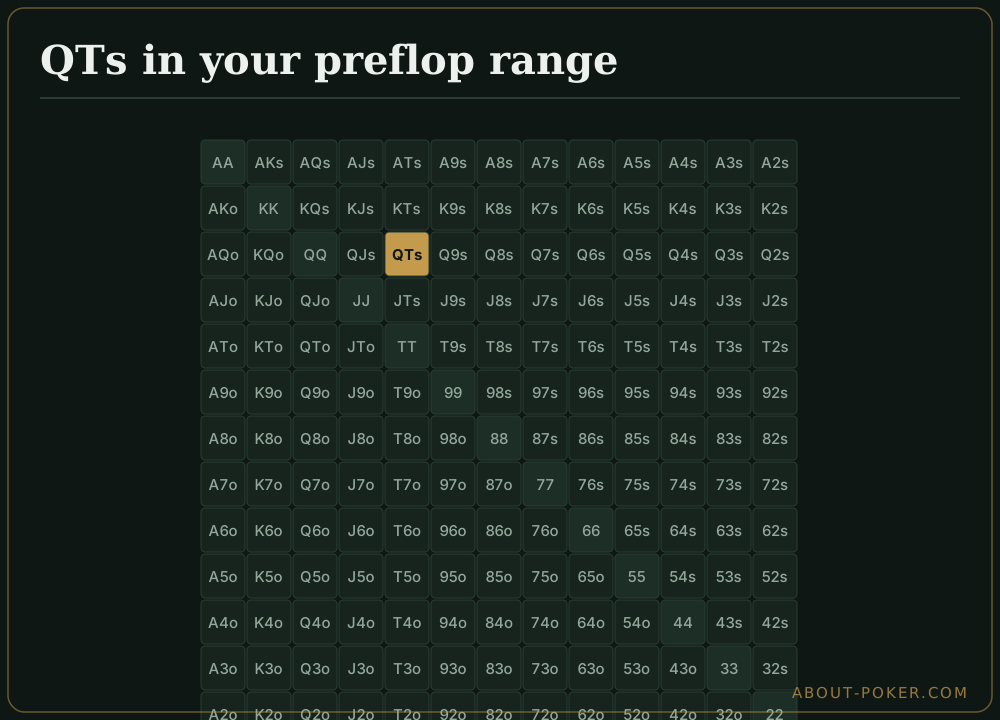
QTs is a clear raise-first-in from middle position, the cutoff, the button, and the small blind, and it makes many under-the-gun ranges in 6-max games too. It earns its spot in your preflop opening ranges because both cards contribute — the queen makes top pair on plenty of boards, and the connected ten opens up straight draws that the queen alone would miss. From late position it also steals blinds efficiently thanks to how often it flops something to continue with.
The suitedness matters more than beginners expect. A queen-high flush is rarely the nuts, but the extra flush equity turns marginal continues into profitable barrels and lets QTs realize far more of its raw equity than its offsuit cousin.
A strong bluff-3-bet, not a value raise
QTs is an excellent light 3-bet, especially against a cutoff or button steal. Two features make it ideal:
- Playability when called. QTs flops straight draws, flush draws, and top pair often enough to keep applying pressure on later streets.
- Modest blockers. Holding a queen and a ten removes a few of the opponent’s strong Broadway combos (KQ, QJ, JT, AQ), so they continue slightly less often.
This is a semi-bluff, not a value 3-bet. Against a tight under-the-gun open you should mostly flat or fold — jamming QTs into a range packed with AA, KK, AK, and AQ is lighting money on fire. Save the aggression for wide, steal-heavy ranges where fold equity is real.
A worked example
You open QTs on the button to 2.5bb and the big blind calls. The flop comes J-9-4 with two of your suit. This is close to a dream texture. You hold Q and T; the board has J and 9, so you have an open-ended straight draw — a king completes K-Q-J-T and an eight completes Q-J-T-9-8, giving you eight straight outs (four kings, four eights). On top of that you have a queen-high flush draw worth nine more outs. Two of your flush cards are also straight cards you would otherwise double-count, so after removing the overlap you have roughly 15 clean outs on the flop.
With that many outs you are a favorite or near-coinflip against most of the big blind’s made hands, so you bet — this is a textbook continuation-bet semi-bluff. You are not hoping they fold; you are happy to get called because you will improve so often. That combination of fold equity plus raw equity is exactly why QTs earns its aggressive preflop treatment.
Playing it from the blinds
From the big blind, QTs is a comfortable defend against a single raise. You are getting a price, closing the action, and holding a hand that flops well. You can also mix in a 3-bet against the widest button and small-blind steals. From the small blind, though, calling is awkward — you will be out of position for the whole hand. A 3-bet-or-fold approach is cleaner, as covered in defending the blinds.
How stack depth changes the play
QTs is a playability hand, and playability is worth the most when stacks are deep. At 100 big blinds or more, the times you flop a big draw or a disguised straight can win a full stack, so realizing equity in position is highly profitable and light 3-betting to build a pot is attractive. This is where QTs shines.
Shorten the stacks and the calculus shifts. At 40 big blinds, you flop far fewer opportunities to win a big pot, and the hand’s implied-odds upside — the reason you love it deep — largely disappears. Light 3-bets become less appealing because there is less room to leverage fold equity across streets, and flatting a raise out of position loses value. Around 20 big blinds and shorter, QTs turns into a raise-or-fold hand: it is a fine open and a reasonable re-jam over a late-position steal because of its blockers and live cards, but flatting and set-mining logic no longer apply. The rule of thumb: the deeper the stacks, the wider and more aggressively you can play QTs; the shorter they get, the more you simplify to open or shove.
When to slow down
The single biggest QTs leak is overplaying top pair. When you flop a queen and face heavy resistance, remember your kicker is a ten — you are behind AQ, KQ, and sets, and you rarely have the best hand in a big pot. A useful discipline: on a queen-high flop, plan to bet once for value and then pot-control, rather than firing three barrels into a range that only continues with hands that beat you.
Two more spots to ease off. First, multiway pots — when three or more players see the flop, your one-pair hands go down in value fast and even your draws need to be the nut or near-nut version to bet hard, because someone often holds a piece. Second, ace-high or paired boards that miss you entirely; QTs makes no pair and no draw on a board like A-7-2, so a single small continuation bet and a fold to resistance is usually correct.
Pot-control your one-pair hands, lean on the draws for aggression, and let QTs do what it does best: make disciplined, positional pots where its playability shines and its ceiling stays capped by good judgment rather than by stacking off with a mediocre pair. For the ranges it belongs in, revisit preflop opening ranges and your 3-bet range.
Frequently asked
Is queen-ten suited a good hand?
Yes, QTs is a solid hand — a comfortable open from middle position onward and a good bluff-3-bet against late-position steals. Its strength comes from Broadway straight potential, a queen-high flush draw, and clean playability. It is not a premium, so avoid stacking off with it in big raised pots.
Should you 3-bet queen-ten suited?
Mostly as a semi-bluff against wide cutoff and button opens. QTs has straight and flush equity plus a queen and ten that block some of the opponent's Broadway continues. Against tight early-position raises it usually flats or folds rather than 3-bets.
How does QTs play from the blinds?
From the big blind you can defend QTs by calling a single raise and occasionally 3-betting against wide steals. From the small blind, prefer 3-betting or folding over calling, since QTs plays poorly out of position when flatted.