How to Play Queen-Three Offsuit (Q3o)
Q3o is a weak offsuit queen that opens only from the button and defends a few blind spots. Learn where Q3 offsuit plays, when to fold it, and how to play it.
On this page · 6 sections
Queen-three offsuit (Q3o) lives near the bottom of the offsuit-queen family. It holds the queen blocker and can flop top pair, but the trey kicker is dead weight and, unlike Q3 suited, there is no flush draw to add equity. Q3o is a hand you play because of your seat and the price, not because the cards are strong.
Where Q3o belongs preflop
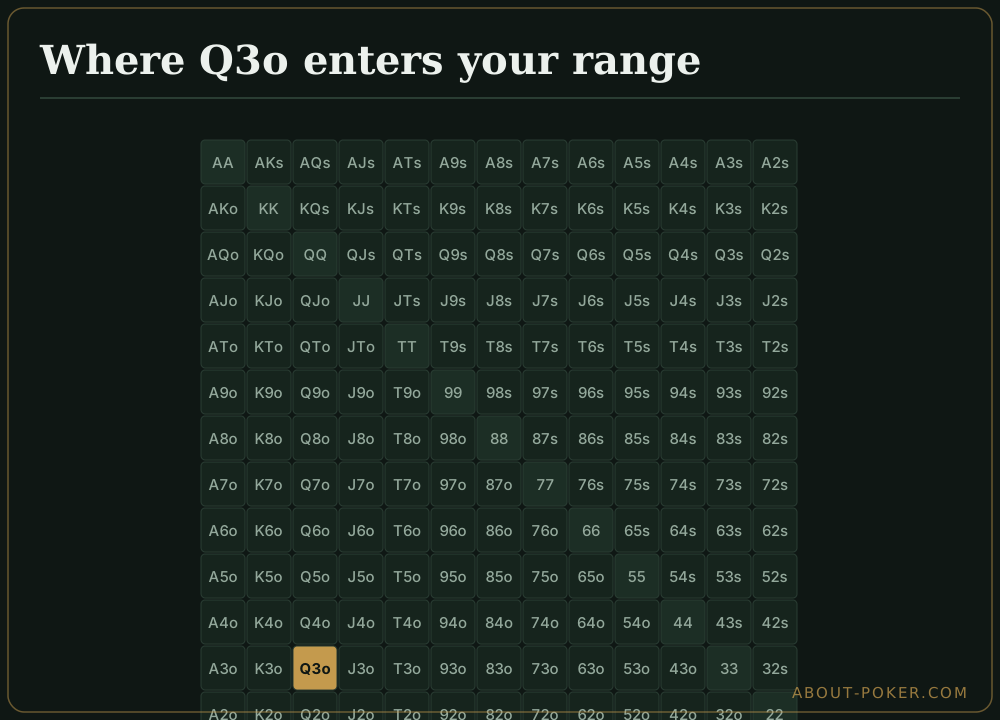
In a standard 6-max game, Q3o is not a default open until you reach the button. From the button you are attacking just two blinds with a very wide range, and any queen with a live blocker earns a look. From the cutoff and everywhere earlier, fold it — the offsuit gap and dead kicker make it a clear loss of expected value against the tighter ranges you face in those seats.
The other place Q3o appears is blind defense. In the big blind against a late-position raise at a good price, you can flat-call some Q3o combos because you are closing the action cheaply and only need modest equity to continue. If you want to see exactly which seats open which hands, the preflop opening ranges chart shows where each queen enters the mix.
What Q3o is not is a 3-bet hand. It is too weak to raise for value and a poor bluff because it unblocks most of the hands that call a 3-bet. When you want a light 3-bet, reach for a suited queen or a suited connector instead.
Why the offsuit gap matters
The lone trey kicker is the whole problem. When you flop top pair with a queen, you are routinely out-kicked by better queens, and against real aggression you are often drawing thin. A suited holding would add flush equity and a flush blocker in some spots. Q3o has neither, so its value is tied almost entirely to flopping a pair of queens and reaching showdown cheaply.
That makes Q3o a “fold or top-pair” hand postflop. You are not chasing draws with it, and you are not firing multiple streets as a bluff — the trey gives you no backdoor straight potential worth chasing.
A worked example
You open Q♣3♦ on the button to 2.5bb. The big blind calls, and the flop comes Q♥ 8♠ 4♣. You have flopped top pair, trey kicker.
This is a c-bet, but a small one — around one-third pot. You hold a made hand that wants calls from worse (weak queens, eights, gutshots) while keeping the pot controlled, because your kicker means you do not want a big pot against a range that may have you dominated. If the big blind check-raises, you are rarely ahead: your kicker plays terribly, and folding is usually correct against a raising range full of better queens, two pair, and sets. Save the chips.
If the flop instead came K♥ 9♠ 4♣, you have queen-high and nothing else. Give up. There is no draw to continue with and no reason to turn a dead hand into a bluff here.
How Q3o compares to its neighbors
Among offsuit queens, Q3o is close to the weakest — the same way Q3 suited sits near the bottom of the suited queens. It plays about the same as Q2o and slightly behind Q4o, since the trey rarely helps make a straight. In blind-versus-blind pots, where ranges are widest, Q3o becomes genuinely playable; for a deeper look at those spots see blind vs blind play.
Common mistakes with Q3o
The two biggest leaks with Q3o both come from overvaluing the queen and forgetting the kicker.
The first is opening it too early. Because a queen feels like a “real” card, players talk themselves into open-raising Q3o from the cutoff, the hijack, or even middle position. From those seats you face too many callers with dominating queens and better broadways, and your dead trey kicker means you are behind whenever the pot goes to showdown with a paired queen. The fix is mechanical: unless you are on the button or in a blind-versus-blind spot, fold it.
The second is going broke with top pair. When you flop a pair of queens, the hand feels strong, but the trey kicker means you are frequently out-kicked by AQ, KQ, and QJ. Firing three streets for value, or calling a check-raise, turns a marginal top pair into a stack-losing bluff-catcher. Bet small once for value and protection, then fold to serious aggression. Your queen is ahead of bluffs and worse queens; it is not ahead of a range that wants to put money in.
How Q3o plays by opponent type
Against tight, straightforward opponents, Q3o’s value collapses. When a nit calls your button open and then raises the flop, they simply have you dominated most of the time — better queen, two pair, or a set. Against these players, play Q3o as pure top-pair-or-fold and never pay off a big bet.
Against loose or passive opponents, Q3o improves. A calling station will pay you off with worse queens and second pair, so your thin value bets get called by hands you beat. A loose-aggressive player who barrels a lot lets you occasionally call down lighter, since their range is wider and your queen blocker takes some of their strong queens out of the deck. The hand is still weak, but who you are playing against decides whether top pair is a value hand or a trap.
The practical takeaway: open it only from the button, defend it selectively at a good price, and treat it as a fold-or-top-pair hand once you see a flop. Discipline with a hand this weak protects your win rate far more than the rare pot it steals. For the version that adds flush equity, compare Q3 suited.
Frequently asked
Is Q3 offsuit a good hand?
No. Q3o is one of the weakest offsuit queens and a below-average hand. It opens only from the button in a 6-max game and shows up in some big-blind defenses, but it should be folded from every earlier position.
Should I 3-bet with Q3 offsuit?
Almost never. Q3o is too weak to 3-bet for value and a poor bluff because the trey blocks almost nothing in your opponent's continuing range. Suited queens and offsuit broadways make far better light 3-bets.
Can I defend Q3 offsuit in the big blind?
Sometimes, against a late-position open at a good price. The queen blocker helps and you can flop top pair, but you are often out-kicked. Play it cautiously and fold to real postflop pressure.