How to Play Queen-Eight Suited (Q8s)
Queen-eight suited is a marginal late-position steal and blind-defend hand. Learn how to play Q8s, when to fold it, and how to avoid the top-pair trap.
On this page · 8 sections
Queen-eight suited (Q8s) is a fringe hand that only earns a place in your range because of position and its flush draw. It is a two-gapper — there is a real distance between the queen and the eight — so it makes fewer and weaker straights than tighter Broadway hands, and its top pair comes with a dangerously weak kicker. What keeps it playable is suitedness and the fold equity you get from late position. Open it as a steal, defend it selectively, and never let it talk you into a big pot with one pair.
Q8s is a late-position-only open
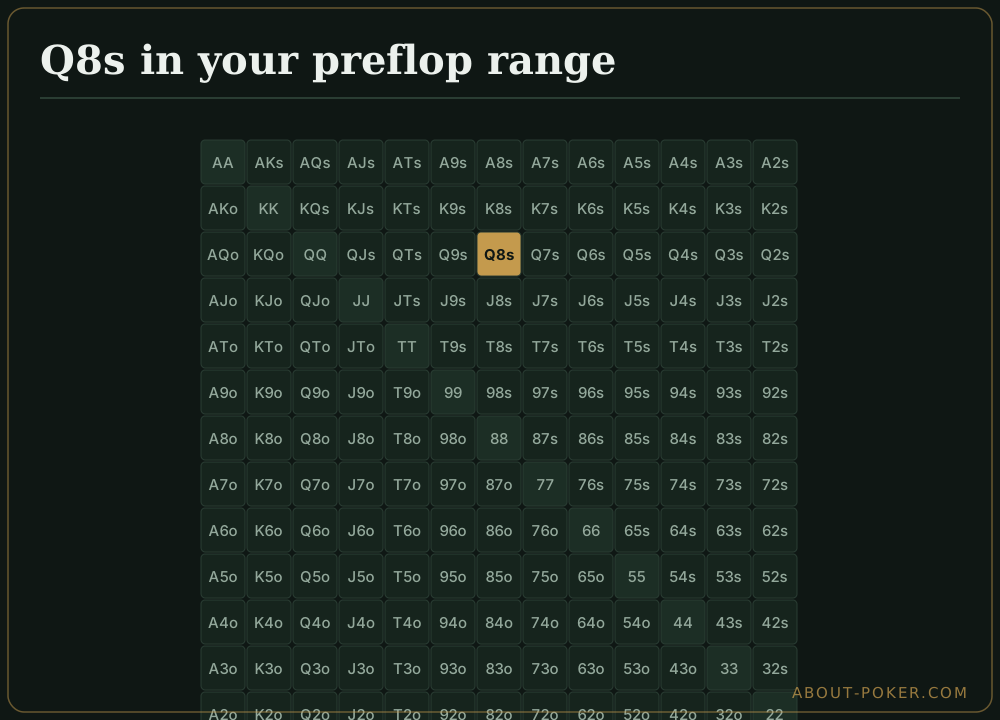
Q8s belongs in your preflop opening ranges from the button and, more marginally, the small blind. It is a fold from under the gun, early position, and usually the cutoff in tighter games. The reason is simple: from late position you are attacking the blinds’ capped ranges with position and fold equity, and the flush draw ensures that when you get called you are not completely lost on the flop. From early position none of those advantages exist and the hand is a clear muck.
This makes Q8s meaningfully weaker than a hand like queen-nine suited: the extra gap removes straight combinations and lowers the frequency with which the hand flops something worth barreling.
What Q8s actually flops
Q8s makes a queen-high flush draw with any two of its suit, a weak top pair with a queen, and occasional gutshots and open-enders around the nine-ten-jack zone. Its equity is draw-dependent — the pairs it makes are thin, so the flush and straight draws are what let you apply pressure. When Q8s misses the draw board entirely, it is an easy give-up.
A worked example
You open Q8s on the button, the small blind folds, and the big blind calls. The flop is J-9-3 with two of your suit. You have a gutshot straight draw (a ten makes the straight) plus a queen-high flush draw. Counting outs, the flush draw is 9 cards and the gutshot adds 4 more, for roughly 13 outs.
Thirteen outs on the flop is around 48% equity against one made hand by the river — essentially a coinflip — so a continuation bet is well justified as a semi-bluff. You get fold equity from the big blind’s many missed hands, and when called you still have a huge chunk of the pot’s equity. That is the ideal Q8s scenario: draws to lean on. Change the flop to K-7-2 rainbow and the story flips — you have almost nothing, so you check and fold to pressure without a second thought.
Defending Q8s from the blinds
From the big blind, Q8s is a marginal defend against a late-position raise where you are getting a good price and closing the action. Against opens from early or middle position, fold it — those ranges dominate you badly. From the small blind, calling is a trap; a 3-bet-or-fold approach, as described in defending the blinds, keeps Q8s out of the ugly out-of-position pots where it loses the most.
The trap to avoid
The Q8s killer is the eight kicker. When you flop top pair, you are behind AQ, KQ, QJ, QT, and Q9, plus every set and two-pair combo. In a raised pot, a queen with an eight kicker is rarely good at showdown, so pot-control it hard and never build a big pot around it. Q8s is a hand you play for its draws and its fold equity — the moment it becomes a one-pair value hand in a bloated pot, you are almost always the one being trapped.
How opponent type reshapes Q8s
Because Q8s survives on fold equity and draws rather than raw strength, the opponent you face matters more than with a premium hand.
- Against a tight, fold-happy blind: the button steal is at its best. These players over-fold to opens and to flop c-bets, so the fold equity that justifies Q8s is fully present. Open it and c-bet your draws confidently.
- Against a loose, sticky caller: the steal loses much of its value. They defend wide and call down light, so you can’t rely on fold equity, and your weak top pairs are frequently second-best at showdown. Against this player, tighten up — Q8s becomes closer to a fold, and when you do play it, only continue with genuine draws, not thin pairs.
- Against an aggressive 3-bettor behind you: be ready to fold. Q8s is a poor 4-bet-bluff candidate (weak blockers) and a poor call out of position, so simply give it up when the seat behind you punishes steals.
How stack depth changes Q8s
Q8s is a draw-dependent hand, so it wants deep stacks to pay off the flushes it occasionally makes — the implied odds are what redeem an otherwise weak holding. At 100bb, a made queen-high flush can win a meaningful pot. As stacks shorten, those implied odds shrink and the hand’s thin pairs become a larger share of its value, which is bad news because Q8s makes weak, dominated pairs. In short-stacked tournament play, Q8s is rarely a flat; it’s either a fold or, from very late position with fold equity, an occasional steal or shove rather than a hand you want to see multiple streets with. The deeper you are, the more the flush draw is worth; the shallower you are, the more Q8s slides toward the muck.
A second worked example: when to give up
You open Q8s on the button and the big blind calls. The flop comes A-K-4 rainbow, none of your suit. You have no pair, no draw, and two of the highest cards in the deck are on the board — a range that hammers the big blind’s calling hands far more than it helps you. This is a check-back or a single small c-bet at most, and an easy fold to any resistance. Contrast that with the J-9 two-suit flop earlier: there you had roughly 13 outs and a clear semi-bluff. The difference between those two flops is the entire skill of playing Q8s — bet when you have draws and fold equity, and surrender instantly when you have neither.
Frequently asked
Is queen-eight suited a good hand?
Q8s is a marginal hand — playable as a button or small-blind steal and as a big-blind defend, but a fold from most other positions. It is a two-gapper with a flush draw, so it flops draws but makes weaker straights than tighter Broadway hands. Treat it as a steal-and-realize holding, never a value hand.
Should you open queen-eight suited?
Only from late position — the button and small blind in most 6-max ranges — and only as a blind steal. It is too weak to open from early or middle position, where you face stronger ranges out of position. Fold it there and open it only when fold equity and position work in your favor.
Can you 3-bet queen-eight suited?
Rarely. Q8s is a low-priority bluff-3-bet because its blockers are weak and its straight potential is gappy. It is almost always better to flat it in the big blind, fold it to early aggression, or open it as a first-in steal rather than 3-bet it.