How to Play Queen-Three Suited (Q3s)
Q3s is a bottom-tier suited queen that only opens from the button and small blind. Learn where Q3s plays, when to fold it, and how to handle it postflop.
On this page · 6 sections
Queen-three suited (Q3s) is a scraping-the-bottom suited queen. Its only real assets are the flush draw and, occasionally, a top pair that’s almost always dominated. The three kicker never plays as a kicker, so this hand’s entire profit comes from stealing the blinds and from the rare times it flops a flush or two pair. Treat Q3s as a steal-only hand and you’ll almost never misplay it.
Where Q3s belongs preflop
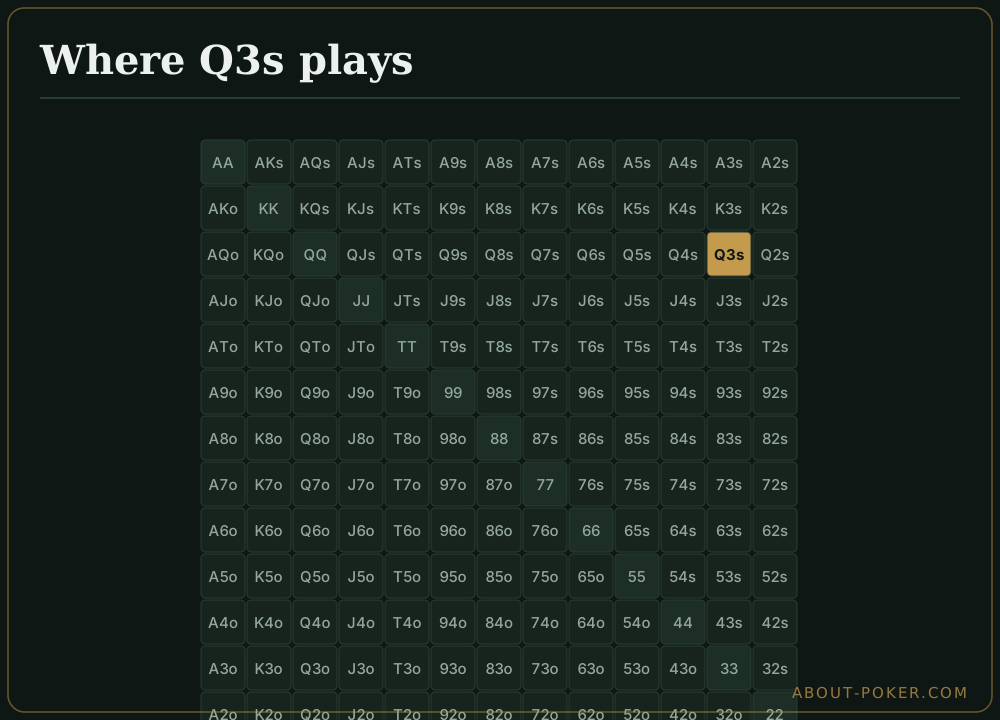
By position, Q3s is strictly a late-position steal:
- Early, middle, and cutoff: fold. There are too many players left to act, and Q3s is below the threshold of a profitable open in all of these seats.
- Button: a thin open when the action folds to you. You’re raising wide to attack the blinds, and Q3s clears the bar because it can win the pot preflop and flops the occasional flush.
- Small blind: open (raise) rather than limp when it’s folded to you. One player left to beat, and a suited hand plays acceptably heads-up.
- Big blind: defend rarely — only against a single button or small-blind raise at a very good price.
Ground the exact borders in the preflop opening ranges and see how the frequencies climb by seat in poker ranges by position.
Why Q3s is so weak
Two things drag Q3s down. First, domination: when you pair the queen, a better queen (KQ, QJ, QT) has you crushed, and your three does nothing to save you. Second, poor connectivity: the queen and three are miles apart, so this hand almost never makes a straight and gains nothing from board texture beyond a flush.
Compared to the wheel suited aces, which use their low card to make the nut straight and their ace to make the nut flush, Q3s makes only a queen-high flush and a dominated pair. That’s why it opens later and less often than almost any hand you’d consider raising.
Facing a raise
When there’s a raise in front of you, Q3s is a fold almost everywhere. It can’t profitably call out of position, and it’s a terrible 3-bet — no value, and the queen blocks few of the hands opponents continue with. The lone exception is closing the action in the big blind, getting a discount against a wide button or small-blind open. In blind-versus-blind pots specifically, ranges are so wide that Q3s becomes a routine defend; see blind vs blind play for how those spots differ from the rest of the table.
A worked example
You open Q♦3♦ from the button and only the big blind calls. The flop comes 9♦ 6♦ 2♠ — you’ve flopped a flush draw, exactly the outcome that makes Q3s worth stealing with.
The big blind checks. You bet as a semi-bluff: you have nine outs to a flush (roughly 35% equity to hit by the river with two cards to come), plus fold equity if the big blind gives up. If called, the turn brings the K♦, completing your flush. Now you bet for value and can barrel again on a blank river. A flopped queen-high flush draw that gets there is the payoff that justifies opening a hand this weak.
Contrast that with flopping bare top pair — Q♠ 8♦ 3♣. Your queen with a three kicker is fragile; check back or bet once small and fold to real pressure. The flush draw is where Q3s wants to make its money, not the dominated pair.
Postflop in one paragraph
When Q3s flops a flush draw, play it as a semi-bluff and get aggressive — the draw plus fold equity is the whole point of the hand. When it flops top pair, keep the pot tiny and be ready to fold; a bare queen is easily dominated. When it flops two pair or a flush, it turns into a real value hand you can bet across streets. When it flops nothing, give it up cheaply — there’s no kicker or straight equity to chase. Q3s profits by stealing preflop and connecting hard, never by grinding thin postflop edges.
Where to go next
Q3s sits at the very floor of the suited-queen family — a button and small-blind steal and nothing more. Sharpen your opens with preflop opening ranges, learn the seat-by-seat borders in poker ranges by position, and tie it together at the preflop strategy hub.
Frequently asked
Is Q3 suited a good hand?
No, Q3s is a weak hand. It's a playable open only from the button and small blind, where you're stealing blinds and can still make a flush. From every earlier position it should be folded because it's dominated far too often.
Should I 3-bet with Q3 suited?
No. Q3s has neither the equity to 3-bet for value nor the blocker profile to make a good bluff. It's a raw fold whenever you face a raise, outside of a discounted big-blind defense.
Is Q3 suited better than Q3 offsuit?
Yes, meaningfully. Being suited adds flush potential worth a few percent of equity and lets Q3s open from a couple of positions where the offsuit version is a pure fold. But it's still one of the weakest hands you'd ever raise.