How to Play Ten-Eight Offsuit (T8o)
T8o is a weak, gappy offsuit hand that opens only from the button and small blind. Learn where 10-8 offsuit folds, when it steals, and how to play its.
On this page · 6 sections
Ten-eight offsuit (T8o) is a middling connector without the one thing that makes connectors valuable — a suit. It has a one-card gap and lives in the middle of the deck, so it can make straights, but as an offsuit hand it never makes a flush, and its high-card strength is poor. T8o makes weak, dominated pairs and needs the board to cooperate to be worth anything. Its role is small: late-position steals, cheap blind defends, and the occasional big draw.
Where T8o belongs preflop
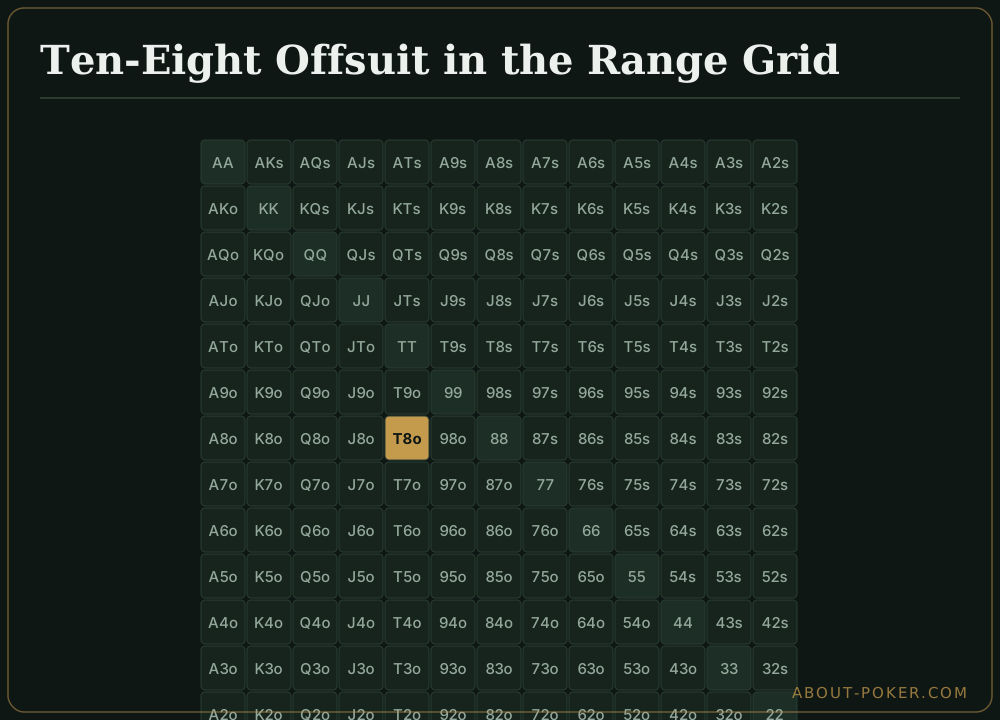
T8o is a raise-or-fold hand from the back of the table:
- Early and middle position: fold. A weak, flush-less gapper this early has no plan against 3-bets and flops badly too often.
- Cutoff: marginal at best; many solid ranges fold it.
- Button: a marginal open. With only the blinds behind, T8o steals dead money and has decent straight potential.
- Small blind: open (raise) rather than limp when it folds to you.
- Big blind: defend against a single raise at the right price, especially versus late steals.
For the exact borders by seat, anchor to the preflop opening ranges; T8o sits at the bottom edge of the openable middle hands.
Straights are the whole plan
T8o’s value is almost entirely in its straight potential. On boards like 9-7-x, J-9-x, or 7-6-x it can flop open-ended draws or made straights, and those are the flops where it can win a stack. Everything else is a disappointment: top pair with the ten is beaten by better tens and every broadway, and a paired eight is behind almost anything that keeps betting. Because it’s offsuit, it can’t fall back on flush equity the way T8 suited can — which is exactly why T8o opens from fewer seats and folds more readily.
The upshot is discipline. Don’t cold-call raises with T8o out of position — you’ll be dominated on the pairs and drawing thin on the misses. Save it for wide spots where its connectedness matters: blind-vs-blind steals and defends, where the framework in blind vs blind play and defending the blinds tells you when to attack.
Facing 3-bets and 4-bets
Open T8o, face a 3-bet, and you should fold in nearly every case. You’re dominated, out of position, and your straight equity alone isn’t enough to continue. Against a 4-bet, folding is automatic.
A worked example
You open T♣8♦ from the button and the big blind defends. The flop comes 9♠ 7♥ 2♦ — you’ve flopped an open-ended straight draw with the jack and six giving you the nuts-ish end each way (any jack or six completes a straight). This is T8o’s best-case scenario: eight clean outs plus two overcard-free live pairs, enough equity to bet and to continue if raised. On a jack or six you can often win a big pot. But contrast that with an A-K-4 flop, where T8o has almost nothing and should give up immediately. That gap between great flops and useless ones is the whole story of the hand. Heads-up, T8o has about 54% equity against a random hand, mostly from these connected boards.
Common mistakes with T8o
Most money lost with ten-eight offsuit comes from a handful of avoidable errors:
- Cold-calling raises out of position. This is the biggest leak. When you flat a middle-position open from the blinds with T8o, you are out of position with a hand that flops dominated pairs and has no flush backup. You will make top pair and be outkicked, or flop a draw and miss most of the time. Fold instead.
- Overvaluing top pair. Flopping a ten on a T-6-2 board feels like a made hand, but your eight kicker is beaten by every better ten and you have no redraw. Against continued aggression, one pair with a weak kicker is a bluff-catcher at best.
- Limping it in. T8o is a raise-or-fold hand from the button and small blind. Limping invites the big blind to see a cheap flop and surrenders the initiative that gives the steal its value.
- Continuing against a 3-bet. As covered above, fold. The straight equity alone does not justify calling out of position against a re-raising range that dominates you.
How the play shifts by opponent and stack depth
T8o’s already-narrow role tightens or loosens with conditions. Against a tight big blind who folds too much, widen your button steals to include it, because the fold equity is what makes the open profitable. Against a sticky, calling-station defender, tighten up — you will get called by better hands and have to navigate flops out of position with a dominated holding.
Stack depth matters too. Deeper stacks (150bb+) modestly favor T8o’s straight potential, since the implied odds on hitting a well-hidden straight grow larger. Shorter stacks (40bb or less) hurt it, because you cannot get paid enough on the rare made straight to offset how often the hand flops nothing usable. At short stacks, drop T8o from your opening range and lean on higher-equity steals instead. For the wider seat-by-seat picture, anchor to preflop opening ranges and the blind-battle logic in blind vs blind play.
Open T8o only from the button and small blind, defend it cheaply, and fold it everywhere else. When the flop connects, play it aggressively; when it doesn’t, let it go.
Frequently asked
Is T8 offsuit a good hand?
T8o is a below-average offsuit hand with a one-gap connection but no flush help and weak high-card value. It only opens from the button and small blind and folds from every earlier seat.
Should I open 10-8 offsuit?
Only late. T8o is a marginal button steal and a small-blind open when it folds to you. From early and middle position it should be folded because it is dominated too often and can't handle 3-bets.
What does T8 offsuit flop well?
T8o wants connected middle boards. It flops open-ended straight draws on layouts like 9-7-x or J-9-x and can make straights on middle-card runouts, but it makes weak, easily dominated pairs otherwise.