Small Blind 3-Bet Range Chart
From the small blind you should 3-bet, not flat, because a caller sits behind you. See a solver-based SB 3-bet range chart and the value/bluff split.
On this page · 6 sections
From the small blind, the right response to a raise is usually to 3-bet or fold — rarely to flat. The reason is the player sitting behind you. When you cold-call a raise from the small blind, the big blind can happily overcall for a cheap price, and you end up in a three-way pot, out of position, with the worst seat at the table. 3-betting fixes that: it either wins the pot outright or isolates the raiser heads up.
Why flatting is a trap in the small blind
Cold-calling works well when you close the action, but the small blind never does — the big blind acts after you. Flat here and you hand the big blind a tempting price to squeeze in behind. You then play a bloated multiway pot from the worst position, where your equity realization is poor.
3-betting sidesteps all of that. Either the original raiser folds and you take it down, or they continue and you’re heads up with the initiative. That’s why a 3-bet-or-fold strategy dominates small blind play against a single raiser. The general framework lives in 3-bet range, and the blind-vs-blind subset is covered in blind vs blind play.
The small blind 3-bet chart (vs a button open, 100bb)
Against a wide button open, a solid small blind 3-bet range is roughly 12 to 16 percent, split into value and bluffs:
Value (3-bet for value, continue vs a 4-bet):
- QQ+ and AK, always.
- JJ, TT, AQs — near-always 3-bets.
- AJs, KQs, and often 99 as strong value.
Bluffs (3-bet, fold to a 4-bet):
- Suited aces A5s, A4s, A3s — great blockers plus wheel playability.
- Suited kings like K9s, K8s — blocker value.
- Suited connectors such as 76s, 65s — equity and playability when called.
Because you’re out of position, use a larger size — around 4x the open, roughly 11 to 13bb over a 2.5bb button raise.
Why blockers matter for the bluffs
The value hands are obvious; the bluff selection is where skill shows. You want bluffs that block your opponent’s strong continuing range. A hand like A5s holds an ace, which reduces the combinations of AA, AK, and AQ the button can call or 4-bet with. That makes your 3-bet more likely to succeed. As a bonus, A5s makes wheels and nut flushes when called, so it isn’t dead money even when the bluff gets through.
A worked example
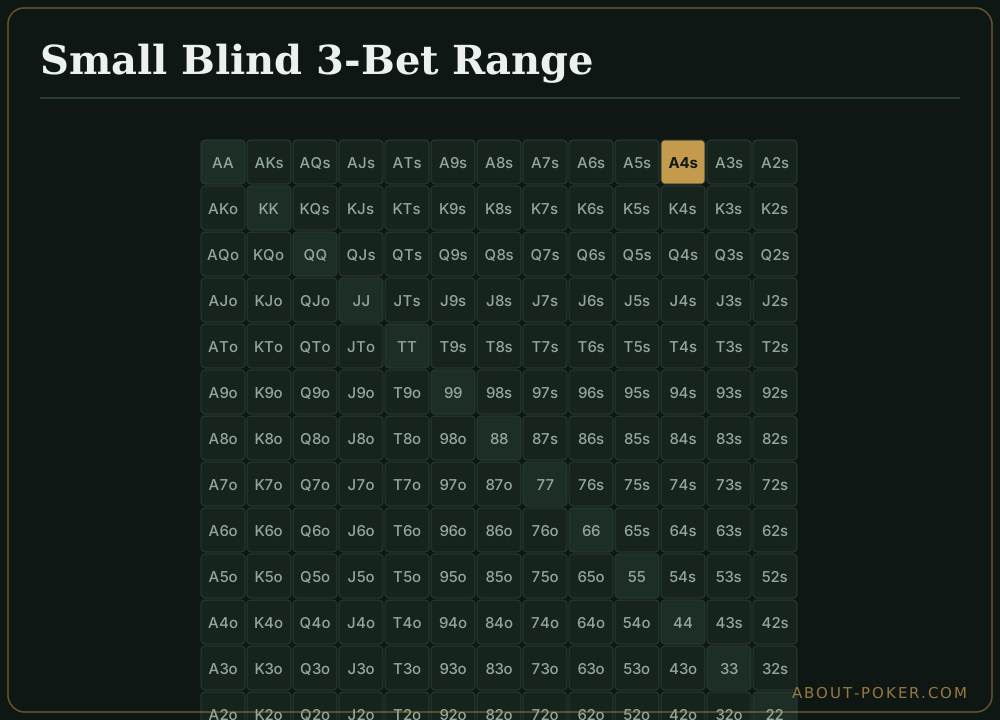
The button opens to 2.5bb and folds to you in the small blind with A4s, 100bb deep.
3-bet, to about 12bb. Here’s why this beats calling:
- If you flat, the big blind gets a cheap look and you play three ways, out of position, with a hand that flops top pair only occasionally.
- If you 3-bet, the ace blocker means the button holds fewer premiums, so it often folds and you win the 5bb already in the middle. When called, A4s can make the nut flush, a wheel, or a pair, and you have the betting initiative heads up.
The same hand played as a flat would be a mistake in this seat; the 3-bet turns a marginal holding into a profitable, aggressive line. For how this range shifts against opens from different seats, see 3-bet range by position.
Adjustments
- Vs a tight opener — cut bluffs; they defend and 4-bet too well.
- Vs a loose opener who folds to 3-bets — widen bluffs and print immediate profit.
- Deeper stacks — lean slightly more toward suited, playable bluffs that navigate postflop well out of position.
Building the range as value plus bluffs
The reason the small blind 3-bet chart looks the way it does is that a good 3-betting range is deliberately polarized — strong value hands and clean bluffs, with the middling hands folded or, if you play a mixed strategy, occasionally flatted. Medium-strength offsuit hands like KJo or ATo make poor 3-bet bluffs because they’re often dominated by the exact hands that call, and they don’t have the blocker or flush equity that makes a 3-bet profitable when called.
That’s why suited aces do so much heavy lifting on the bluff side: they block premiums, they make the nuts often enough to have value when called, and they’re easy to continue with on a wide range of flops. As you study your own play, the fastest improvement usually comes from tightening the bluff side to blocker-rich suited hands and cutting the dominated offsuit hands that leak chips into 4-bets and dominated calls. Keep the value side honest, choose bluffs that block, and the small blind stops being a losing seat.
Frequently asked
Why should the small blind 3-bet instead of calling?
Because the big blind sits behind you. If you just call, you invite the big blind into a multiway pot with a great price, and you play three-handed out of position. 3-betting either takes the pot down or isolates the raiser heads up, which is far better than flatting from the small blind.
How wide should the small blind 3-bet be against a button open?
Against a wide button open, a common solver-based small blind 3-bet range is around 12 to 16 percent of hands. It's a linear-to-polarized mix of value hands and bluffs, sized larger than in-position 3-bets because you're out of position.
What hands make good small blind 3-bet bluffs?
Suited hands with blockers and playability work best: suited aces like A5s and A4s, suited kings, and suited connectors. The ace blockers reduce the chance your opponent holds a premium, and suited hands retain equity when called.
What size should a small blind 3-bet be?
Out of position, use a larger 3-bet size, often around 4x the open or roughly 11 to 13bb over a 2.5bb button open. The bigger size charges the opponent more to continue and helps compensate for your positional disadvantage.