What Is Angle Shoot in Poker?
An angle shoot is an unethical but technically legal move that exploits rules or opponents. Learn common angles, why they are frowned upon, and how to avoid them.
On this page · 6 sections
Angle shooting is one of the ugliest phrases in poker, and understanding it protects both your bankroll and your reputation. An angle shoot is a deliberately unethical move that exploits the ambiguity of the rules or manipulates an opponent to gain an unfair edge, while technically staying inside the letter of the rules. It is the dark cousin of clever play, and every good player should know how to spot and avoid it.
Defining the Angle
The word “angle” comes from the idea of finding a sneaky angle around fair play. An angle shooter is not marking cards or peeking at the deck, which would be flat-out cheating. Instead, they exploit gray areas: unclear betting motions, sloppy chip stacks, or a rule technicality that a less experienced player will not know to invoke.
The distinction matters. Cheating breaks the rules; angle shooting bends the spirit of the rules while staying within the text. That is precisely why it is so frustrating. The angle shooter can protest, “I didn’t break any rule,” even as the whole table knows exactly what they did.
Why It Is Universally Frowned Upon
Poker relies on a shared understanding of fair conduct. When someone angle shoots, they erode the trust that keeps the game civil and fun. Card rooms take it seriously; repeat angle shooters can receive penalties, be moved, or even be barred from the venue. Online, deliberate exploitation of client glitches or timing tricks can get an account suspended.
Angle shooting also tends to backfire socially. Regular players remember who angles, and reputations spread quickly. The short-term chips you might steal with a dirty move are rarely worth becoming the player nobody wants at their table.
Common Angle Shooting Examples
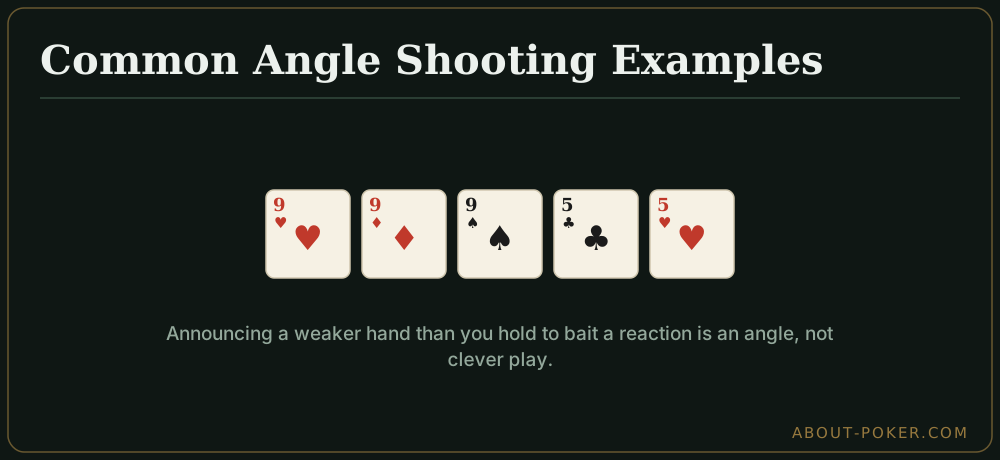
One classic angle is hiding high-denomination chips behind lower ones so an opponent underestimates your stack when deciding to commit. Proper etiquette is to keep large chips visible and in front. Another is the fake fold, where a player moves their cards forward as if to muck to gauge an opponent’s reaction, then pulls them back. Related is the string bet used deceptively, making a partial motion toward the pot to induce a reaction before completing the bet.
At showdown, miscalling your own hand, for example announcing “just a pair” while actually holding two pair, is an angle designed to trick an opponent into showing or celebrating first. This overlaps with the slow roll, where a player with the winning hand deliberately delays turning it over to taunt the opponent.
A Worked Example
Imagine a player says “I call” so quietly that the dealer does not hear it, then when their opponent tables a monster, they claim they never called and try to muck. That is a textbook angle: exploiting the ambiguity of a verbal action. In a well-run room, a clearly audible verbal declaration is binding, so the correct ruling is that the call stands. But in a loose home game with no firm rules, the shooter may get away with it.
Contrast this with a legitimate play. Announcing “raise” firmly and then sizing your bet is fine. Betting all your chips as a bluff is fine. The line is crossed when the goal shifts from outplaying your opponent to tricking them through procedural deception rather than superior poker.
How to Protect Yourself
Be crisp and clear in everything you do. Announce your actions verbally: “raise,” “call,” “all in.” Keep your chips stacked so denominations are obvious. Never react to an opponent’s fake fold or hesitation; wait for the dealer to confirm the action. If something feels off, stop the hand and call the floor rather than arguing directly. A neutral ruling protects you far better than a heated table debate.
The Bottom Line
Angle shooting is legal in the narrow, technical sense and wrong in every sense that matters. Knowing the common angles lets you defend against them without becoming paranoid, and refusing to use them keeps you welcome at every table you sit down at. The strongest players win with better decisions, not dirty tricks, and the game is far healthier when everyone plays it straight.
Frequently asked
What is an angle shoot in poker?
An angle shoot is a deliberately unethical move that uses ambiguity in the rules or manipulates an opponent to gain an unfair advantage, while stopping short of outright cheating like marking cards. It is technically within the rules but universally considered poor sportsmanship.
Is angle shooting cheating?
Angle shooting sits in a gray area. It usually does not break the written rules, so it is not classified as outright cheating like collusion or marked cards, but most players and card rooms treat it as dishonest behavior that can get you barred or penalized.
What are common angle shooting examples?
Common angles include hiding large chips behind smaller ones, pretending to fold to induce a reaction, miscalling your hand at showdown to see a reaction, and making an ambiguous motion toward the pot to fake a call or raise.